Buying land in between paved cities and forests has become increasingly popular, but those same areas are naturally fire prone.


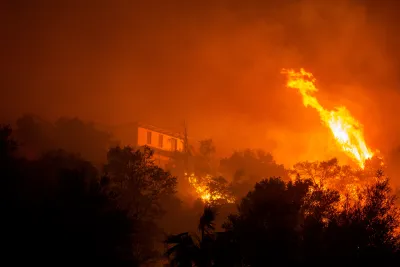
Suburban sprawl in America has led to explosive population growth in wildfire-prone areas: buying land in between paved cities and forests has become increasingly popular due to its scenic views and cheap price tag, but those same areas in the “wildland-urban interface” are naturally fire prone. Sachi Kitajima Mulkey reports for Grist:
A recent study in Natural Hazards, a Nature journal, found that the expansion of this kind of housing in tandem with climate change quadrupled the risk of destructive wildfire in California. In January 2025, the Eaton and Palisades fires broke out in the shrubby sprawl surrounding Los Angeles, forcing more than 200,000 people to evacuate and burning down thousands of structures. Earlier this month, three large wildfires struck suburban areas of Spokane, Washington, the state’s second-biggest city.
Over a third all homes in the continental U.S. are now considered to be in the wildland-urban interface. Chris Buckley, a public information officer with the U.S. Forest Service, said that the chances of a fire increase as more people move into one of these areas. Wildland-urban interface neighborhoods are one of the most rapidly growing types of land in the country.
Read the full story: In the American West, wildfire comes for the suburbs

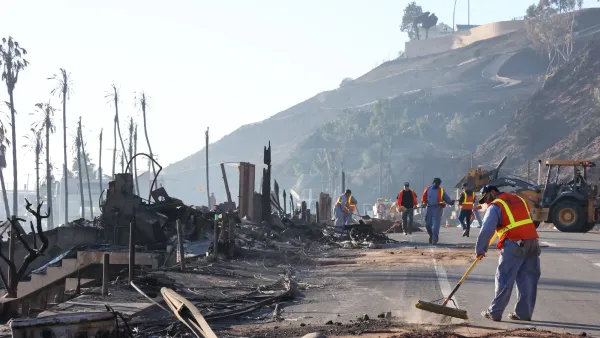
Malibu and Pasadena residents will be able to build up to 4 units on fire-damaged properties
The two cities settled a lawsuit brought by a YIMBY group that challenged their ban on multifamily housing in fire-impacted areas.

UCLA Experts Offer Critical Support for LA Wildfire Response and Recovery
The UCLA Luskin Center for Innovation offers expert guidance on LA wildfire response and recovery, addressing critical issues like water safety, air quality, equitable rebuilding, and climate adaptation to promote resilience and sustainability.
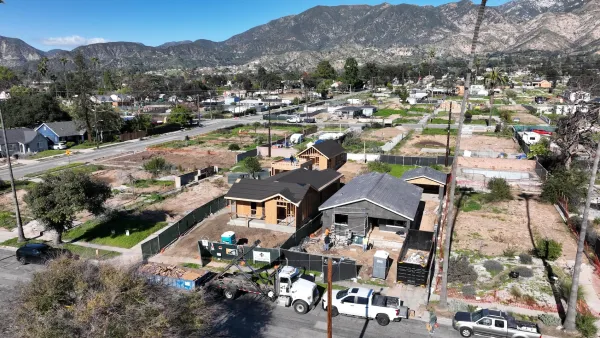
Almost 40% of LA fire survivors face a housing crisis
Many Angelenos who lost their homes in the Altadena and Pacific Palisades fires have already run out of temporary housing funds.

Planetizen Federal Action Tracker
A weekly monitor of how Trump’s orders and actions are impacting planners and planning in America.

Amtrak, CN end decades-long dispute with eight-year agreement
The new operating agreement establishes an updated framework for the companies to work together, including processes to resolve disputes.

Colorado’s Largest Data Center Could Rise Next to Homes — Without a Public Hearing
The proposed campus would consume 11 times the power of Denver International Airport; as it has across the country, opposition mounts.

'This is going to be painful:’ Virginia stares down $1.7 billion funding gap for highway maintenance
The state may address the deficit by shifting $290 million from its construction budget to maintenance projects.

Judges permit Denver to divert 77,000 acre feet from the Colorado River for reservoir expansion
Overuse and climate change have caused the Colorado River’s water levels to plummet.
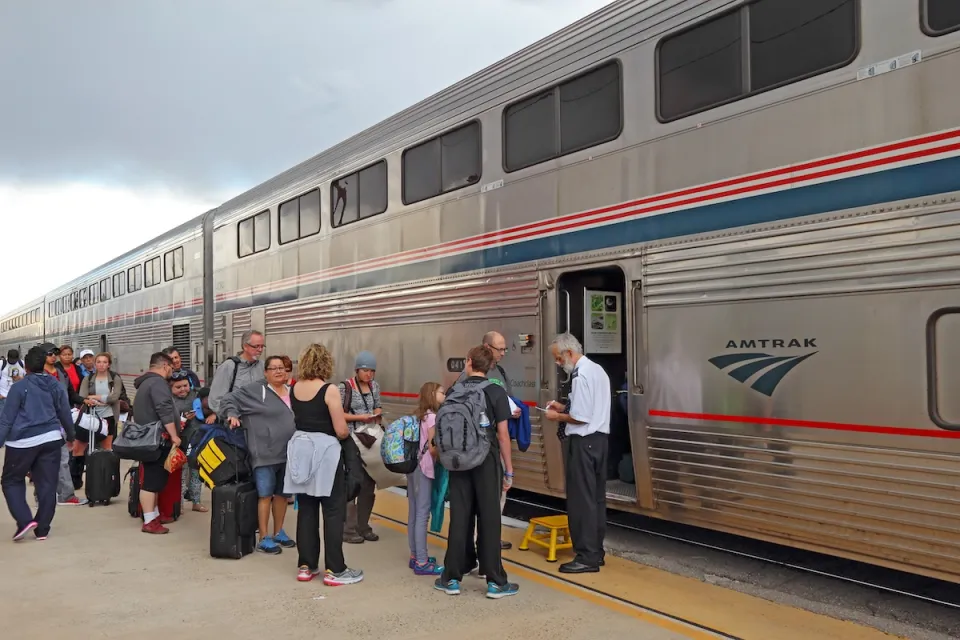
Amtrak, CN end decades-long dispute with eight-year agreement
The new operating agreement establishes an updated framework for the companies to work together, including processes to resolve disputes.

FREE Course: Walkable City 1: Why Walkability?
After describing his path towards focusing on walkability as the essence of good planning, Jeff Speck marches through his five principal reasons for making more walkable places.
Reinventing Malls: Planning Alchemy—Turning Gray Fields Into Gold
The course focuses on the opportunities and imperatives that shape reinvention of mall sites.

KFH Group Inc.
Greater Baltimore Committee
Eagle County Government
The Architects Foundation
University of Cincinnati Online
The Pocatello Development Authority
The Urban Renewal Agency of the City of Pocatello