The state may address the deficit by shifting $290 million from its construction budget to maintenance projects.


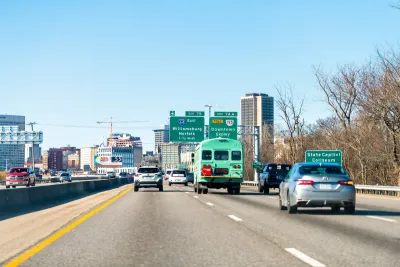
Virginia is considering significantly reducing construction funding to remedy a $1.7 billion funding deficit for highway maintenance. Over the past two decades, Virginia has gained 2,000 miles of pavement and 400 bridges, which require millions annually for maintenance and repair.
State law requires Virginia’s Commonwealth Transportation Board to prioritize maintenance funding over construction. During a work session on Sept. 15, Laura Schewel, Virginia’s deputy secretary of transportation, suggested shifting funds from construction to maintenance to address the funding gap, and “proposed increasing maintenance to roughly $290 million per year, over the next six years. That would significantly reduce construction funding, including the state’s Smart Scale program, unless it adopts mitigations,” Virginia Mercury reports. “Funding for transportation projects through the Smart Scale program could drop temporarily by around 51%.”
Virginia Mercury reports:
“There is no mitigation strategy that makes this not painful,” said [Virginia] Secretary of Transportation Nick Donohue on Tuesday. “This is going to be painful no matter what we do moving forward.”
Read the full story: Virginia confronts $1.7 billion shortfall in highway maintenance funding

Parking Reform: Dynamic Pricing Expected Soon in Arlington County, Virginia
The dynamic, demand-based pricing is on its way to Northern Virginia.

Raised interest rates may kill financially vulnerable construction projects
The chief economist at ConstructConnect warns that if construction project owners are negatively impacted by the raised rates, it could result in delayed payments to contractors.

92% of DC Construction Groups Struggle to Hire Workers Amid ICE Raids
Contractors are being forced to delay project timelines as more workers stay home to avoid ICE dragnets.

Planetizen Federal Action Tracker
A weekly monitor of how Trump’s orders and actions are impacting planners and planning in America.

California plans to bury El Niño’s downpour
If the state plays its cards right, it may be able to store a billion acre-feet of El Niño’s water in aquifers.

Desperate measures: Advocates weigh draining Lake Powell to fill Colorado River
Draining the reservoir could reduce evaporation losses by a couple hundred thousand acre-feet.

In Texas, data centers are swallowing promised parkland
Residents who moved to Taylor, Texas for a rural community now have to contend with three data centers in their backyard.

How a Chicago-sized wind farm beat the odds and powered on
The project spanned five presidential administrations and a standoff with a U.S. military base.

MTA gives itself 30 days to transform pit into basketball court
The site has been under construction since 2022; the city originally estimated it would finish the court in 2024.

FREE Course: Walkable City 1: Why Walkability?
After describing his path towards focusing on walkability as the essence of good planning, Jeff Speck marches through his five principal reasons for making more walkable places.
Reinventing Malls: Planning Alchemy—Turning Gray Fields Into Gold
The course focuses on the opportunities and imperatives that shape reinvention of mall sites.

City of Rosemead
Rutgers University, Edward J. Bloustein School of Planning and Public Policy
One Hundred Miles
Hunter College, City University of New York (CUNY)
The Architects Foundation
University of Cincinnati Online
City of Cambridge
Montrose County
The Pocatello Development Authority