Many Angelenos who lost their homes in the Altadena and Pacific Palisades fires have already run out of temporary housing funds.


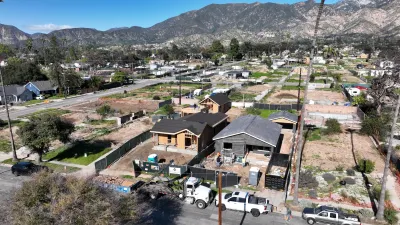
A survey of Los Angeles-area fire victims revealed that nearly 40% of families who lost homes in the 2025 fires have either run out of temporary housing insurance payments or are expected to run out soon, reports Grace Toohey in the Los Angeles Times.
"And the findings were even more urgent for lower-income households: Among those earning $50,000 or less, almost 80% said they didn’t think they could afford housing for three months once coverage ended," Toohey adds.
Beyond temporary housing, about four in 10 survivors said they have taken on debt to cover their expenses, and one in 10 said they've had to cut back on food or other major expenses. "Homeowners estimate that in order to rebuild their homes, they would need more than $600,000 on average above what insurance is expected to provide," according to the report.
Renters are also feeling the pain, with the report estimating that they would need about $250,000 in addition to insurance payouts to pay for lost belongings and temporary housing. The report notes that only about 40% of residents remain displaced, down from 55% in December. "Survivors also saw progress in soil testing, with almost half of total-loss homes reporting they had completed soil tests, up from about a third in December." However, many sites tested positive for dangerous contaminants, extending the timeline for reconstruction.
FULL STORY: Nearly 40% of L.A. fire survivors face crisis as temporary housing funds dry up, survey finds

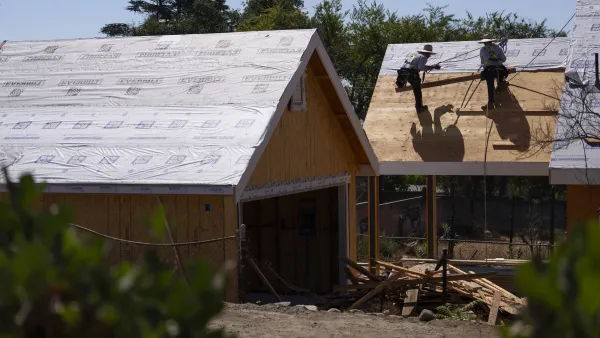
One Year After the LA Fires, Just 13% of Damaged Homes Have a Rebuilding Permit
After a slow start, permitting is starting to pick up.
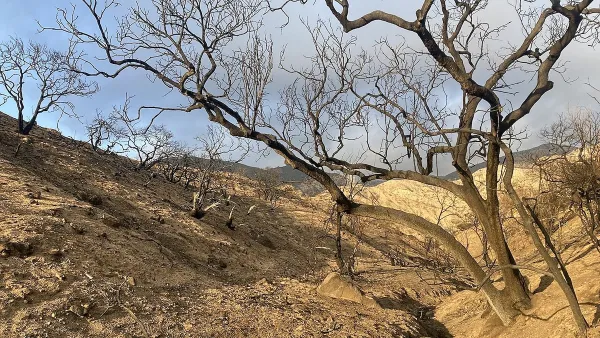
Preserving Altadena’s Trees: A Community Effort to Save a Fire-Damaged Landscape
In the wake of the Eaton Fire, Altadena Green is working to preserve fire-damaged but recoverable trees, advocating for better assessment processes, educating homeowners, and protecting the community’s urban canopy from unnecessary removal.

UCLA Experts Offer Critical Support for LA Wildfire Response and Recovery
The UCLA Luskin Center for Innovation offers expert guidance on LA wildfire response and recovery, addressing critical issues like water safety, air quality, equitable rebuilding, and climate adaptation to promote resilience and sustainability.

The state-sanctioned urbicide of Austin
People don’t kill cities. Freeways do.

US to reduce Colorado River water deliveries to Mexico
A new Colorado Treaty amendment reduces Mexico’s Colorado River water allocation by 250,000 acre feet.

New Jersey’s second-largest city bans standalone data centers
Jersey City will continue to allow co-location facilities, such as those meant for research institutions that store their own data.

Amtrak not solely to blame for New Jersey commuter rail's unreliability, report finds
A new study from the Garden State Initiative found that NJ Transit’s budget grew 20% across a 4 year period, but reliability declined significantly over the same period.

EPA erases limits on planet-warming pollution from power plants
Under Monday’s plan, power plants would still have some limits on how much mercury, arsenic and other contaminants they can emit.

Phoenix announces new on-demand transit service, more frequent RAPID buses
Both new services will launch in October, and are part of Phoenix's Project Effective Access Solutions for Easing Congestion.

FREE Course: Walkable City 1: Why Walkability?
After describing his path towards focusing on walkability as the essence of good planning, Jeff Speck marches through his five principal reasons for making more walkable places.
Reinventing Malls: Planning Alchemy—Turning Gray Fields Into Gold
The course focuses on the opportunities and imperatives that shape reinvention of mall sites.

Eagle County Government
Harvard University Graduate School of Design
Nashville Planning Department
The Architects Foundation
University of Cincinnati Online
The Pocatello Development Authority
The Urban Renewal Agency of the City of Pocatello
Journal of the American Planning Association