By building lines close to existing infrastructure, Trump aims to lower costs and bypass environmental oversight and opposition from local communities.


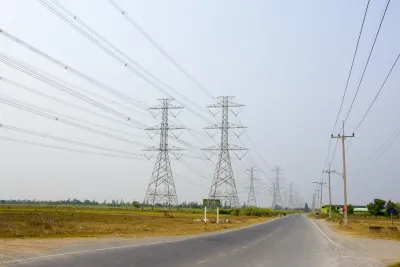
The Trump administration has released a new plan to turn the nation's highway and rail lines into “multi-use” utility corridors, holding transmission wires, water pipelines and fiber optic lines. Titled “America's Great Corridors of Commerce," the project allows state-level transportation agencies to voluntarily lease land alongside roads and tracks to private sector companies developing new infrastructure.
The administration hopes that using existing transportation land for infrastructure projects will lower costs and allow developers to bypass environmental reviews, Shelby Talcott writes for Yahoo News.
The plan also aims to help the U.S compete with China in building infrastructure like high-voltage transmission lines. Developers can potentially bypass opposition from local communities and zoning boards — the most common obstacles — if they build the lines close to existing infrastructure.
“Notably, the new proposal follows the Trump administration's cancellation of a number of major transmission initiatives. The Energy Department ended a $4.9 billion conditional loan commitment last year for a transmission project and scrapped three other transmission corridor proposals earlier this month,” Yahoo News reports. “Trump's focus on leveraging the land — which mirrors proposals that Biden administration officials, environmental groups, and congressional Democrats have advocated for years — offers an alternative to those prior cancelled projects by using highway and railroad-affiliated land.
Read the full story: Trump’s new affordability push runs on highways, rail

Trump to blast ‘hydrocarbon highway’ through ‘world’s longest art gallery’
Environmental and historic preservation groups are suing to stop the project.
Bad on Purpose, Weird Highways
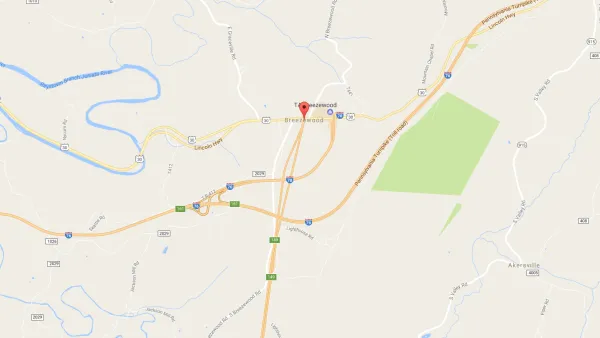
Breezewood Pennsylvania is home to a traffic bottle neck on the I-70, and could be a target of Trump's promised infrastructure spending.
Is Trump trying to ‘eliminate funding provided by Congress for transit projects’?
Democrats and transportation advocates are responding to the Trump administration’s plans to overhaul the Capital Investment Grants program.

Planetizen Federal Action Tracker
A weekly monitor of how Trump’s orders and actions are impacting planners and planning in America.

Washington state to charge fee to drivers with fuel-efficient cars
Revenue from the fee will go towards supporting the state’s highways.
Trump to blast ‘hydrocarbon highway’ through ‘world’s longest art gallery’
Environmental and historic preservation groups are suing to stop the project.

MBTA Green Line project moved to next phrase of CIG program
The modernization effort will cost $4.08 billion.

22-mile pedestrian and bike path to encircle Atlanta by 2030
The project will also support affordable housing.

Army detonates nearly 5 tons of lead in Iowa
The detonation comes after days of delays and public outcry.

FREE Course: Walkable City 1: Why Walkability?
After describing his path towards focusing on walkability as the essence of good planning, Jeff Speck marches through his five principal reasons for making more walkable places.
Reinventing Malls: Planning Alchemy—Turning Gray Fields Into Gold
The course focuses on the opportunities and imperatives that shape reinvention of mall sites.

City of Charlotte
City of Rosemead
Rutgers University, Edward J. Bloustein School of Planning and Public Policy
University of Michigan School for Environment and Sustainability (SEAS)
Hunter College, City University of New York (CUNY)
The Architects Foundation
University District Partnership