The new plan does not apply mandatory cuts to any of the river’s upper basin states.


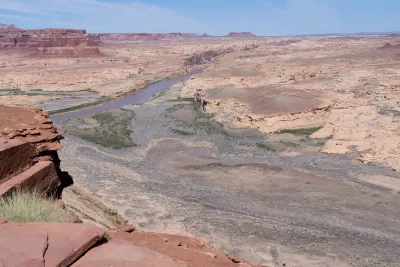
Amid an ongoing drought and record-low water levels at Lake Powell and Lake Mead, the Colorado River’s largest reservoirs, the Bureau of Reclamation released its two-year operating plan on Aug. 21, detailing how the seven states that utilize the Colorado River’s water must reduce their usage.
The operating plan requires the lower basin states — Arizona, California and Nevada — to reduce their use by 1.25 million acre-feet over the next two years: Arizona by 760,000 acre-feet, California by 440,000 and Nevada by 50,000, respectively. The plan also asks the lower basin states to provide an additional 700,000 acre-feet of water conservation over the next two years, Jennifer Solis writes for Source NM.
If the drought conditions worsen, the plan could require much deeper cuts from the same states — up to 3 million acre-feet of water, or roughly 40% of their yearly supply. The operating plan does not specify how these cuts would be divided across the three states.
The Bureau of Reclamation gave Colorado, Utah, Wyoming and New Mexico, the Colorado River’s upper basin states, no mandatory water cuts, but a voluntary water target of up to 200,000 acre-feet. JB Hamby, chairman of the Colorado River Board of California and California’s chief negotiator, called on the upper basin states to cut water use and “maintain sustainable deliveries to the Lower Basin,” Solis reports.
Read the full story, below.
Read the full story: Feds announce water cuts under new Colorado River plan


Nevada sues feds to block Colorado River cuts
The federal government’s newly released plan for managing the Colorado River’s dwindling water supply could cause Nevada to lose over 70% of its allocated water.
New Drought Contingencies Triggered for Upper Colorado River States
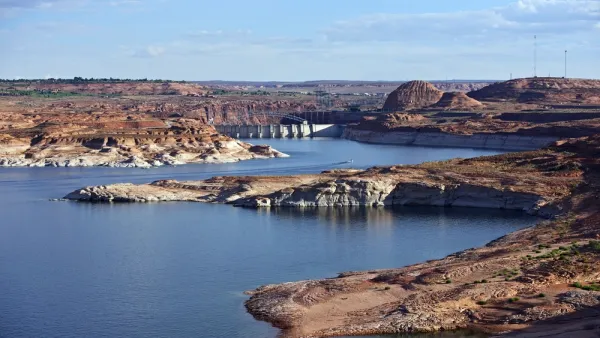
The latest Bureau of Reclamation report on water levels in Lake Powell and Lake Mead trigger new drought contingencies in Colorado, New Mexico, Utah, and Wyoming.
Even a “best case scenario” El Niño won't fix the West’s drought
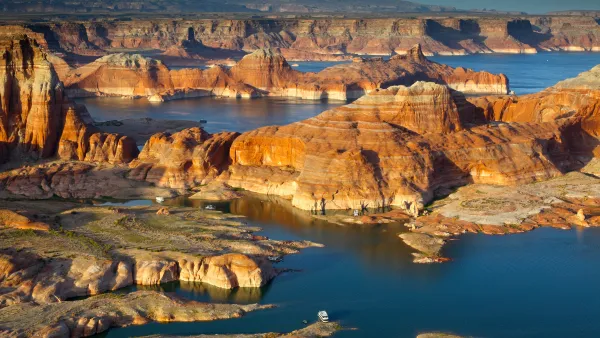
While lower basin states may see increased precipitation, increased snowfall in upper basin states is needed to bring sufficient water to the West.

Planetizen Federal Action Tracker
A weekly monitor of how Trump’s orders and actions are impacting planners and planning in America.

‘Going backwards:’ Baltimore mayor, students rally against state's transit funding plan
Maryland's proposed six-year plan provides no funding for Baltimore’s BMORE bus program and reduces its road maintenance funding.

Detroit to transform waterfront with $2.2 billion investment
Developers will convert about 18 acres of unused parking lot space into civic spaces.

U.S.-Iran war may have ‘devastating’ impact on cost to warm homes
Vermont and Maine residents may see a 76% increase in the cost of warming their homes this winter.

Senate bill would ‘overhaul’ environmental permitting laws
Under the proposed act, government agencies would also not be able to suspend or rescind permits after granting them.

Exemption applications for NYC’s pied-à-terre tax see 55% success rate
The city sent nearly 40% of its initial pied-à-terre tax warnings erroneously.

FREE Course: Walkable City 1: Why Walkability?
After describing his path towards focusing on walkability as the essence of good planning, Jeff Speck marches through his five principal reasons for making more walkable places.
Reinventing Malls: Planning Alchemy—Turning Gray Fields Into Gold
The course focuses on the opportunities and imperatives that shape reinvention of mall sites.

One Hundred Miles
County of Mendocino
planning NEXT
The Architects Foundation
University of Cincinnati Online
Montrose County
Northern Illinois Transit Authority (NITA)
The Pocatello Development Authority