A few strategic investments could turn the IBX into an essential spine of the regional transportation network, not just another branch of New York's subway system.


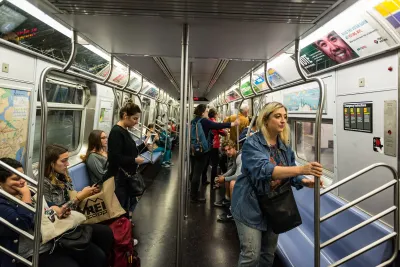
This piece was originally published in The Urban Condition.
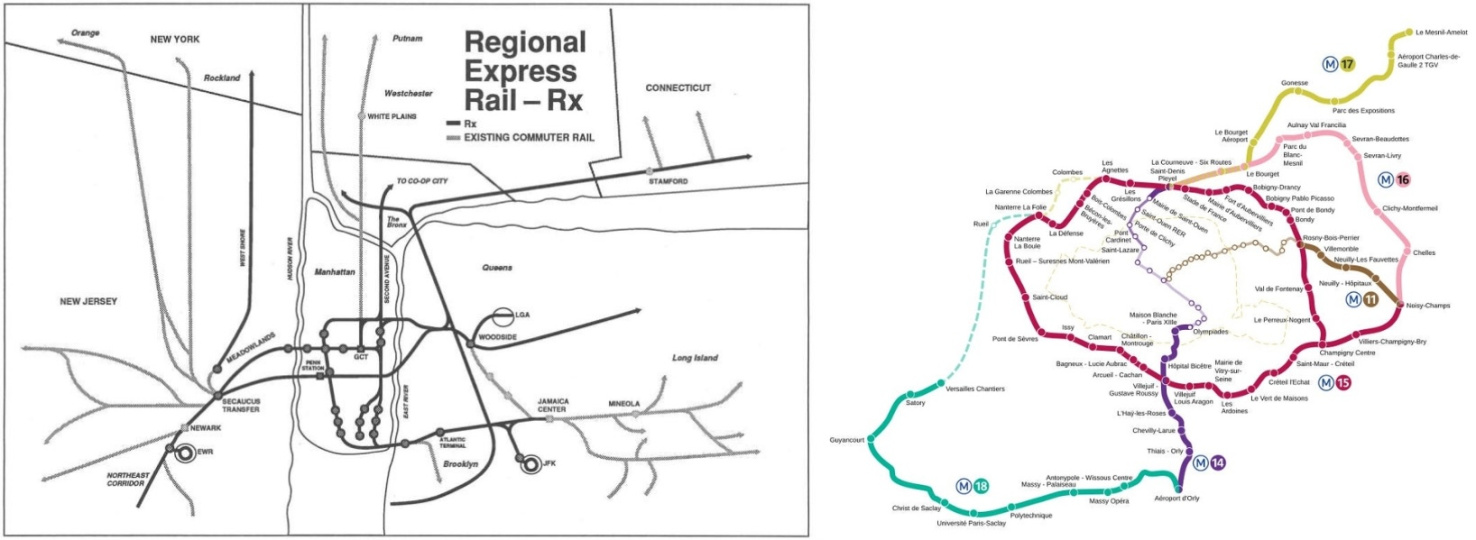
In 1996, the Regional Plan Association put forward a proposal for an interconnected, European-style regional rail system for the Tri-State area. One component of the think tank’s vision was known as the Triboro Rx, a rail service linking Brooklyn, Queens and the Bronx entirely on existing railroad rights of way.
To date, the Triboro Rx is one of the few projects the think tank proposed that is actually moving forward, albeit in pieces. The Triboro concept was eventually whittled down to just two boroughs. The Interborough Express that would connect Brooklyn and Queens is currently in the planning process, and is expected to open sometime in the 2030s.
The tracks through the Bronx and over the Hell Gate Bridge were dedicated to another project known as Penn Station Access. When it opens in 2030, that under-construction project will add four new train stations in the Bronx and connect Metro North’s New Haven Line to Penn Station.
These two projects, the IBX and Penn Station Access, were once envisioned by the RPA as a single line within a grand regional rail system. Now, they are on totally separate tracks — literally and figuratively. Though these two services come within about a mile of one another, passengers will not be able to transfer between them. This outcome reflects the region’s siloed approach to transit network planning and its limited ambitions with each individual transit project it pursues.
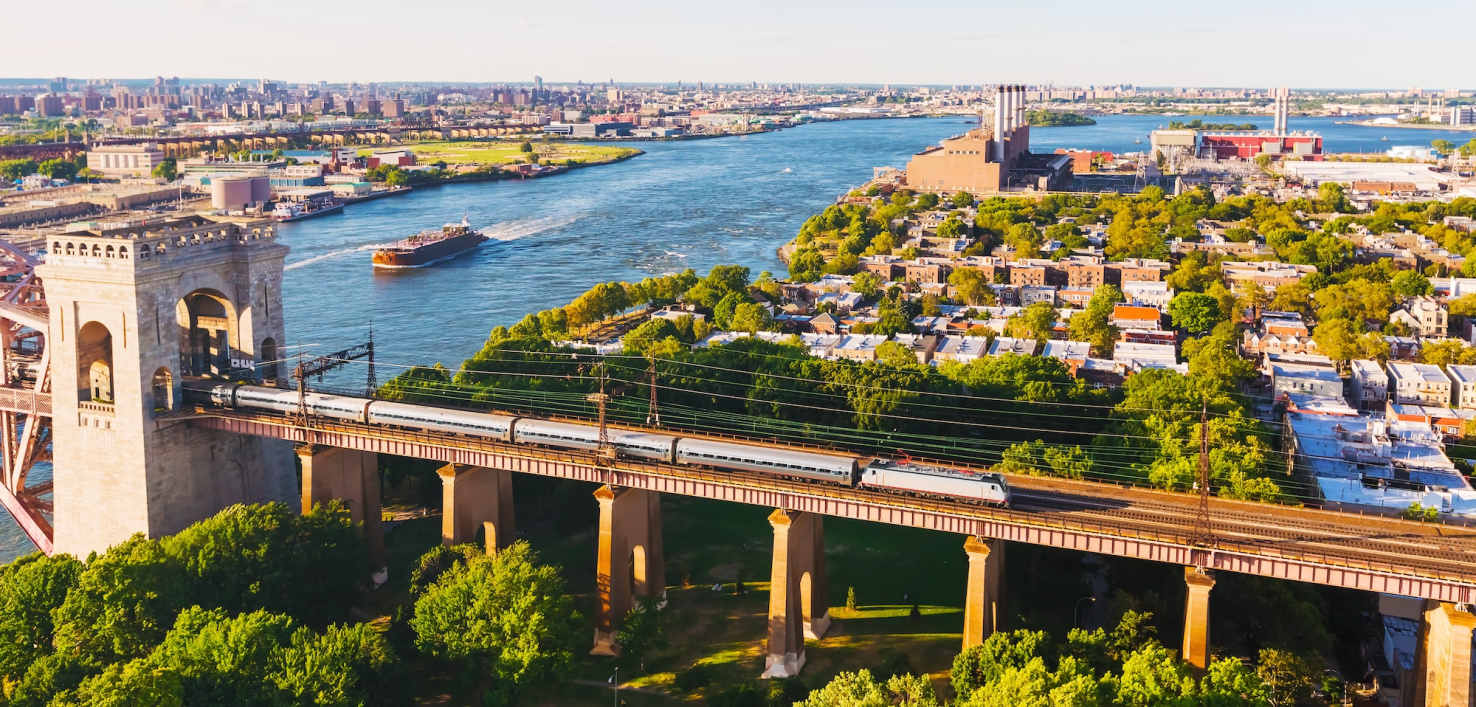
The IBX won’t make it to the Bronx, or further north to Westchester County and Connecticut. But that doesn’t mean it can’t live up to its original promise as an artery in the regional transportation system.
As I wrote in part one of this piece, the IBX will have a transformative impact on mobility in Brooklyn and Queens from the day that it opens, largely because of transfers to express subways that will quickly get riders to popular destinations like Midtown, Downtown Brooklyn and the JFK Airtrain at Jamaica.
With a few complementary transit projects, the mobility benefits of the IBX could extend to the Bronx and beyond, as envisioned by the RPA 30 years ago. A handful of more ambitious initiatives could bring the benefits of the IBX even farther out to Long Island and New Jersey, as well as to air travelers landing at LaGuardia Airport and intercity train passengers on the Northeast Corridor.
This piece lists those projects in order of difficulty and expense. Most of the following ideas are speculative and have not been formally proposed by a government agency. However, they follow transit planning best practices as reflected in white papers from advocacy groups like the RPA.
Integrating the NYC subway and commuter rail
The central premise of these conceptual projects addresses how to better integrate the IBX and the rest of the New York City subway system with what is now called the "commuter rail" system. These projects seek to make the most of existing infrastructure rather than building expensive new lines, and they embody the notion that travel to and from the downtown core is no longer the central, overriding purpose of transit planning.
The suite of projects imagined here follow a similar logic to Paris’s 21st-century transit improvement program. The Grand Paris Express is largely focused on the banlieues — the Parisian equivalent of the outer boroughs. These areas were already well connected to central Paris, but not to one another. The Grand Paris Express has changed that, enabling fast, new inter-suburb connections, as well as improved access to the urban core by way of easy transfers to regional rail lines. As an added benefit, the program has helped facilitate the transformation of Paris proper into a pedestrian and bike utopia — another relevant lesson for New York.
The transit future of the Tri-State area is also intertwined with the future of its highways. If New Yorkers are serious about tearing down the 20-mile Brooklyn-Queens Expressway, which roughly parallels the IBX, the city needs to provide commensurate replacement transportation infrastructure. The scale of the transit network planning envisioned here is what would be necessary to transform America’s urban transportation networks so that inner city freeways are no longer necessary.
Without further ado, here are the projects that could unlock the full potential of the IBX:
Add high-frequency ferry service between Brooklyn Army Terminal, Staten Island and New Jersey
Brooklyn Army Terminal, the Brooklyn terminus of the IBX, already has a New York City Ferry dock. This could be the closest connection between an NYC Ferry dock and a subway station (the Staten Island Ferry is a different, older system with better subway integration), and it could be designed as a major rail-to-water transfer point. The dock could be upgraded to accommodate more and more frequent vessels making direct trips to Staten Island and New Jersey. (Though the NYC Ferry system recently established a Brooklyn to Staten Island connection, that route does not currently stop at Brooklyn Army Terminal.)
It should be a quick ride to Staten Island. The distance between Brooklyn Army Terminal and the main Staten Island ferry terminal at St. George is about two miles, less than half of the distance between St. George and South Ferry in Manhattan. A direct, frequent ferry connection between the IBX and Staten Island could make this the preferred transit route between the fifth borough and Brooklyn, JFK and Long Island. Ferries would probably also become the fastest transit option for reaching large swathes of south and Central Brooklyn from New Jersey coastal communities.
Make the LIRR Atlantic Avenue Branch a super-express subway line
Ever since the Long Island Rail Road got a third terminus station at Grand Central Madison in 2023, advocates have wondered about the long term fate of the Atlantic Branch. Nearly all trains on this line are now shuttles that go back and forth between Jamaica and Atlantic Terminal in downtown Brooklyn, entirely within New York City limits. Most of the day, these shuttle trains run every 20 minutes.
Turning the Atlantic Avenue Branch into a subway line, or simply increasing its frequency to every five minutes, would have a major impact on the utility of the IBX. Instead of a maximum trip time of 30 minutes from the East New York transfer station to Jamaica due to waits as long as 20 minutes, subway-style service would ensure a maximum trip time of more like 15 minutes. It would be a similar story for the IBX-to-downtown-Brooklyn connection.
Initiate "Super G" service
As the only currently operational subway line that does not touch Manhattan (not counting the Staten Island Railroad), the G Train is a sort of mirror of the IBX. But where the IBX will serve more peripheral parts of Brooklyn and Queens, the G serves the busiest parts of these boroughs.
If it were extended on either end to connect with the IBX, a Super G Train could improve access to Long Island City, Greenpoint, Williamsburg and Downtown Brooklyn from the outer reaches of Brooklyn and Queens — or potentially beyond, if the transit projects listed below also become a reality. As an added plus, the Super G quite closely parallels the path of the BQE. Along with the IBX, the Super G could siphon off north-south trips currently made on the highway and increase transit use.
The Super G could run entirely on existing tracks. In fact, until 2011, the G Train ran on the R tracks to Forest Hills, Queens — a route that advocates are currently working to restore. However, there are major operational challenges to overcome in initiating this service, including maintaining the frequencies of other lines and turning G Trains around at the new termini.
Build an IBX-LIRR infill transfer station near 51st Avenue in Queens
Under current plans, the IBX will cross both the LIRR Main Line and the LIRR Port Washington Line in Queens, but it will not offer transfers to either service. Building an infill station connecting the IBX to one or both of these LIRR lines near 51st Avenue would provide quick and convenient connections to Long Island, as well as increased transit capacity between Queens and Midtown, reducing crowding on the E/F trains.
There are pros and cons to which LIRR line the IBX should connect to. For either line, trip times to Penn Station and Grand Central Madison would likely be under 15 minutes. That’s a short enough time to expect passengers to stand for the duration of their trip, making use of the full capacity of the LIRR’s trains.
Only the Main Line, however, would offer connections to Jamaica, Queens (in about 10 minutes) and most of Long Island. The Port Washington Line would only provide connections to Eastern Queens and a short stretch of the North Shore. The Main Line also sees many more trains per hour than the Port Washington Line, which would translate to less time waiting for transfers.
A Main Line transfer station would maximize regional connectivity and convenience. The line’s four-track configuration also means that some trains could bypass the station. Still, any infill station has the effect of slowing trips for passengers farther down the line. Fewer passengers would be negatively affected by an infill station on the Port Washington Line, but presumably fewer would benefit as well.
Initiate through-running regional rail service and Amtrak to Long Island
If the MTA, Amtrak and New Jersey Transit ever agree on a through-running scheme for regional trains at Penn Station, the LIRR/IBX transfer stop could also directly serve many destinations across the Hudson. Amtrak also has long-term plans to serve Long Island. If Amtrak trains stopped at the LIRR/IBX transfer station, that would provide even more and faster connections to many other destinations on the island as well as in New Jersey and points south.
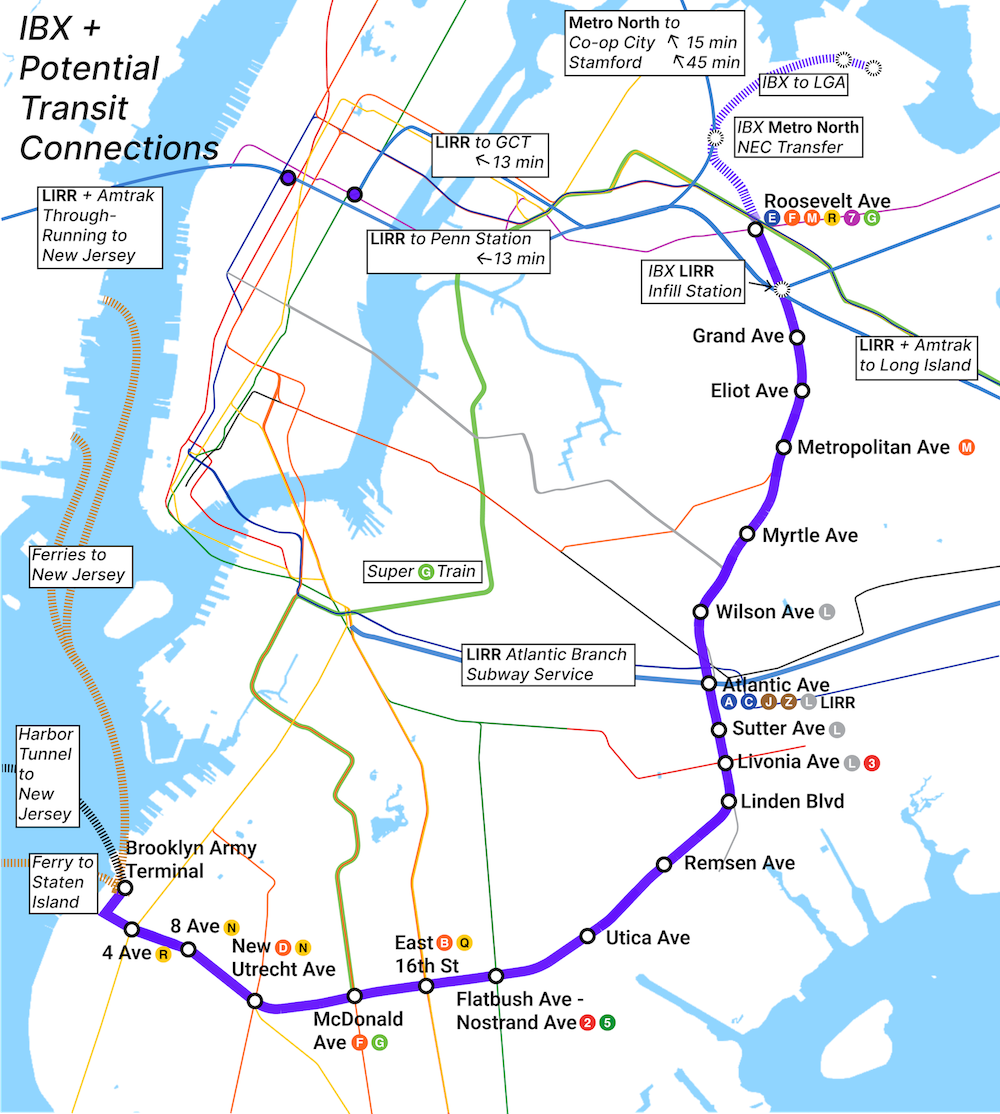
Extend the IBX one mile to connect with Metro North’s Penn Station Access project, providing a link to the Bronx, Westchester and Connecticut
Here’s where things start to get more costly and complex, requiring new horizontal infrastructure.
Metro North’s Penn Station Access project makes it impossible for the IBX to reach the Bronx, as explained above. But the IBX could be extended to offer a transfer to the Metro North tracks headed for the Bronx and points north. It’s a straight shot on existing rail right-of-way about 1.2 miles beyond the planned IBX terminus in Jackson Heights. There could also be an additional infill station on the way, at Northern Boulevard, as envisioned in the Transit Cost’s Project’s "A Better Billion" proposal.
There would need to be a new transfer station constructed on the Metro North tracks, which will be shared with Amtrak’s Northeast Corridor. This brings up the familiar tradeoffs of infill stations. Here, there are only two active tracks, so additional passing tracks would probably be necessary to allow at least some Amtrak NEC trains to bypass the station.
Metro North trips from the transfer station to the Bronx or Connecticut would be very fast. Extrapolating from Penn Station Access travel time projections, passengers could reach Co-Op City in the northern Bronx in about 15 minutes, and Stamford in roughly 45. This connection has the potential to attract a lot of new transit trips and get drivers off of bottlenecks like the RFK, Throggs Neck and Bronx-Whitestone bridges.
Extend the IBX to LaGuardia Airport
If the IBX were extended that additional mile in its existing right-of-way, it would be about a mile closer to LaGuardia Airport. Why not go the rest of the distance?
There are two general ways to route this extension, one on either side of St. Michael’s Cemetery. The first option would see the IBX veer off of its right-of-way onto the BQE east spur before turning onto Grand Central Parkway and into the vicinity of the airport. This option could travel almost entirely on existing highway rights-of-way. However, it would not connect with the Metro North transfer station described above.
The second option would veer north after the IBX-Metro North transfer station, traveling across a couple of industrial blocks before turning right on Grand Central Parkway and tracing a similar route to the airport campus. This option would be longer and therefore more expensive to construct than the first. Both routes could include an additional infill station at Astoria Heights. And both would at some point have to dive underground to avoid violating FAA height restrictions near Runway 4.
Either option would be very costly and complicated and would likely face extreme NIMBY opposition. There would also need to be a debate about whether the IBX or the N Train, which currently terminates in Astoria, is the optimal transit connection to the airport. The aforementioned "Better Billion" proposal opts for the N.
The N has the advantage of providing a one-seat connection to Manhattan. However, The IBX may be able to get passengers to Manhattan in a similar amount of time via transfers to the E/F, Metro North or LIRR. And, of course, LGA passengers coming from or going to Brooklyn and Queens would have a much easier time doing so via the IBX.
There are other advantages to the IBX connection to LGA. Its smaller trains and stations could potentially make it feasible to build stops at both Terminals 2 and 3, which would be difficult for the 10-car N Train. That means the IBX could serve as an internal airport people mover as well as a regional transit connector (though fare collection could make this tricky.) Automated operations on the IBX, if the MTA chooses to pursue them, could enable trains to run as frequently as every two minutes, more than twice as often as the N could run.
It's possible to combine these two options. It might be easier and cheaper to extend the N Train part of the way to the airport to an IBX transfer station at Astoria Heights or farther west on Grand Central Parkway. This would avoid the challenges of routing long, limited turn-radius trains into the complex airport campus environment.
Upgrade the IBX-Metro North transfer station into an intermodal Northeast Corridor rail-air hub
If planners chose to extend the IBX to LGA after the Metro North transfer station, there would need to be a conversation about whether to turn that station into a regular stop on Amtrak’s Northeast Corridor. With the airport less than a 10-minute ride on the IBX away from the busiest railroad in North America, it would be worth considering how to make the most of that proximity.
A connection between LGA and Metro North would be a boon unto itself. Trips from large parts of the Bronx, Westchester and Connecticut to the airport would suddenly become a breeze. The Metro North connection would offer an additional option for LGA passengers to access Manhattan, once again taking up the standing room on the trains for the last 10 or 15 minutes of the ride into Penn Station.
Upgrading this station to serve Amtrak NEC trains would make the entire Northeast much more accessible to LaGuardia. BWI Airport station serves 1.4 million passengers per year. Newark Airport station serves 2.9 million. It’s easy to imagine an LGA station surpassing those figures.
Once again, the infill station conundrum rears its head. Is it worth slowing down every NEC passenger’s trip to provide this new transfer to LGA? Perhaps a good compromise would be for Acela trains to skip this station, leaving it to Northeast Regional trains, similar to the approach at Newark Airport Station.
This infill station, as well as the LIRR infill station described above, would also pose difficult questions around local access. The surrounding streets at both infill station sites are not currently designed to accommodate a major train station.
The Newark Airport train station solved this by being designed solely as a transfer station, with no connection whatsoever to the surrounding neighborhood. But that was an absurd situation for the residents and businesses nearby, who could not access the train or the Airtrain to the airport. NJ Transit is now adding a neighborhood connection to the station.
Build the Harbor Tunnel for passengers and freight
New York City politicians and planners have long dreamed of a freight rail tunnel under New York Harbor connecting Brooklyn and Bayonne, New Jersey. On the Bayonne side, tracks would connect with the rest of the national rail network. On the Brooklyn side, this tunnel would connect with the freight rail tracks that run along the IBX right-of-way, and from there to Long Island and the Bronx. The IBX project will preserve at least a single track for freight throughout the entire right of way to ensure continued freight access, and, ostensibly, to keep the dream of the Harbor Tunnel alive.
Given that the IBX terminates at the exact spot where this tunnel would emerge into Brooklyn, it’s worth considering whether passenger service could be added. Would it be possible to run IBX trains through the big tunnel, and on to a transfer station with the Hudson-Bergen Line light rail service in Bayonne? Or would it be possible to run NJ Transit trains along these tracks to a transfer terminus with the IBX in Brooklyn? Would it be possible to somehow get Staten Island in on the action?
These are all very difficult, very expensive questions — but they are all worth asking for a mega-city envisioning a better future for itself.
—
Benjamin Schneider is a senior investigative and policy reporter at Remapping Debate. He is the author of "The Unfinished Metropolis: Igniting the City-Building Revolution."


MTA plans to outfit all buses with stroller storage by next year
All buses will have seats that flip up to allow for stroller storage or more standing room.
NYC 'bicycle visionary' Janette Sadik-Khan returns to public service with appointment to MTA board
The former DOT commissioner is known for her efforts to make NYC streets safe for people biking and walking.
Mamdani Budget Funds Queensway, Dimming Hope for Reactivated Long Island Rail
Supporters of a proposed rail extension say building the elevated park as proposed would make it harder to bring trains back to this part of Queens.

Planetizen Federal Action Tracker
A weekly monitor of how Trump’s orders and actions are impacting planners and planning in America.

Amtrak, CN end decades-long dispute with eight-year agreement
The new operating agreement establishes an updated framework for the companies to work together, including processes to resolve disputes.

Judges permit Denver to divert 77,000 acre feet from the Colorado River for reservoir expansion
Overuse and climate change have caused the Colorado River’s water levels to plummet.

Atlanta City Council unanimously backs $3.5 billion Beltline light rail project
The resolution was drafted after Atlanta Mayor Andre Dickens pulled support for the Atlanta Streetcar extension last year.

SEPTA to bring nearby frequent transit to over 1 million new riders as part of decade-long plan
The agency's Accelerate plan will also bring frequent transit to twice the amount of jobs that are currently located near it.

NYC plants over 18,000 trees, the most new foliage in a decade
Many of the trees were planted in communities vulnerable to extreme heat.

FREE Course: Walkable City 1: Why Walkability?
After describing his path towards focusing on walkability as the essence of good planning, Jeff Speck marches through his five principal reasons for making more walkable places.
Reinventing Malls: Planning Alchemy—Turning Gray Fields Into Gold
The course focuses on the opportunities and imperatives that shape reinvention of mall sites.

City of Thousand Oaks
City of Wisconsin Rapids
Harvard University Graduate School of Design
The Architects Foundation
University of Cincinnati Online
The Pocatello Development Authority
The Urban Renewal Agency of the City of Pocatello

