More than half of bathrooms that should be publicly accessible are not available, according to a study from Georgia State University.



According to new research from Georgia State University's New School of Public Health, over half of publicly accessible restrooms are actually unavailable to the public.
"The researchers used an expansive definition of publicly accessible restrooms that included both government-funded facilities and restrooms located in private businesses such as gas stations, restaurants and retail stores. Even with that broad definition, more than half of all facilities identified were inaccessible when audited by a team of faculty and student researchers, the press release says."
"The study has already helped inform local efforts to improve public sanitation infrastructure. In partnership with the Atlanta-based nonprofit Central Outreach and Advocacy Center, the researchers shared their preliminary findings with city leaders, who later announced the installation of 12 Throne Labs public restrooms ahead of the World Cup."
The release adds, "The researchers say the findings point to several policy opportunities, including clarifying responsibility for public restroom infrastructure within municipalities, dedicating funding for maintenance and expansion, and developing sanitation standards for major events that bring large numbers of visitors into the city."
Read the full story: More Than Half of Atlanta’s Restrooms Inaccessible to the Public, GSU Study Finds

This Thai city is the 'global capital of toilet access'
The Global Public Toilet Index ranks cities by per capita public restrooms.
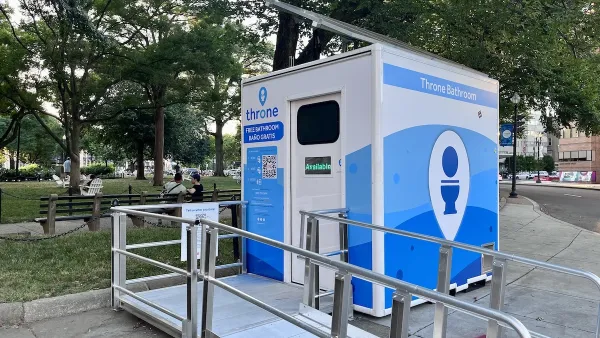
DC to Invest $1 Million in Public Restrooms in 2026
After residents protested the closing of six Throne restrooms, the District is creating a position to manage public bathrooms and plans to fund 10 bathrooms in the next year.

When Bathroom Access Restricts Mobility
For parents of young children, people with mobility equipment, and others, a lack of accessible public restrooms can mean limited outings.

‘Going backwards:’ Baltimore mayor, students rally against state's transit funding plan
Maryland's proposed six-year plan provides no funding for Baltimore’s BMORE bus program and reduces its road maintenance funding.

Detroit to transform waterfront with $2.2 billion investment
Developers will convert about 18 acres of unused parking lot space into civic spaces.

HUD modernizes 50-year-old manufactured housing framework
The Next Generation Manufactured Housing Action Plan establishes new energy-efficiency standards for manufactured homes, and new guidelines for anchoring them.

After $600,000 wasted, CA high-speed rail board limits CEO’s power
Ian Choudri will no longer be able to sign, change or manage contracts.

Lithium mines leech water from surrounding communities. Soon, they’ll run dry
Researchers concluded that most lithium mines won't have enough water to meet industry demands by 2050.

El Niño takes lives, infrastructure as U.S. storm systems prove ill-prepared
About two-thirds of America's culverts are in states with outdated design standards.

FREE Course: Walkable City 1: Why Walkability?
After describing his path towards focusing on walkability as the essence of good planning, Jeff Speck marches through his five principal reasons for making more walkable places.
Reinventing Malls: Planning Alchemy—Turning Gray Fields Into Gold
The course focuses on the opportunities and imperatives that shape reinvention of mall sites.

One Hundred Miles
County of Mendocino
planning NEXT
The Architects Foundation
University of Cincinnati Online
Montrose County
Northern Illinois Transit Authority (NITA)
The Pocatello Development Authority