As they proliferate across the country, data centers face growing backlash from communities concerned about their rapid growth and unknown impacts.


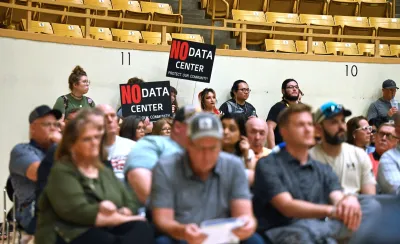
A recent Gallup poll reveals that 75% of Americans oppose data centers near their homes, citing concerns about environmental issues and public health.
As Ray Levy Uyeda explains in Prism, "These numbers not only paint a stark picture of the massive backlash to the rapid and rapacious buildout of data processing facilities (some of which consume enough energy to power a midsize city), but they’re also an indicator that the public feels very differently than the corporations pushing for their construction."
Across the country, cities and states are moving to regulate data centers, with many of them putting in place temporary moratoriums on the facilities. "Communities that are already forced to contend with the consequences of data centers warn of their near-constant noise pollution, voracious consumption of water, and discharge of pollutants into local ecosystems." Opponents are also concerned about the potential for data centers to raise the cost of energy for all residents in the surrounding community.
According to the National Conference of State Legislatures, 14 states have introduced data center legislation, but no moratorium has been passed at the state level. Only one city has passed a full ban (not a temporary moratorium): Monterey Park, California, where a ban on data centers was approved by 86.3% of voters this June.
As for the argument that data centers bring jobs and economic development to the region: "According to Food & Water Watch research, one permanent job in the data center industry costs $13 million of investment. In Virginia, which has become ground zero for data center development, a non-data-center job requires an investment of about $137,000."
Read the full story: In a divided country, U.S. residents agree on one thing: no data centers

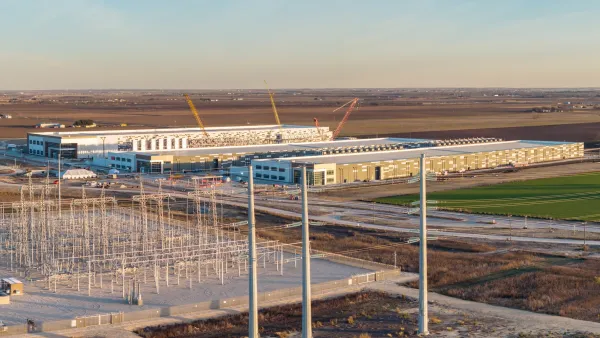
Texas bars data centers from raising utility costs for residents
Gov. Abbott is calling on the state's utility regulator to take steps to reduce energy costs for consumers and ensure data center operators pay for any added costs.
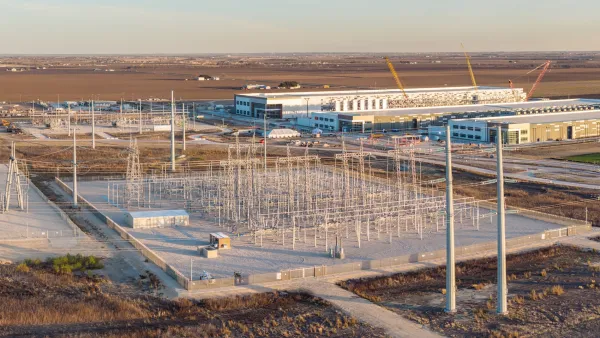
Poll: Low-income Americans resist data centers 5 times as often as high-earning counterparts
A new survey reveals differences between how Americans at various income levels perceive data centers.
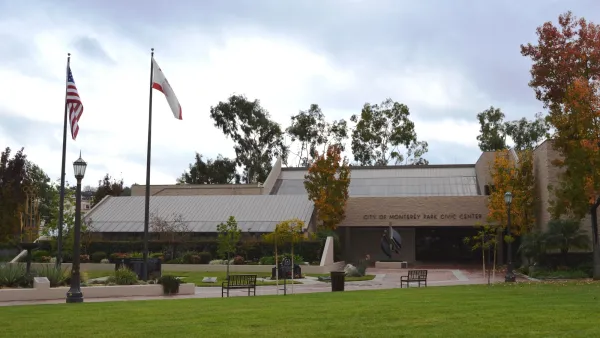
California city permanently bans data centers
A ballot measure to indefinitely ban data centers from Monterey Park was approved by roughly 86% of voters in a special election in June.

Planetizen Federal Action Tracker
A weekly monitor of how Trump’s orders and actions are impacting planners and planning in America.

Amtrak, CN end decades-long dispute with eight-year agreement
The new operating agreement establishes an updated framework for the companies to work together, including processes to resolve disputes.

Northwest rail fans eager for Sept. 30 debut of Amtrak’s Airo fleet
Get ready for that new train smell and more seats. But they won’t go faster or run more frequently on the Cascades route in Washington and Oregon.

NYC to turn city-owned property into thousands of homes
The city has scheduled a public hearing regarding the development for October.

Buses travel at 5mph along this route in NYC. The Bronx's first-ever busway looks to change that
Prior to the busway, buses on the Bx36 route traveled as slowly as 5 miles per hour.

Pittsburg launches 'EZ permits,' aims for one-day turnaround for low-risk permits
The pilot ‘fast lane’ for permits is part of a bundle of modernization efforts for Pittsburg’s permitting process.

FREE Course: Walkable City 1: Why Walkability?
After describing his path towards focusing on walkability as the essence of good planning, Jeff Speck marches through his five principal reasons for making more walkable places.
Reinventing Malls: Planning Alchemy—Turning Gray Fields Into Gold
The course focuses on the opportunities and imperatives that shape reinvention of mall sites.

City of Thousand Oaks
City of Wisconsin Rapids
Harvard University Graduate School of Design
The Architects Foundation
University of Cincinnati Online
The Pocatello Development Authority
The Urban Renewal Agency of the City of Pocatello