A ballot measure to indefinitely ban data centers from Monterey Park was approved by roughly 86% of voters in a special election in June.


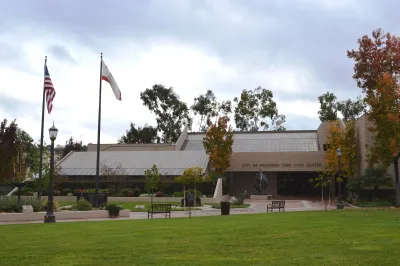
Voters in Monterey Park, California approved a permanent ban on data centers "as a way to protect air quality, drinking water resources, and public health, and to avoid potential impacts to electricity and water rates from the large-scale computing facilities." The small municipality is located in the San Gabriel Valley, just east of Los Angeles.
According to a brief from the Water Education Foundation, "The measure amends the city’s general plan and land use framework to add a citywide ban on data centers, according to city officials."
According to a USA Today article, "The ballot language states that the prohibition will remain in effect unless voters decide to reverse it, giving residents continuing authority over whether such facilities can operate in the city." It is the first city to enact such a ban through a ballot measure.
The measure was prompted in part by growing local opposition to a data center project proposed for a vacant office complex in the city. The city council passed a 45-day moratorium in January, followed by a 10-month extension in March.
FULL STORY: Southern California city votes to permanently ban data centers

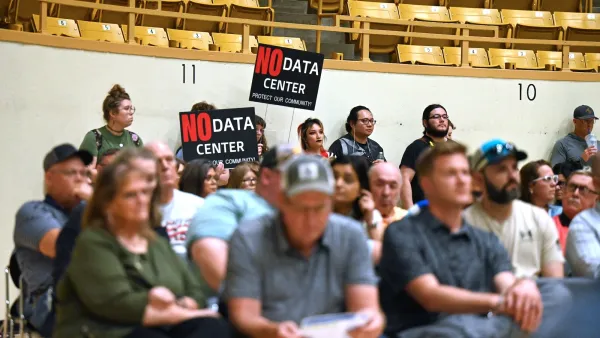
Poll: 75% of Americans oppose data centers near their homes
As they proliferate across the country, data centers face growing backlash from communities concerned about their rapid growth and unknown impacts.
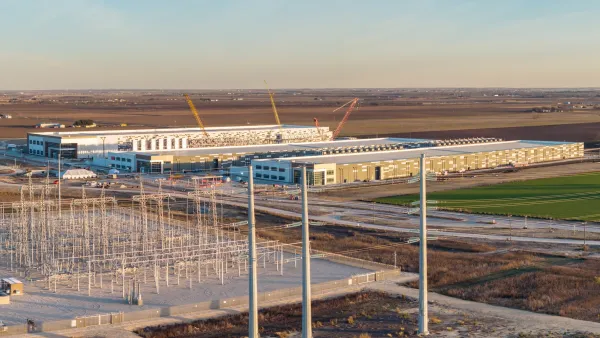
Texas bars data centers from raising utility costs for residents
Gov. Abbott is calling on the state's utility regulator to take steps to reduce energy costs for consumers and ensure data center operators pay for any added costs.
Poll: Low-income Americans resist data centers 5 times as often as high-earning counterparts
A new survey reveals differences between how Americans at various income levels perceive data centers.

Planetizen Federal Action Tracker
A weekly monitor of how Trump’s orders and actions are impacting planners and planning in America.

The state-sanctioned urbicide of Austin
People don’t kill cities. Freeways do.

US to reduce Colorado River water deliveries to Mexico
A new Colorado Treaty amendment reduces Mexico’s Colorado River water allocation by 250,000 acre feet.

Mamdani overhauls NYC's Vision Zero plan with 100 new policy goals
The overhaul aims to reduce traffic deaths and make streets safer for pedestrians, cyclists and drivers through lower speed limits, new safety infrastructure and more.

Amtrak not solely to blame for New Jersey commuter rail's unreliability, report finds
A new study from the Garden State Initiative found that NJ Transit’s budget grew 20% across a 4 year period, but reliability declined significantly over the same period.

EPA erases limits on planet-warming pollution from power plants
Under Monday’s plan, power plants would still have some limits on how much mercury, arsenic and other contaminants they can emit.

FREE Course: Walkable City 1: Why Walkability?
After describing his path towards focusing on walkability as the essence of good planning, Jeff Speck marches through his five principal reasons for making more walkable places.
Reinventing Malls: Planning Alchemy—Turning Gray Fields Into Gold
The course focuses on the opportunities and imperatives that shape reinvention of mall sites.

_02.JPG)
Eagle County Government
Harvard University Graduate School of Design
Nashville Planning Department
The Architects Foundation
University of Cincinnati Online
The Pocatello Development Authority
The Urban Renewal Agency of the City of Pocatello
Journal of the American Planning Association