Leaving rail funding up to annual appropriations threatens to drastically limit its reliability and effectiveness.


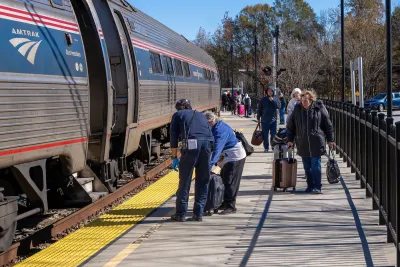
The National Rail Passengers Association is warning that the currently proposed draft of the BUILD America 250 Act would endanger funding for passenger rail and could ultimately lead to a drop of 80% in federal railway funding, writes Kea Wilson in Streetsblog USA.
According to Wilson, "Unlike the Bipartisan Infrastructure Law, which the new bill would theoretically replace when it expires on Sept. 30, BUILD America 250 includes no 'advanced appropriations' for any transportation program not secured by the Highway Trust fund — a $106 billion category which includes all funding for passenger rail." This means rail funding would have to be approved by Congress each year, unlike funds for highway programs.
"Given an annual appropriations process that is more likely to generate an extended government shutdown than pass a bill on time, we can say with a high degree of confidence: there won’t be enough funding," said Sean Jeans-Gail, the NRPA's vice president of government affairs and policy.
FULL STORY: Why BUILD America 250 Would Be Uniquely Bad For Passenger Rail

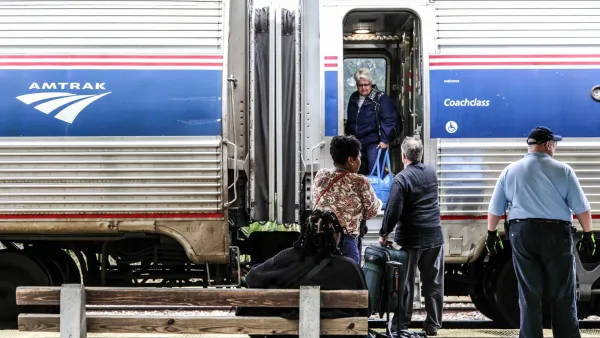
Trump budget slashes passenger rail funding by 82%
The White House's proposed FY2027 budget makes drastic cuts to public transit and eliminates high-speed rail funding altogether.
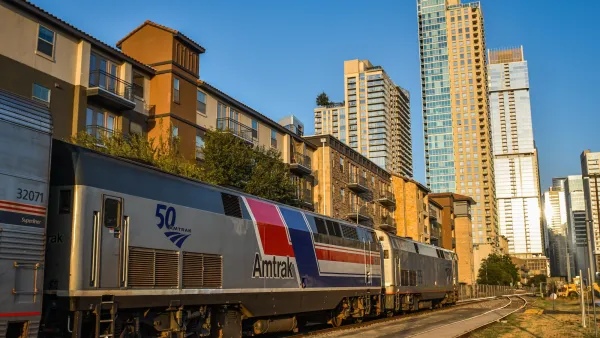
Texas DOT report outlines options for commuter rail between Austin and San Antonio
Amtrak currently operates just one trip per day between the two cities.
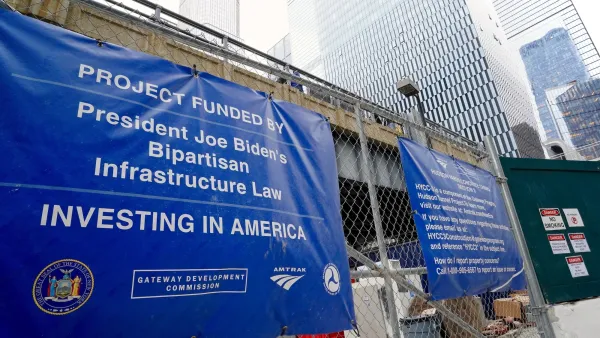
NYC-NJ Gateway Tunnel Project to Stop Work Next Week if DOT Doesn’t Release Funding
The federal government hasn’t released funding frozen during last October’s government shutdown.

Planetizen Federal Action Tracker
A weekly monitor of how Trump’s orders and actions are impacting planners and planning in America.

The state-sanctioned urbicide of Austin
People don’t kill cities. Freeways do.

US to reduce Colorado River water deliveries to Mexico
A new Colorado Treaty amendment reduces Mexico’s Colorado River water allocation by 250,000 acre feet.

5 New England states march closer to 800 megawatt wind energy project
Securing federal approval for the project may be complicated under the Trump administration, which has historically been hostile towards domestic wind power.

Baltimore to break ground on $50 million Transit Priority Project
The project will bring faster bus trips, safer streets and better bike connections to Baltimore.

Airbnb launches $250 million 'last-dollar financing' housing accelerator, makes first investment in Austin
The company will put $6.4 million towards affordable housing development in Texas’ capital.

FREE Course: Walkable City 1: Why Walkability?
After describing his path towards focusing on walkability as the essence of good planning, Jeff Speck marches through his five principal reasons for making more walkable places.
Reinventing Malls: Planning Alchemy—Turning Gray Fields Into Gold
The course focuses on the opportunities and imperatives that shape reinvention of mall sites.

Eagle County Government
Harvard University Graduate School of Design
Nashville Planning Department
The Architects Foundation
University of Cincinnati Online
The Pocatello Development Authority
The Urban Renewal Agency of the City of Pocatello
Journal of the American Planning Association