Southern California cities are adjusting their zoning codes to support mixed-use and residential developments that are replacing dying shopping malls.


In a commentary in The Orange County Register, Byron De Arakal highlights the changing role of the county's shopping malls, many of which have fallen victim to the forces of e-commerce and changing consumer preferences.
According to De Arakal, "Pressed by gargantuan state housing mandates, saddled with upside-down budgets, and dogged by an oversupply of obsolete commercially zoned land, 'mall' cities are wisely ditching their fallow 'fiscal zoning' strategies emphasizing commercial retail zoning in favor of mixed-use zoning that integrates new housing to feed right-sized retail uses focused on daily needs, dining, personal services and entertainment."
In Westminster, a former mall is being transformed into a mixed-use development with 2,250 new housing units. The city adopted a zoning blueprint to establish a framework for the new use, creating new and more stable revenue streams for the county at the same time as new housing and commercial space. "Meanwhile, 380 apartments are under construction on 15 acres of the Brea Mall property once occupied, in part, by the carcass of a long-closed Sears store. City officials, seeking to reboot the mall property’s tax base, paved the way for the project by scuttling the property’s stale commercial designation in its general plan and zoning code in favor of a mixed-use scheme."
De Arakal praises city leaders' initiative and foresight, saying, "It takes vision to shed the old zone-for-sales-tax paradigm in favor of mixed-use planning strategies to revitalize Orange County’s retail relics. But by integrating new homes, daily needs and essential services into a single footprint, OC cities are setting the stage for a built-in customer base that sustains local businesses regardless of broader retail trends."
Read the full story: OC cities smart to rethink zoning strategies on former mall sites

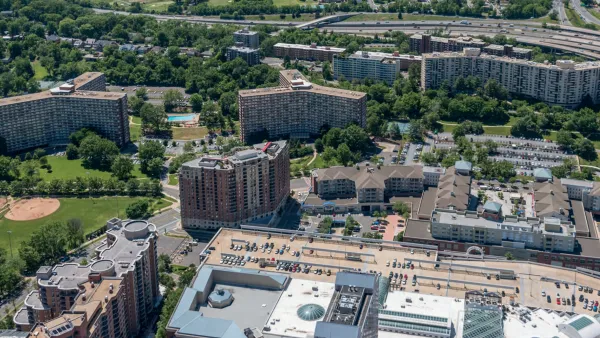
How one Arlington YIMBY used 'homebrew econometrics' to lobby for density
An upzoning proposal for Pentagon City could bring in an additional $8 million to $11 million in tax revenue.

You Can Live Inside America’s Oldest Indoor Shopping Mall
The Arcade in Providence, Rhode Island, first built in 1828, was redeveloped into 48 micro-housing units.
Orange County, Florida Adopts Largest US “Sprawl Repair” Code
The ‘Orange Code’ seeks to rectify decades of sprawl-inducing, car-oriented development.

Planetizen Federal Action Tracker
A weekly monitor of how Trump’s orders and actions are impacting planners and planning in America.

California plans to bury El Niño’s downpour
If the state plays its cards right, it may be able to store a billion acre-feet of El Niño’s water in aquifers.

Chicago breaks ground on $3 billion megadevelopment
The new neighborhood, titled Foundry Park, will one day host 3,700 residences.

Satanic place names
From streams and lakes to valleys and canyons, I mapped more than 1,000 places named after the Devil.

California High-Speed Rail Authority CEO resigns after $600,000 scandal
Under Ian Choudri, the authority used taxpayer dollars to fund first class flights and trips to nightclubs.

Want to study the Missouri River? Soon, you may need unanimous approval from 10 states
Legislation would require 10 governors’ permission to study or build projects moving water outside the basin.

FREE Course: Walkable City 1: Why Walkability?
After describing his path towards focusing on walkability as the essence of good planning, Jeff Speck marches through his five principal reasons for making more walkable places.
Reinventing Malls: Planning Alchemy—Turning Gray Fields Into Gold
The course focuses on the opportunities and imperatives that shape reinvention of mall sites.

City of Rosemead
Rutgers University, Edward J. Bloustein School of Planning and Public Policy
One Hundred Miles
Hunter College, City University of New York (CUNY)
The Architects Foundation
University of Cincinnati Online
City of Cambridge
Montrose County
The Pocatello Development Authority