An upzoning proposal for Pentagon City could bring in an additional $8 million to $11 million in tax revenue.


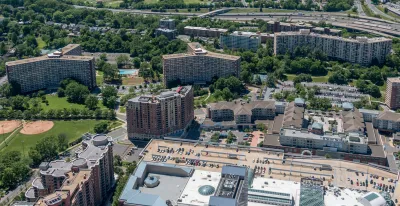
When the Arlington County Board was set to vote on a proposal that would add hundreds of new housing units to Pentagon City, Virginia, Matthew Kowalyk decided to use his background in economics and data analysis to make the case for approving the proposal.
In a piece for Greater Greater Washington, Kowalyk explains how he did it — and how other supporters of density can do the same in their communities. "While turning to numbers isn’t a sure-fire way to persuade people to approve more housing, pointing out the fundamentals of a neighborhood’s conditions might cut through the noise surrounding a development proposal."
For Kowalyk, the "fundamentals" include transportation infrastructure and its capacity for new residents, local housing costs and potential tax revenue. "I did not dive into greenspace, walkways, or other issues because I wanted to focus on the reasons why I believe we need more density in general."
Kowalyk's analysis estimated an $8 million to $11 million increase in tax revenue if the upzoning plan is approved. It also revealed that local transit stations (and their parking lots) are well equipped to handle additional travelers, and that housing costs in the region have increased significantly over the last two decades, pointing to a need for more housing.
Kowalyk admits the limitations of his "homebrew econometrics," but encourages other housing advocates and planners to use the data and resources at their disposal to provide a sober perspective on a city or region's housing challenges.
FULL STORY: How I used friendly neighborhood data science to advocate for housing in Arlington

To upzone or not to upzone? Two views on the housing crisis
Allowing more density can increase the housing supply, but does the attendant rise in land prices cancel out the benefits?

LA delays state housing mandate with 'low-rise ordinance'
The new ordinance allows the city to delay implementing SB 79, a state law requiring more density near transit.

San Diego wants to limit upzoning law to just 16% of transit-adjacent parcels
The city's planning director says some areas are unfit for immediate upzoning due to a lack of resources or hazards such as wildfire risk.

Planetizen Federal Action Tracker
A weekly monitor of how Trump’s orders and actions are impacting planners and planning in America.

The state-sanctioned urbicide of Austin
People don’t kill cities. Freeways do.

US to reduce Colorado River water deliveries to Mexico
A new Colorado Treaty amendment reduces Mexico’s Colorado River water allocation by 250,000 acre feet.

5 New England states march closer to 800 megawatt wind energy project
Securing federal approval for the project may be complicated under the Trump administration, which has historically been hostile towards domestic wind power.

Baltimore to break ground on $50 million Transit Priority Project
The project will bring faster bus trips, safer streets and better bike connections to Baltimore.

Airbnb launches $250 million 'last-dollar financing' housing accelerator, makes first investment in Austin
The company will put $6.4 million towards affordable housing development in Texas’ capital.

FREE Course: Walkable City 1: Why Walkability?
After describing his path towards focusing on walkability as the essence of good planning, Jeff Speck marches through his five principal reasons for making more walkable places.
Reinventing Malls: Planning Alchemy—Turning Gray Fields Into Gold
The course focuses on the opportunities and imperatives that shape reinvention of mall sites.

Eagle County Government
Harvard University Graduate School of Design
Nashville Planning Department
The Architects Foundation
University of Cincinnati Online
The Pocatello Development Authority
The Urban Renewal Agency of the City of Pocatello
Journal of the American Planning Association