Allowing more density can increase the housing supply, but does the attendant rise in land prices cancel out the benefits?


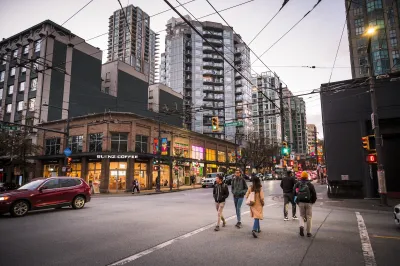
In recent weeks, I have been reading the work of two of the more interesting thinkers on housing costs: Patrick Condon of the University of British Columbia and author Kevin Erdmann of the Mercatus Center (affiliated with George Mason University).
Unlike most housing policy commentators I have read in recent years, Condon does not focus on the United States; instead, he focuses more broadly on the rise in housing costs throughout the Anglosphere, particularly in Vancouver where he lives.
In his 2024 book "Broken City," Condon argues that Vancouver’s rising supply has done nothing to reduce housing costs. He writes that "Vancouver, despite tripling the number of housing units within city limits since 1960, has been rewarded for its effort with the third highest housing prices in the world." Why hasn’t Vancouver’s infill worked? His theoretical logic is that "When the city authorizes a doubling of market density.. the residual land price goes up in response… [thus there is] no substantial decrease in the cost per square foot of new housing."
As readers of this blog know, most arguments against new housing are, in my opinion, easily rebutted. I am not sure this is true of Condon’s argument. Having said that, I am not persuaded, for a few reasons. First, his assumption that land prices increase as fast as density seems arbitrary. I am perfectly prepared to agree that if government allows landowners to build 100% more housing, the cost of land increases by some number more than zero, because developers are willing to pay more for land on which they can build more houses and thus make more money. But why 100% instead of 50% or 25%? Admittedly, land costs have risen in cities that have allowed lots of new housing, but they have also risen in cities that don’t, like New York and San Francisco. Second, his attitude towards the law of supply and demand seems internally inconsistent. If I understand his argument correctly (and maybe I do not) land prices rise on upzoned land because there is more demand for upzoned land. But if demand affects housing costs, why shouldn’t supply?
Third, Condon’s focus on the city of Vancouver overlooks the rest of the Vancouver region. Have Vancouver’s suburbs and exurbs kept up with the central city’s level of housing construction, or have growth management policies kept new housing out of suburbs in order to prevent suburban sprawl? If the latter is the case, regionwide housing production might not have kept up with demand even if central city developers are churning out an enormous number of houses and condos. Fourth, Condon doesn’t compare Vancouver to less expensive Canadian cities. Have Calgary and Edmonton, for example, allowed more housing than Vancouver? If so, this fact might explain why Vancouver is so costly.
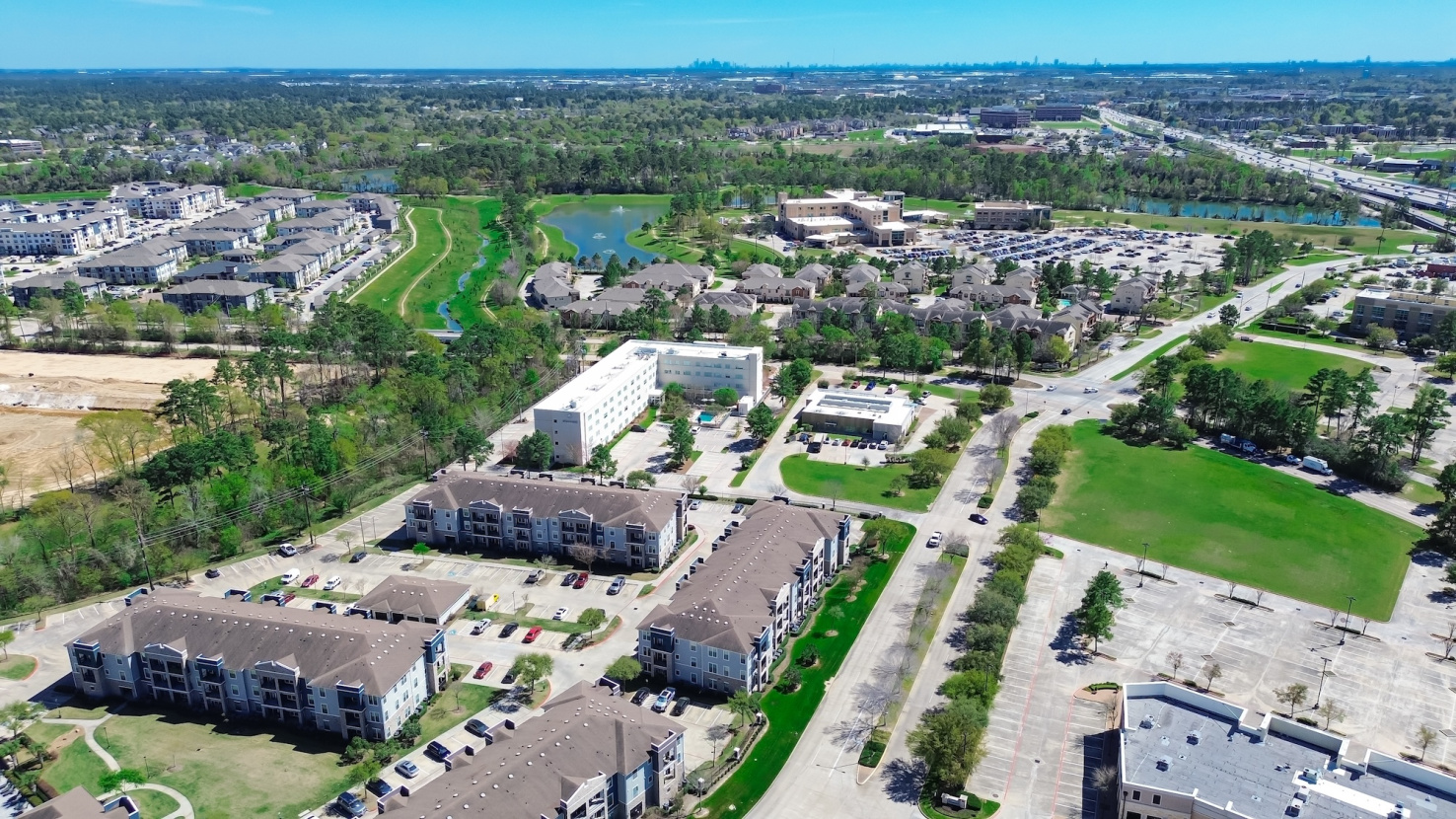
By contrast, Kevin Erdmann, who is most active on Substack, is a strong supporter of the "Yes In My Back Yard" movement — that is, he supports less zoning and more housing. Much of his work is focused on the question: Why did rents rise not just in the "nice" parts of high-cost cities, but also in high-growth cities like Houston? Erdmann describes the latter cities as "Contagion Cities," which implies that as people are priced out of high-cost cities like New York, some of them move to lower-cost cities like Houston, driving up prices in those places.
Erdmann also focuses heavily on the 2008 financial crisis and its impact on housing. In his 2022 book "Building From the Ground Up," he points out that between 2008 and 2019, lending to borrowers with credit scores above 760 nearly doubled, while lending to borrowers with scores between 720 and 760 dropped by 58%. Tighter lending standards "wiped out the buyer’s market for the homes that were already owned by working-class households and wiped out trillions of dollars of life savings in their home equity." As a result, home construction slowed down: Developers won’t build homes in places where buyers can’t get a loan, thus causing home prices to temporarily nosedive in working-class areas.
Erdmann’s view is supported by home completion data. Although the 2008 financial crisis affected both single-family and multi-family housing, the effect on the former was more dramatic: Completions of single-family homes (especially lower-cost single-family homes) still have not reached their 2006 peak, while completions of housing units with more than five units in a building were 64% higher (although still about 40% below their 1973 peak, despite the fact that the U.S. population has grown by about 60% since 1973). And when working-class households are frozen out of homeownership, they crowd the rental housing market, thus raising rental demand even when supply is increasing.
However, Erdmann’s analysis also strikes me as incomplete. He points out that Canada and Australia are"examples of normal construction markets.", which suggests that there was no crackdown on mortgage lending in those countries. If the mortgage crackdown explained rising rents, Canada and Australia would have stable rents. As Condon points out, this has not really been the case. Like Condon, Erdmann’s work suggests avenues for further research, even if it does not explain everything.
—
Michael Lewyn is a professor at Touro University, Jacob D. Fuchsberg Law Center, in Long Island. His scholarship can be found at http://works.bepress.com/lewyn.

Report Shows San Francisco’s ‘Family Zoning’ Plan Would Produce Less Than Half of Needed Housing Units
The city’s economic analysis reveals that a rezoning proposal would yield from 8,504 to 14,646 units, well below the number required by the state.

San Francisco Mayor’s ‘Family Zoning’ Plan Faces Pushback, Displacement Concerns
Newly proposed legislation aims to protect long-term tenants from displacement caused by Mayor Lurie’s proposed zoning reform plan, which would allow for more housing construction in parts of the city.
‘Montana Miracle:’ The State Actually Succeeding at Housing Reform
A series of ambitious zoning reforms is having a significant impact on the state’s housing supply.

Planetizen Federal Action Tracker
A weekly monitor of how Trump’s orders and actions are impacting planners and planning in America.

Amtrak, CN end decades-long dispute with eight-year agreement
The new operating agreement establishes an updated framework for the companies to work together, including processes to resolve disputes.

Northwest rail fans eager for Sept. 30 debut of Amtrak’s Airo fleet
Get ready for that new train smell and more seats. But they won’t go faster or run more frequently on the Cascades route in Washington and Oregon.

Trump administration unlawfully slashed $7 billion in clean energy grants, judge rules
The Environmental Protection Agency ended the Solar For All program, which provided the grants, after President Donald Trump’s inauguration.

Record-breaking wildlife overpass in Colorado brings 91% reduction in animal collisions
Prior to the overpass, vehicles were hitting one deer per day on Colorado’s Interstate 25.

California lawmakers approve just 5% of much-needed LA28 transportation funding
State legislators appear just as unwilling as Trump to pay for Olympics-related transportation projects.

FREE Course: Walkable City 1: Why Walkability?
After describing his path towards focusing on walkability as the essence of good planning, Jeff Speck marches through his five principal reasons for making more walkable places.
Reinventing Malls: Planning Alchemy—Turning Gray Fields Into Gold
The course focuses on the opportunities and imperatives that shape reinvention of mall sites.

City of Thousand Oaks
City of Wisconsin Rapids
Harvard University Graduate School of Design
The Architects Foundation
University of Cincinnati Online
The Pocatello Development Authority
The Urban Renewal Agency of the City of Pocatello

