A compelling story of a fast-growing, polycentric region grappling with identity and affordability, Susan Henderson reframes CNU 34 as a hands-on workshop, inviting planners to explore Northwest Arkansas as it decides what it will become.


Regionalism often sounds tidy in theory of shared systems and shared goals, but in practice it raises a harder question: can a region grow together without losing the distinct places that give it meaning?
Northwest Arkansas will host the Congress for the New Urbanism’s 34th annual gathering, offering more than a conference venue: it presents a rare, real-time test of how a fast-growing region decides what it wants to become. As Susan Henderson observes, the region is “one of the fastest growing… and one of the few still deciding what that growth should look like,” making it a timely and consequential setting for this year’s Congress.
Henderson portrays Northwest Arkansas not as a single corridor, but as a polycentric “family of centers,” where Bentonville, Fayetteville, Rogers, and Springdale each assert distinct identities alongside smaller towns and rural landscapes. Her accompanying photography reinforces this argument visually, capturing everything from revitalized downtown blocks to working landscapes, offering readers a grounded sense of place that goes beyond planning theory. Together, the images and text make a compelling case for exploring these communities firsthand, whether it’s Bentonville’s evolving urban fabric, Fayetteville’s college-town vitality, or the quieter resilience of towns like Prairie Grove and Lincoln.
The stakes of this regional experiment are rising. With a population projected to surpass one million by 2050, Northwest Arkansas faces mounting pressures, including housing affordability, infrastructure demands, and loss of green space. Henderson underscores that “the region is not merely growing. It is being tested,” pointing to sharp increases in rents and home prices as evidence.
Regional planning efforts led by DPZ CoDesign, PlaceMakers, and Crafton Tull emphasize preserving distinct centers and rural edges to avoid what Henderson calls “growth without community.” CNU 34 reflects this focus, with programming spread across multiple locations and centered on applying the Transect at a regional scale.
In Henderson’s framing, Northwest Arkansas is not just hosting the Congress, it is “the workshop,” where attendees can experience, block by block, how growth decisions shape community outcomes in real time.
FULL STORY: Growth Without Sameness

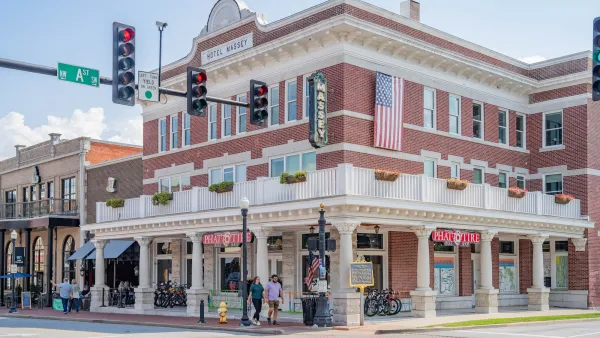
A New Urbanist’s roadtrip guide to Northwest Arkansas
Heading to the CNU conference next month? A Northwest Arkansas urban planner has custom designed a roadtrip just for you.
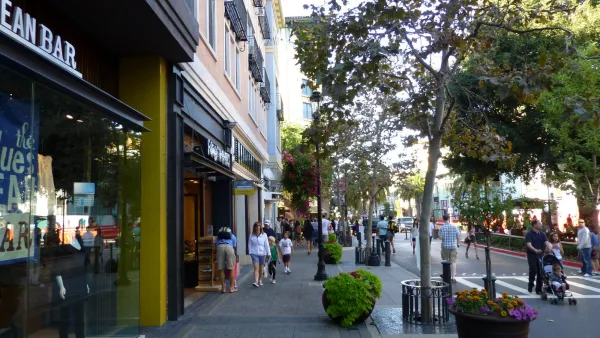
Can Urbanist Islands Make a Difference Where Sprawl Reigns?
The product of a single developer, San Jose's Santana Row is a pocket of urbanism in a sea of sprawl. But can it influence development patterns beyond its bounds, and should it?

Study: Americans Spending Less Time Interacting in Public Space
American pedestrians are moving faster and spending less time connecting with other people when walking down city streets.

The state-sanctioned urbicide of Austin
People don’t kill cities. Freeways do.

US to reduce Colorado River water deliveries to Mexico
A new Colorado Treaty amendment reduces Mexico’s Colorado River water allocation by 250,000 acre feet.

New Jersey’s second-largest city bans standalone data centers
Jersey City will continue to allow co-location facilities, such as those meant for research institutions that store their own data.

Amtrak not solely to blame for New Jersey commuter rail's unreliability, report finds
A new study from the Garden State Initiative found that NJ Transit’s budget grew 20% across a 4 year period, but reliability declined significantly over the same period.

EPA erases limits on planet-warming pollution from power plants
Under Monday’s plan, power plants would still have some limits on how much mercury, arsenic and other contaminants they can emit.

Phoenix announces new on-demand transit service, more frequent RAPID buses
Both new services will launch in October, and are part of Phoenix's Project Effective Access Solutions for Easing Congestion.

FREE Course: Walkable City 1: Why Walkability?
After describing his path towards focusing on walkability as the essence of good planning, Jeff Speck marches through his five principal reasons for making more walkable places.
Reinventing Malls: Planning Alchemy—Turning Gray Fields Into Gold
The course focuses on the opportunities and imperatives that shape reinvention of mall sites.

Eagle County Government
Harvard University Graduate School of Design
Nashville Planning Department
The Architects Foundation
University of Cincinnati Online
The Pocatello Development Authority
The Urban Renewal Agency of the City of Pocatello
Journal of the American Planning Association