At the turn of the 20th century, moving sidewalks promised efficient, comfortable movement of pedestrians. Then cars took over.


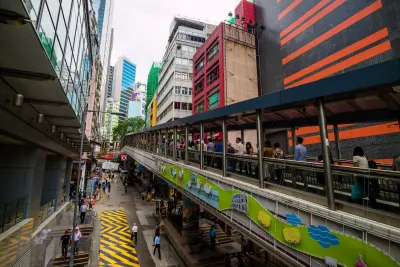
Despite making its debut almost a century and a half ago at the 1893 Chicago World's Fair, the moving sidewalk hasn't made much headway in the modern world outside of airports and theme parks.
An article by Bill Gourgey in Popular Science traces the history of the moving sidewalk concept and its various applications since it was first invented. One of its early champions, Alfred Speer, first proposed an elevated moving sidewalk on New York City's Broadway as a solution to congestion. "Today, a confluence of factors, including aging populations in need of mobility assistance, the spread of 'complete streets' to establish more car-free zones, and the climate-driven pressure to rethink mass transit, may be creating favorable conditions for new versions of Speer’s vision."
Cities and companies have made various attempts at using moving sidewalks with varied degrees of success. Ultimately, they have found their niche in airports, theme parks, and other contained places with limited destinations. Today, Hong Kong's Central-Mid-Levels Escalator, which connects hillside neighborhoods with the city center, is the world's longest covered escalator system.
FULL STORY: In 1871, cities almost got moving sidewalks. Why are we still waiting?

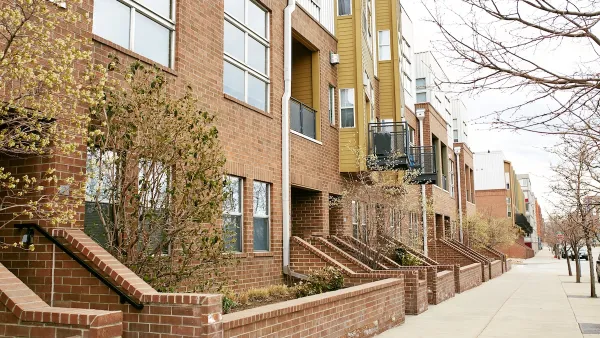
Denver to Shift Sidewalk Repair Work to City, Funded by Property Owners
The city is shifting from a piecemeal approach to sidewalk repairs that charged property owners with doing the work to a more streamlined, city-led process.
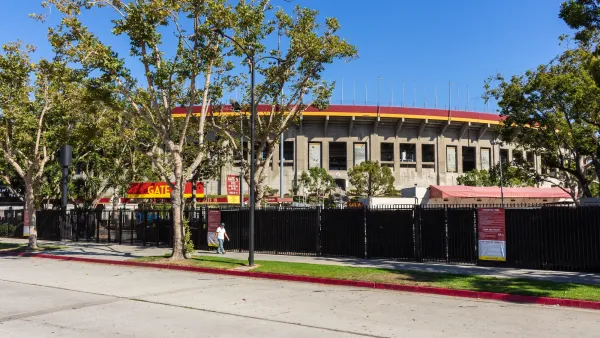
LA authorizes $9.5M for sidewalk repairs around Olympic venues
The city is hosting the Olympic and Paralympic Games in 2028.
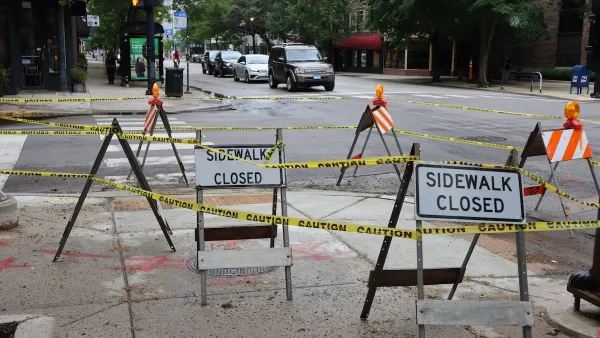
Chicago Residents Sue City Over Inaccessible Sidewalks
The suit alleges the city has failed to create a “coordinated, proactive system” for complying with ADA and ensuring accessibility on the city’s sidewalks and crosswalks.

Planetizen Federal Action Tracker
A weekly monitor of how Trump’s orders and actions are impacting planners and planning in America.

The state-sanctioned urbicide of Austin
People don’t kill cities. Freeways do.

US to reduce Colorado River water deliveries to Mexico
A new Colorado Treaty amendment reduces Mexico’s Colorado River water allocation by 250,000 acre feet.

5 New England states march closer to 800 megawatt wind energy project
Securing federal approval for the project may be complicated under the Trump administration, which has historically been hostile towards domestic wind power.

Baltimore to break ground on $50 million Transit Priority Project
The project will bring faster bus trips, safer streets and better bike connections to Baltimore.

Airbnb launches $250 million 'last-dollar financing' housing accelerator, makes first investment in Austin
The company will put $6.4 million towards affordable housing development in Texas’ capital.

FREE Course: Walkable City 1: Why Walkability?
After describing his path towards focusing on walkability as the essence of good planning, Jeff Speck marches through his five principal reasons for making more walkable places.
Reinventing Malls: Planning Alchemy—Turning Gray Fields Into Gold
The course focuses on the opportunities and imperatives that shape reinvention of mall sites.

Eagle County Government
Harvard University Graduate School of Design
Nashville Planning Department
The Architects Foundation
University of Cincinnati Online
The Pocatello Development Authority
The Urban Renewal Agency of the City of Pocatello
Journal of the American Planning Association