Rhode Island transit riders are being forced into hours-long commutes after RIPTA drastically reduced service last fall.


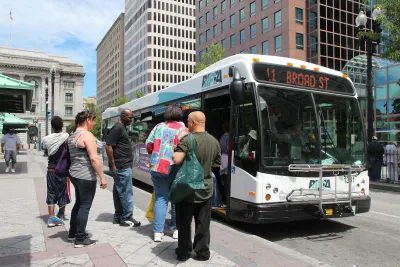
Service cuts made by the Rhode Island Public Transit Authority (RIPTA) last fall are having major impacts on riders, forcing some into much longer commutes or even changing jobs, reports Ben Berke for Ocean State Media.
As part of the cuts, “45 of RIPTA’s 63 routes saw reductions in service, which RIPTA CEO Christopher Durand described as the largest service cut in the agency’s 59-year history. Ridership across the system quickly dropped 12%, according to RIPTA.”
The cuts were made to help the agency achieve financial stability and amounted to roughly $4.4 million in annual savings, less than 3 percent of the agency’s total budget and 0.03 percent of the state’s budget. But it has had significant negative effects on residents who rely on transit. “In interviews conducted on bus routes across Rhode Island, Ocean State Media heard from riders who lost hours of free time, reduced their working hours, or started paying for Uber and Lyft rides that eat up much of their earnings.”
Read the full story: Bus cuts reroute daily life for Rhode Island riders


Cash-Strapped RIPTA Unveils Massive Cuts to Bus Service Across the State
Just 9 bus routes untouched as agency proposes to slash trips but CEO remains mum on potential layoffs.

Rhode Island Transit Expanding On-demand Microtransit Program
RIPTA’s Flex On Demand program replaces scheduled stops on some of its bus lines with a curb-to-curb microtransit service.
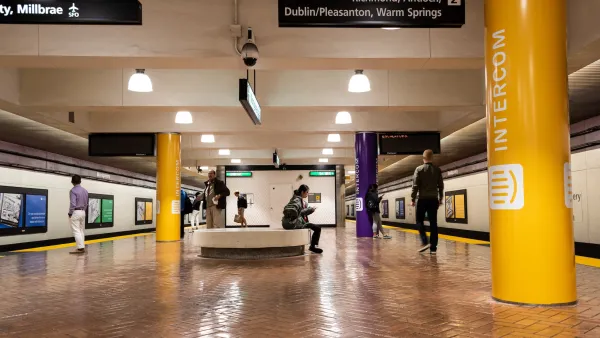
BART Announces Major Service Cuts, Fare Increases in Face of $376M Deficit
If a November ballot measure fails to bring new funding, BART’s ‘alternative service plan’ would reduce frequencies to 30 minutes, raise fares by 30%, and close up to 15 stations.

Planetizen Federal Action Tracker
A weekly monitor of how Trump’s orders and actions are impacting planners and planning in America.

California plans to bury El Niño’s downpour
If the state plays its cards right, it may be able to store a billion acre-feet of El Niño’s water in aquifers.

Desperate measures: Advocates weigh draining Lake Powell to fill Colorado River
Draining the reservoir could reduce evaporation losses by a couple hundred thousand acre-feet.

California city breaks ground on transit connector
The project includes three mobility hubs and a pedestrian bridge.

After public outcry, Massachusetts city releases housing development tracker
Cambridge’s tracker currently shows 250 housing projects in various stages of development.

40 years after approval, Chicago breaks ground on new park
The park honors Jean Baptiste Point du Sable, the city’s first permanent non-native settler.

FREE Course: Walkable City 1: Why Walkability?
After describing his path towards focusing on walkability as the essence of good planning, Jeff Speck marches through his five principal reasons for making more walkable places.
Reinventing Malls: Planning Alchemy—Turning Gray Fields Into Gold
The course focuses on the opportunities and imperatives that shape reinvention of mall sites.

City of Rosemead
Rutgers University, Edward J. Bloustein School of Planning and Public Policy
One Hundred Miles
Hunter College, City University of New York (CUNY)
The Architects Foundation
University of Cincinnati Online
City of Cambridge
Montrose County
The Pocatello Development Authority