The agency is retooling a plan to modernize its aging bus depots after the Trump administration decided to freeze nearly $324 million in grants.


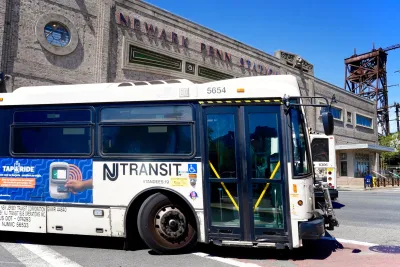
The NJ Transit agency is scaling back its efforts to electrify its fleet after the federal government froze millions in funding, reports Colleen Wilson for NorthJersey.com.
As Wilson explains, “NJ Transit secured nearly $324 million in federal funds between 2020 and 2024 to modernize four bus garages in North Jersey, in part so they would be equipped to handle electric buses.” NJ Transit planned to modernize its garages before expanding its electric fleet to avoid range problems and other issues faced by other transit agencies.
Now, federal funding is frozen, and the plan is on hold. “To unlock these frozen funds, NJ Transit devised a plan to shift some federal dollars to cover upgrades on the garages without electric vehicle investments.” According to NJ Transit President and CEO Kris Kolluri, “We are adapting to policy changes, technology changes, but in no way are we moving away from the state mandate of an eventual goal of zero-emissions.”
Editor's Note: The headline for this article was updated to reflect that NJ Transit has not halted its electrification strategy, but is shifting resources to align with federal requirements.
Read the full story: NJ Transit planned electric bus expansion. Then Trump stepped in

US Transit Fleets Have Bought Over 8,000 Zero-emission Buses
The number of zero-emission transit vehicles grew by 16 percent between 2024 and 2025.
Madison’s Electric Buses Keep Running Through Brutal Freeze
A late January winter storm offered a key test for electric buses that often falter in cold temperatures.
USDOT Announces $2B in Grants for Transit Buses, Favoring Hybrids Over Electric Options
The new round of grants for buses and facility upgrades doesn’t include any for battery-electric buses, favoring instead diesel-electric hybrids and CNG buses.

Planetizen Federal Action Tracker
A weekly monitor of how Trump’s orders and actions are impacting planners and planning in America.

California plans to bury El Niño’s downpour
If the state plays its cards right, it may be able to store a billion acre-feet of El Niño’s water in aquifers.

Chicago breaks ground on $3 billion megadevelopment
The new neighborhood, titled Foundry Park, will one day host 3,700 residences.

Satanic place names
From streams and lakes to valleys and canyons, I mapped more than 1,000 places named after the Devil.

California High-Speed Rail Authority CEO resigns after $600,000 scandal
Under Ian Choudri, the authority used taxpayer dollars to fund first class flights and trips to nightclubs.

Want to study the Missouri River? Soon, you may need unanimous approval from 10 states
Legislation would require 10 governors’ permission to study or build projects moving water outside the basin.

FREE Course: Walkable City 1: Why Walkability?
After describing his path towards focusing on walkability as the essence of good planning, Jeff Speck marches through his five principal reasons for making more walkable places.
Reinventing Malls: Planning Alchemy—Turning Gray Fields Into Gold
The course focuses on the opportunities and imperatives that shape reinvention of mall sites.

City of Rosemead
Rutgers University, Edward J. Bloustein School of Planning and Public Policy
One Hundred Miles
Hunter College, City University of New York (CUNY)
The Architects Foundation
University of Cincinnati Online
City of Cambridge
Montrose County
The Pocatello Development Authority