The number of zero-emission transit vehicles grew by 16 percent between 2024 and 2025.


Public transit fleets across the country are steadily adopting more zero-emission vehicles despite supply chain challenges, with the number of ZEBs in transit fleets surpassing 8,000 as of July 2025.
According to an article by Alex Roman in Metro Magazine, the latest Zeroing in on ZEBs report from CALSTART shows that “As of July 2025, a total of 8,116 full-size ZEBs have been funded, ordered, delivered, or deployed, representing 16% growth over the July 2024 count. Nearly 1,400 small ZEBs have been adopted nationwide, representing 20% of year-over-year growth.”
California leads the nation with 1,933 battery-electric buses and 690 fuel cell electric buses, followed by New York, Washington, Florida, and Massachusetts. While battery-powered buses remain dominant in the field, more transit authorities are also buying fuel cell electric buses, which surged 49 percent nationwide during the reporting period.
“Mike Hynes, deputy director of transit at CALSTART, told METRO that it is a positive step that the U.S. transit industry continues to make measurable progress in adopting ZEBs, even as agencies navigate ongoing procurement and manufacturing challenges.” According to Hynes, agencies are “taking a more strategic approach to fleet modernization, assessing their operational needs first and then determining which propulsion technologies best fit those requirements” rather than relying on a single technology.
FULL STORY: U.S. Zero-Emission Bus Adoption Surpasses 8,000 Vehicles

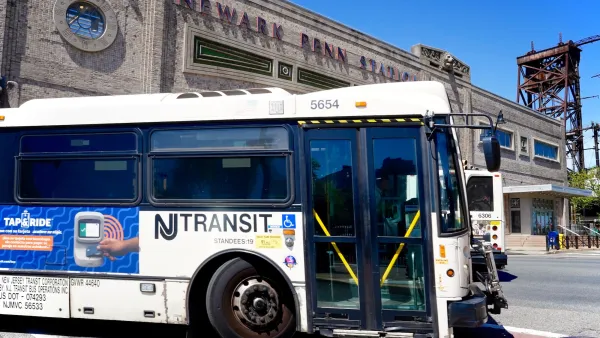
Facing Federal Funding Freeze, NJ Transit Revises Zero-emission Plan
The agency is retooling a plan to modernize its aging bus depots after the Trump administration decided to freeze nearly $324 million in grants.
10 States Follow Through on Promise to Put 3.3 Million EVs on the Road
Rebate programs are at the heart of collaborative success.
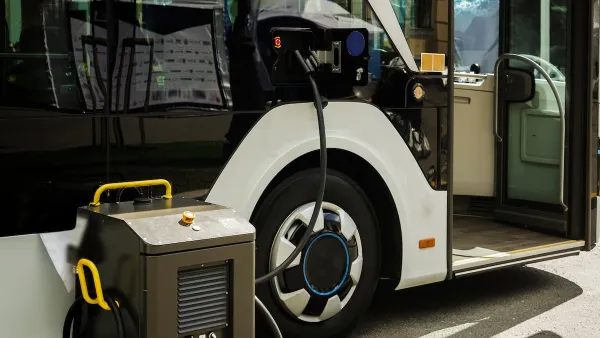
Zero-Emission Bus Fleets Grow, But Federal Funding Is in Jeopardy
Transit agencies around the country have purchased over 7,000 zero-emission buses, but a federal program that funds the shift could be eliminated under the new administration.

The state-sanctioned urbicide of Austin
People don’t kill cities. Freeways do.

US to reduce Colorado River water deliveries to Mexico
A new Colorado Treaty amendment reduces Mexico’s Colorado River water allocation by 250,000 acre feet.

New Jersey’s second-largest city bans standalone data centers
Jersey City will continue to allow co-location facilities, such as those meant for research institutions that store their own data.

Amtrak not solely to blame for New Jersey commuter rail's unreliability, report finds
A new study from the Garden State Initiative found that NJ Transit’s budget grew 20% across a 4 year period, but reliability declined significantly over the same period.

EPA erases limits on planet-warming pollution from power plants
Under Monday’s plan, power plants would still have some limits on how much mercury, arsenic and other contaminants they can emit.

Phoenix announces new on-demand transit service, more frequent RAPID buses
Both new services will launch in October, and are part of Phoenix's Project Effective Access Solutions for Easing Congestion.

FREE Course: Walkable City 1: Why Walkability?
After describing his path towards focusing on walkability as the essence of good planning, Jeff Speck marches through his five principal reasons for making more walkable places.
Reinventing Malls: Planning Alchemy—Turning Gray Fields Into Gold
The course focuses on the opportunities and imperatives that shape reinvention of mall sites.

Eagle County Government
Harvard University Graduate School of Design
Nashville Planning Department
The Architects Foundation
University of Cincinnati Online
The Pocatello Development Authority
The Urban Renewal Agency of the City of Pocatello
Journal of the American Planning Association