When measured per capita, traffic fatalities in the United States far outstrip those in peer countries.


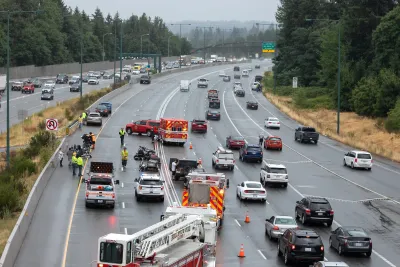
Writing in Bloomberg CityLab, David Zipper argues that the United States is using the wrong method to count traffic deaths.
Unlike most other countries, the United States reports traffic deaths as compared to vehicle miles traveled (VMT). But when you look at deaths per capita, the United States has more than twice as many road fatalities as peer countries.
“In the US, many transportation professionals favor this deaths-per-distance metric, because it supposedly accounts for uniquely American factors like the country’s physical enormity, the scale of national infrastructure and residents’ “love affair” with the automobile,” Zipper explains. But this analysis obscures the real costs of traffic violence and normalizes crash fatalities.
According to Zipper,
Worse than misleading, normalizing crash fatalities by distance driven avoids acknowledging essential reasons why people in the US are killed on the road with such startling frequency — and it precludes opportunities to change course.
Zipper explains that individual choices such as taking transit or choosing a job closer to home can reduce the amount of miles driven and, therefore, the likelihood of getting in a crash. “But viewed through the myopic lens of deaths per mile, neither change would seem to affect safety, since the risk of crashing during a given mile of driving is unaffected.”
The car-centric design of most U.S. communities is a major reason for the massive number of traffic deaths each year — but there are opportunities to make a difference by changing single-use zoning, eliminating free parking, and supporting public transit, for example. “These are not immutable conditions; they are the direct result of policy choices that are inducing Americans to drive more — and to crash more, too.”
FULL STORY: The US Is Counting Traffic Deaths Wrong

Pedestrian Deaths Fell by Largest Percentage in 15 Years, but Remain Above Pre-Pandemic Levels
After a spike in deaths during the Covid-19 years, road deaths fell to 3,024 in the first half of 2025.
US Traffic Deaths Fell by 12% in One Year. How Did it Happen?
Biden-era investment in safe streets, shifts in travel patterns brought on by the pandemic, and increased traffic enforcement are all possible reasons why traffic deaths dropped significantly between 2024 and 2025.
Nevada’s Highway Safety Plan Targets 35% Drop in Traffic Deaths by 2035
The 2026-2030 plan aims to reduce deaths and serious injuries with a long-term goal of eliminating traffic deaths by 2050.

Planetizen Federal Action Tracker
A weekly monitor of how Trump’s orders and actions are impacting planners and planning in America.

The state-sanctioned urbicide of Austin
People don’t kill cities. Freeways do.

US to reduce Colorado River water deliveries to Mexico
A new Colorado Treaty amendment reduces Mexico’s Colorado River water allocation by 250,000 acre feet.

Mamdani overhauls NYC's Vision Zero plan with 100 new policy goals
The overhaul aims to reduce traffic deaths and make streets safer for pedestrians, cyclists and drivers through lower speed limits, new safety infrastructure and more.

Amtrak not solely to blame for New Jersey commuter rail's unreliability, report finds
A new study from the Garden State Initiative found that NJ Transit’s budget grew 20% across a 4 year period, but reliability declined significantly over the same period.

EPA erases limits on planet-warming pollution from power plants
Under Monday’s plan, power plants would still have some limits on how much mercury, arsenic and other contaminants they can emit.

FREE Course: Walkable City 1: Why Walkability?
After describing his path towards focusing on walkability as the essence of good planning, Jeff Speck marches through his five principal reasons for making more walkable places.
Reinventing Malls: Planning Alchemy—Turning Gray Fields Into Gold
The course focuses on the opportunities and imperatives that shape reinvention of mall sites.

Eagle County Government
Harvard University Graduate School of Design
Nashville Planning Department
The Architects Foundation
University of Cincinnati Online
The Pocatello Development Authority
The Urban Renewal Agency of the City of Pocatello
Journal of the American Planning Association