Several other Dutch cities have banned advertising for harmful or polluting industries on city-owned properties.


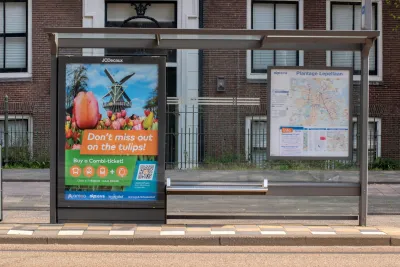
Amsterdam is poised to become the first world capital to ban advertising for fossil fuels, meat, and “highly polluting” services such as air travel, cruises, and cars on city-owned properties, reports Diane Hernández for Voz.
Amsterdam joins eight other Dutch cities with similar policies. “According to a report from the city, the ban will apply to public spaces under municipal control, including streets, subway and train stations, bus shelters and street furniture. The stated aim is to ‘reduce the promotion of activities that contribute to the climate crisis and negative impacts on animal health and welfare.’”
The move builds on a 2025 Dutch judicial ruling that allows municipalities to ban ads deemed harmful to public health and the climate.
FULL STORY: Amsterdam will be the first capital city in the world to ban meat and fossil fuel advertising


NYC Congestion Pricing Revenue Will Fund up to 1,000 Hybrid Refrigerated Trucks
Traffic to the Hunts Point Produce Market causes increased rates of asthma in surrounding neighborhoods.
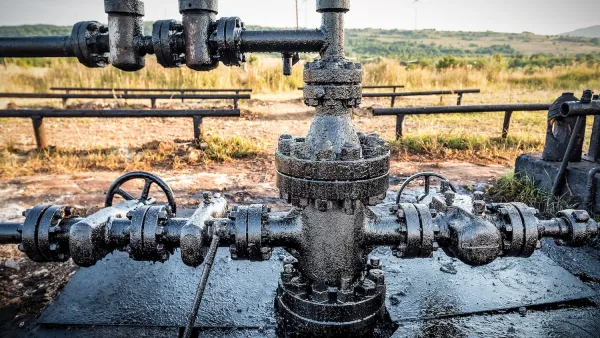
Mapping Groundwater Risks from Orphan Wells Across U.S. Aquifers
A new USGS study reveals that more than half of the nation’s documented orphan wells lie within aquifers supplying the vast majority of U.S. groundwater, posing widespread risks of contamination from aging, unplugged infrastructure.
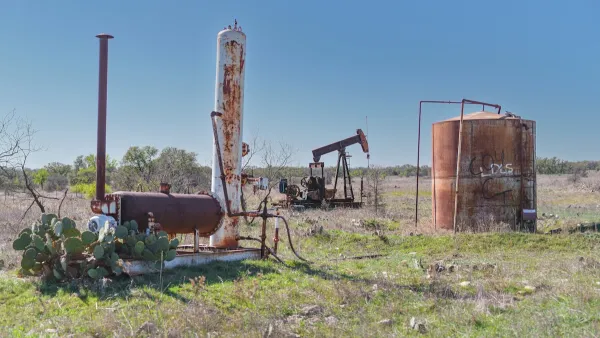
Using Old Oil and Gas Wells for Green Energy Storage
Penn State researchers have found that repurposing abandoned oil and gas wells for geothermal-assisted compressed-air energy storage can boost efficiency, reduce environmental risks, and support clean energy and job transitions.

Planetizen Federal Action Tracker
A weekly monitor of how Trump’s orders and actions are impacting planners and planning in America.

The state-sanctioned urbicide of Austin
People don’t kill cities. Freeways do.

US to reduce Colorado River water deliveries to Mexico
A new Colorado Treaty amendment reduces Mexico’s Colorado River water allocation by 250,000 acre feet.

Mamdani overhauls NYC's Vision Zero plan with 100 new policy goals
The overhaul aims to reduce traffic deaths and make streets safer for pedestrians, cyclists and drivers through lower speed limits, new safety infrastructure and more.

Amtrak not solely to blame for New Jersey commuter rail's unreliability, report finds
A new study from the Garden State Initiative found that NJ Transit’s budget grew 20% across a 4 year period, but reliability declined significantly over the same period.

EPA erases limits on planet-warming pollution from power plants
Under Monday’s plan, power plants would still have some limits on how much mercury, arsenic and other contaminants they can emit.

FREE Course: Walkable City 1: Why Walkability?
After describing his path towards focusing on walkability as the essence of good planning, Jeff Speck marches through his five principal reasons for making more walkable places.
Reinventing Malls: Planning Alchemy—Turning Gray Fields Into Gold
The course focuses on the opportunities and imperatives that shape reinvention of mall sites.

Eagle County Government
Harvard University Graduate School of Design
Nashville Planning Department
The Architects Foundation
University of Cincinnati Online
The Pocatello Development Authority
The Urban Renewal Agency of the City of Pocatello
Journal of the American Planning Association