Gov. Hochul will introduce legislation to set up a framework for deploying autonomous cars in one of the nation’s most restrictive markets.


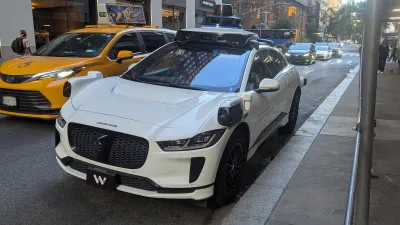
New York Governor Kathy Hochul announced plans to create a regulatory framework for autonomous taxis in areas of the state outside of New York City.
As Maya Perez explains in an article for WebProNews, “The legislation, set to be introduced in the coming weeks, would enable limited pilots in smaller cities and rural areas, with the possibility of scaling up to full commercial operations.” New York City is excluded because of its “unique challenges, including heavy traffic, pedestrian volumes, and intricate infrastructure.”
“Industry experts view this as a significant step forward for autonomous vehicle adoption in one of the country’s most restrictive jurisdictions.” The shift is in line with emerging federal guidelines that could preempt state regulations.
Acording to Perez, “Implementation timelines suggest pilots could launch by mid-2026, pending legislative approval. Companies must submit detailed safety plans, including emergency protocols and human override mechanisms for initial phases.”
Read the full story: New York Governor Proposes Statewide Robotaxi Expansion, Excluding NYC
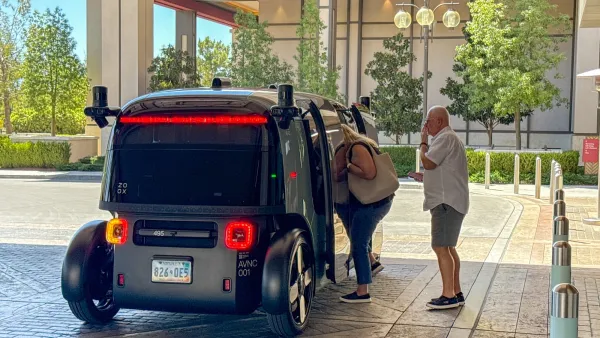
Amazon's Zoox recalls robotaxis after failure to recognize active fire scene
The car did not register the thick smoke as it drove into a fire scene.
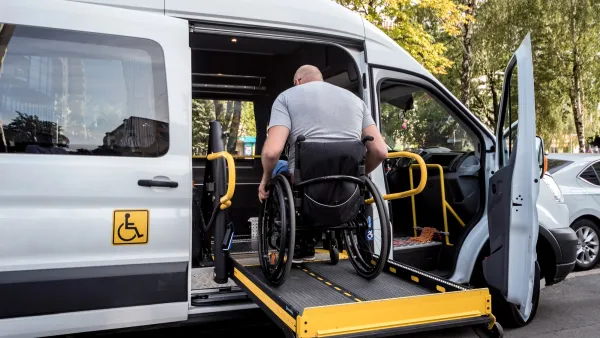
DC's robotaxi bill stays silent on accessibility
A 24-page bill addresses safety, permitting and consumer rights — but fails to mention wheelchairs or accessible vehicles.

Uber promises to bring robotaxis to Houston in 2027
Nuro, an Uber partner, has received permits to test its self-driving cars in Texas and California.

California plans to bury El Niño’s downpour
If the state plays its cards right, it may be able to store a billion acre-feet of El Niño’s water in aquifers.

Desperate measures: Advocates weigh draining Lake Powell to fill Colorado River
Draining the reservoir could reduce evaporation losses by a couple hundred thousand acre-feet.

Eastern Nebraska is running out of electricity
Data centers and electrification are straining eastern Nebraska’s grid, throttling economic development.

SpaceXAI may be fined $6 million for data center lacking water permits
A Mississippi agency also responds after a federal judge criticized the state’s Clean Air Act enforcement.

Housing is the top priority of Seattle’s sole new councilmember
Jenks campaigned on building 1,000 new units of affordable housing.

New tax cuts may slash $1.5 billion in funding for Miami transit, public parks
Amendment 3 will save Miami-Dade homeowners $2,700 in 2028.

FREE Course: Walkable City 1: Why Walkability?
After describing his path towards focusing on walkability as the essence of good planning, Jeff Speck marches through his five principal reasons for making more walkable places.
Reinventing Malls: Planning Alchemy—Turning Gray Fields Into Gold
The course focuses on the opportunities and imperatives that shape reinvention of mall sites.

City of Rosemead
Rutgers University, Edward J. Bloustein School of Planning and Public Policy
One Hundred Miles
University of Michigan School for Environment and Sustainability (SEAS)
Hunter College, City University of New York (CUNY)
The Architects Foundation
City of Cambridge
Montrose County
The Pocatello Development Authority