A 24-page bill addresses safety, permitting and consumer rights — but fails to mention wheelchairs or accessible vehicles.


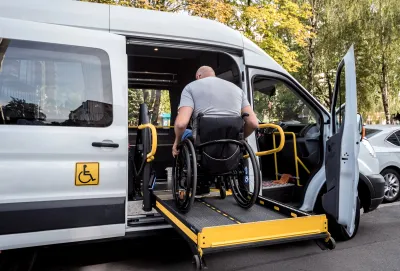
A new Washington D.C. bill proposes a vast set of regulations for robotaxis — but accessibility is not a significant part of it, writes Michael Kahn in The Weekly Driver.
According to Kahn, "The Autonomous Vehicle Deployment Authorization Amendment Act of 2026, introduced May 1 by Ward 6 Councilmember Charles Allen, contains exactly one disability provision, at lines 251 through 253. It requires an app."
As Kahn explains, "A rider in a power wheelchair can use that app. What arrives at the curb will not fit the chair." The bill does not mandate accessible vehicles. "No operator anywhere offers fully driverless wheelchair-accessible service today. Waymo’s accessible vans are driven by humans, a fact Waymo states in its own rider help pages."
For Kahn, "Technology that was supposed to be transformative for disabled people is arriving under laws that guarantee it won’t be."
Read the full story: DC’s Robotaxi Bill Never Says the Word “Wheelchair”

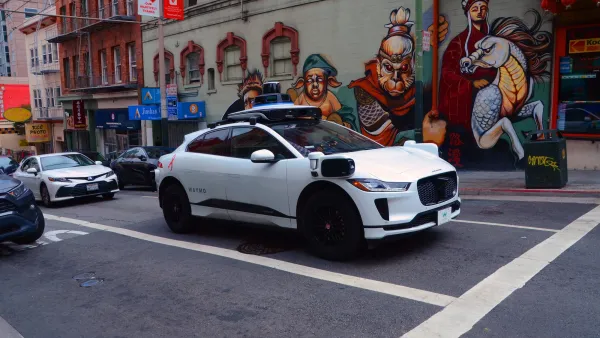
Feds say robotaxis interfering with first responders is a 'functional insufficiency,' demand solutions by August
The NHTSA issued a letter to autonomous carmakers, noting that 'Every second matters when law enforcement officers, firefighters, or paramedics are answering a call.'
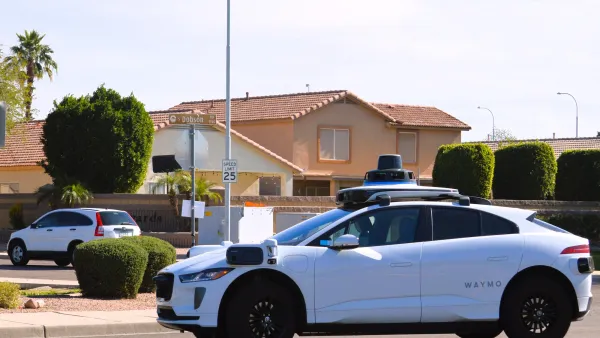
Uber and Waymo part ways in Phoenix
The companies ended a three-year pilot program, with Waymo saying it plans to keep its Phoenix robotaxi fleet available through its own app.
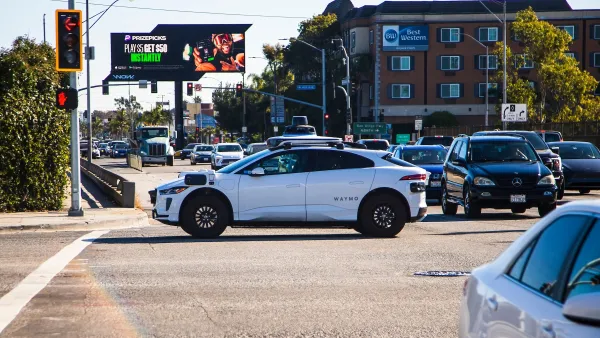
MIT study confirms robotaxis don't reduce traffic
Waymo data reveals that the cars spend close to half of their time 'deadheading' — driving around with no passengers.

Planetizen Federal Action Tracker
A weekly monitor of how Trump’s orders and actions are impacting planners and planning in America.

Data reveals that NYC’s bet on congestion pricing has paid off
After almost two years of the program, reports show positive impacts on traffic and air quality and no disruptions to parking.

Denver is solving homelessness. Why aren't the rest of us?
Since 2023, Denver's street homeless population has decreased by 64%, proving that effective tools exist to support those in need of housing.

Michigan needs billions to save its water infrastructure. The state won't fund it
Michigan needs to invest $2.8 billion per year over the next 20 years to fix its water infrastructure. The FY 2027 budget allocates only $27.9 million.

Trump asks Supreme Court to allow border wall through Texas national park
Judge Kathleen Cardone previously blocked the Big Bend border wall project, and Texas’ Land Commissioner has spoken out against it as well.

This MA town is drowning in its own sewage — and residents like it that way
Susan Murcott, a waste water expert, said if Carlisle didn't address their leaking sewage, the problem could turn “deadly.”

FREE Course: Walkable City 1: Why Walkability?
After describing his path towards focusing on walkability as the essence of good planning, Jeff Speck marches through his five principal reasons for making more walkable places.
Reinventing Malls: Planning Alchemy—Turning Gray Fields Into Gold
The course focuses on the opportunities and imperatives that shape reinvention of mall sites.

City of Rosemead
Rutgers University, Edward J. Bloustein School of Planning and Public Policy
One Hundred Miles
The Architects Foundation
University of Cincinnati Online
Montrose County
Northern Illinois Transit Authority (NITA)
The Pocatello Development Authority