Almost all of the state’s reservoirs are nearing capacity after significant storms passed across the state.


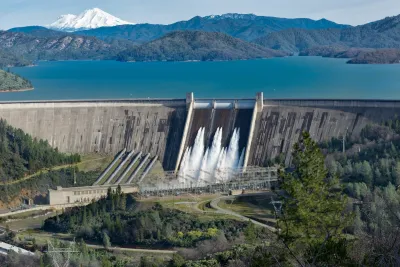
Lake Shasta, California’s largest reservoir, us up to 77 percent capacity after last weekend’s rains, rising 36 feet since December 16.
As Paul Rogers explains in The Mercury News, “Similarly, the water level at Oroville, the state’s second-largest reservoir, in Butte County, has jumped 69 feet over the same three weeks. On Monday, it was 73% full and at 134% of its historical average, having added nearly as much water in the past 24 hours as Crystal Springs Reservoir in San Mateo County holds when full.”
The Sierra Nevada snowpack, down to 18 percent of normal on December 16, was up to 90 percent on Monday as skiers celebrated the fresh powder.
California typically receives most of its rain between December and March, so more wet weather could be on the way. “In Southern California, Cachuma Reservoir, the largest in Santa Barbara County, was 100% full and spilling on Monday. Farther south, Diamond Valley Lake in Riverside County, a linchpin of the water supply for 20 million people in the Los Angeles region, was 94% full.”
FULL STORY: California’s largest reservoir rises 36 feet as rains boost water supply statewide

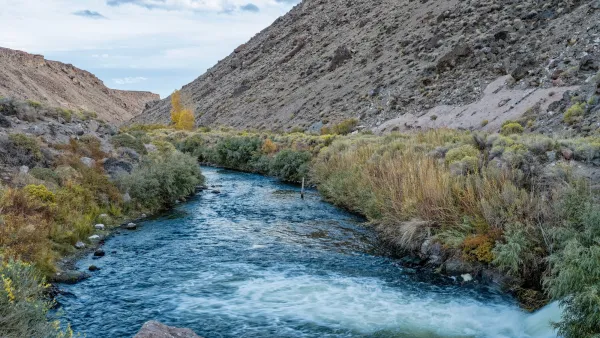
California is Out of Drought for First Time in 25 Years
The state’s reservoirs are reaching capacity for the first time in decades, but more rain could prompt flooding in downstream communities.
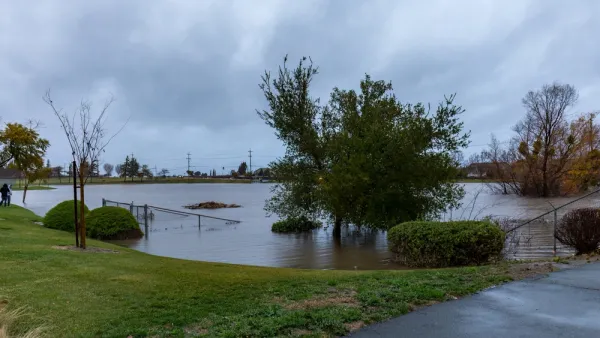
California’s Reservoirs are Filling Up, but For How Long?
Recent storms are bringing plenty of water to parched parts of California, but scientists warn the relief won’t be a long-term solution to longer, drier periods.
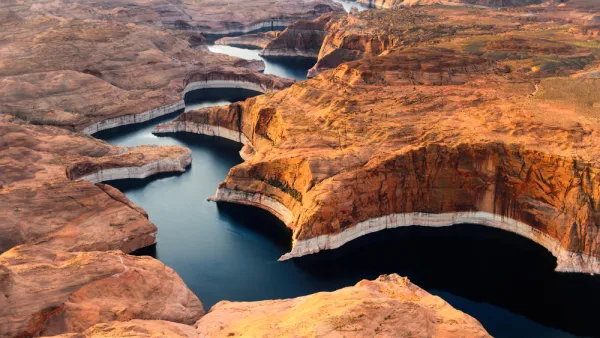
States Agree to Drastic Water Cuts From Colorado River
In the throes of a historic megadrought, three Southwestern states will make deep reductions in their water usage to preserve diminishing resources.

Planetizen Federal Action Tracker
A weekly monitor of how Trump’s orders and actions are impacting planners and planning in America.

The state-sanctioned urbicide of Austin
People don’t kill cities. Freeways do.

US to reduce Colorado River water deliveries to Mexico
A new Colorado Treaty amendment reduces Mexico’s Colorado River water allocation by 250,000 acre feet.

5 New England states march closer to 800 megawatt wind energy project
Securing federal approval for the project may be complicated under the Trump administration, which has historically been hostile towards domestic wind power.

Baltimore to break ground on $50 million Transit Priority Project
The project will bring faster bus trips, safer streets and better bike connections to Baltimore.

Airbnb launches $250 million 'last-dollar financing' housing accelerator, makes first investment in Austin
The company will put $6.4 million towards affordable housing development in Texas’ capital.

FREE Course: Walkable City 1: Why Walkability?
After describing his path towards focusing on walkability as the essence of good planning, Jeff Speck marches through his five principal reasons for making more walkable places.
Reinventing Malls: Planning Alchemy—Turning Gray Fields Into Gold
The course focuses on the opportunities and imperatives that shape reinvention of mall sites.

Eagle County Government
Harvard University Graduate School of Design
Nashville Planning Department
The Architects Foundation
University of Cincinnati Online
The Pocatello Development Authority
The Urban Renewal Agency of the City of Pocatello
Journal of the American Planning Association