Ten years after launching a plan to cut salt pollution, Lake George is seeing results, and the model is spreading across the country and beyond.


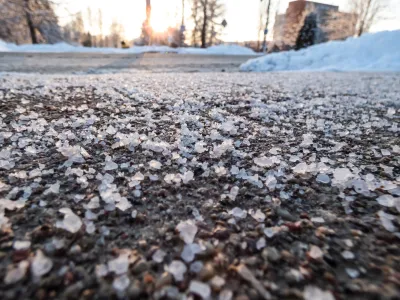
This article was originally published in The Daily Yonder.
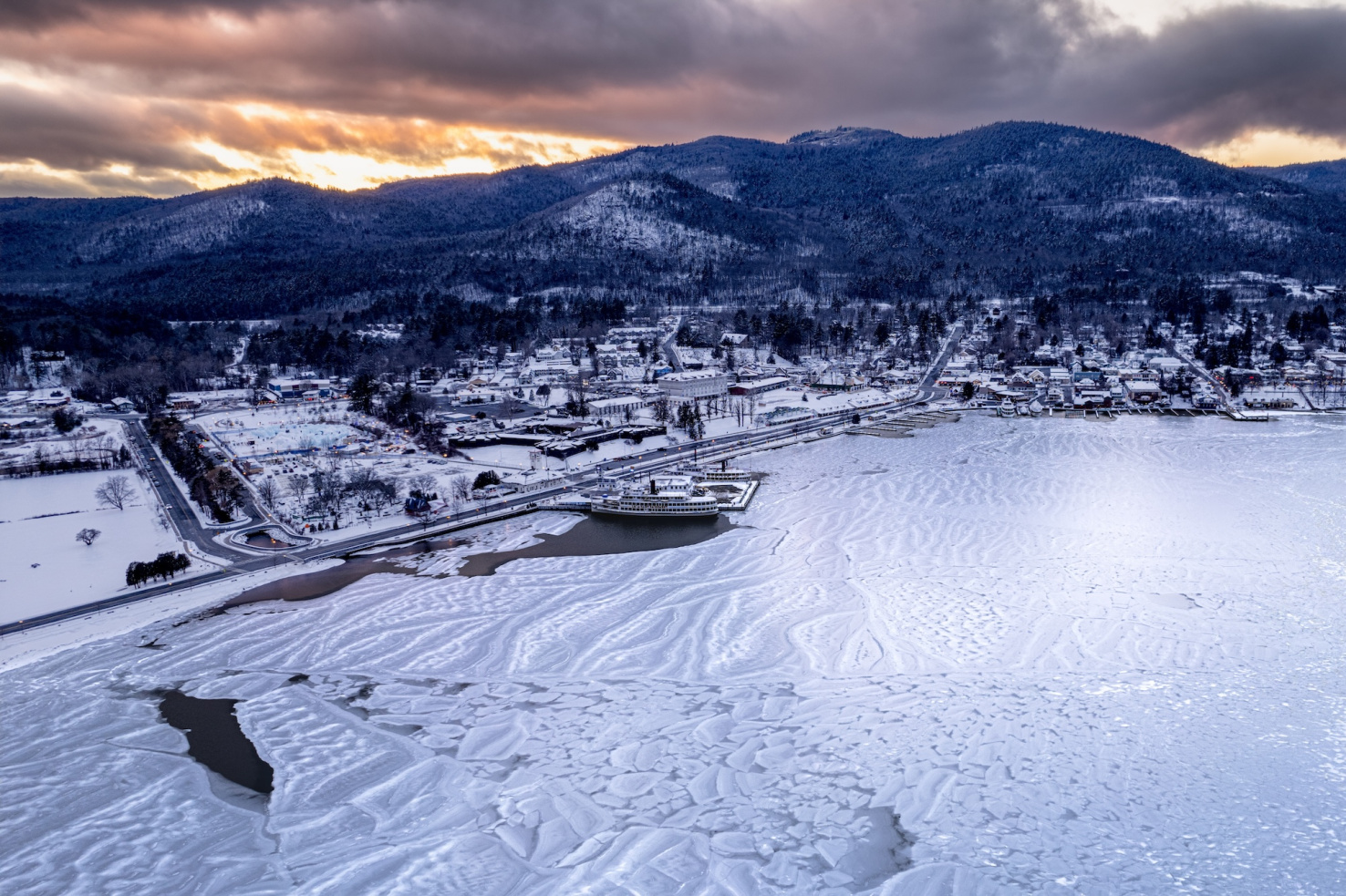
A decade ago, Lake George in Warren County, New York, faced a growing environmental threat as rising levels of road salt seeped into its waters, harming ecosystems, drinking water, and infrastructure. In response, local leaders, scientists, and community partners launched the Lake George Road Salt Reduction Initiative, a collaborative effort to protect the largest lake in the Adirondack Park.
Since then, the initiative has made significant strides in reducing salt runoff, improving road maintenance practices, and preserving the lake’s water quality. At the Lake George Association’s 2025 Salt Summit, stakeholders celebrated this advancement and reflected on the path to reducing the environmental footprint of road salt.
“Ten years ago, we set out to change the way our region thinks about and uses road salt,” said Lake George Waterkeeper Chris Navitsky. “This year’s Summit celebrates that progress and provides a launchpad to accelerate road salt reduction partnerships, as well as science and solutions, for the next decade.”
Salt runoff, which had steadily increased over the years, led to dangerous spikes in chloride levels in Lake George and its feeder streams. These spikes posed risks to water quality, aquatic life, and even plumbing systems in nearby homes.
“Road salt is the acid rain of our time,” Navitsky said, echoing a common refrain repeated throughout the summit.
Over the past decade, the salt reduction initiative has transformed from a local experiment into a national model for environmentally responsible winter road maintenance.
At the Salt Summit, experts highlighted how a science-based methodology, now formalized as the SWiM (Salt Use and Winter Management) program, has helped reduce harmful salt runoff into waterways.
By combining technology like automated spreaders and road weather monitoring systems with strong municipal partnerships and consistent training, communities across the region have successfully lowered salt use while still prioritizing safety.
“We started measuring just a couple of routes back in 2015 [with SWiM], and from that point forward, the data has been crucial in proving what works and what doesn’t,” said Phil Sexton, chief executive officer of WIT Advisers, an environmental management consulting company. “The technology evolved along with the process. It’s allowing people to calibrate much more easily, which is potentially the number one best practice.”
Calibration, adjusting salt spreaders to apply the right amount of salt, is at the heart of SWiM’s success, helping to minimize environmental impact without compromising road safety.
In the local town of Hague, these practices have helped reduce chloride levels in local waterways by 40%, while overall chloride levels in Lake George, which had tripled between 1980 and 2015, are now leveling off.
Sodium and calcium levels are also decreasing in the watershed, a sign that reduced road salt use is changing the lake’s chemistry.
Scientists said these lower levels may be helping reduce invasive species in the area, like zebra mussels. While the lake is slower to respond, scientists said steady improvements in its tributaries suggest progress. Researchers are now using modeling tools to better understand how these changes could play out over the long term.
“The [chemical levels in the] tributaries are coming down and we are seeing the effects of what’s going on,” said Jack Cosby, Ph.D., a professor with the UK Centre for Ecology and Hydrology who has been researching the chemical evolution of the Lake George region. “It hasn’t shown up in the lake yet because the lake has a long turnover time itself, but we’re getting there.”
“The local efforts have worked in terms of the road salt reduction program,” said Jim Sutherland, Ph.D., who, in his retirement, continues to research the lake region. “We’re just glad that we were able to use all of this data in one spot to make this evaluation and show how successful the road salt reduction program has been.”
What began around Lake George is now rippling across the Adirondack Park and beyond.
To date, 23 towns have signed on to salt reduction agreements modeled on the Lake George project, and the approach is being adopted in cities across New York State as well as in Virginia, Maine, and Canada.
“For over 10 years, the Lake George Association has proven that smart salt reduction works,” said LGA Executive Director Dr. Brendan Wiltse. “With strong partnerships at every level, we’ll continue making Lake George the gold standard for effective, science-driven salt reduction across the Adirondack Park and New York state.”


Road Salt has Increased Chloride Levels in the Potomac by 85%
A common winter road clearing technique is having major impacts on waterways.
Minnesota Advocates Propose Tools to Limit Road Salt Use
Winter-oriented road design can limit the amount of polluting chloride used on the state’s roads to mitigate winter conditions.

The 'Wide-Ranging Ecological Downside' of Road Salt
A study from the USGS using five decades of data shows salinity and alkalinity are up in waterways across the United States.

Planetizen Federal Action Tracker
A weekly monitor of how Trump’s orders and actions are impacting planners and planning in America.

Amtrak, CN end decades-long dispute with eight-year agreement
The new operating agreement establishes an updated framework for the companies to work together, including processes to resolve disputes.

Northwest rail fans eager for Sept. 30 debut of Amtrak’s Airo fleet
Get ready for that new train smell and more seats. But they won’t go faster or run more frequently on the Cascades route in Washington and Oregon.

LAX SkyLink opening delayed again, contractor won’t commit to new deadline
The project was supposed to open its doors to the public in 2023.

Caltrain may slash over one-third of its stations
If Bay Area voters reject two transit tax measures, Caltrain, BART and AC Transit will see steep service cuts.

A 'dangerous' precedent: North Carolina successfully pressures communities into voting for toll roads
Two mayors resigned from the Charlotte Regional Transportation Planning Organization after it voted in favor of the toll roads.

FREE Course: Walkable City 1: Why Walkability?
After describing his path towards focusing on walkability as the essence of good planning, Jeff Speck marches through his five principal reasons for making more walkable places.
Reinventing Malls: Planning Alchemy—Turning Gray Fields Into Gold
The course focuses on the opportunities and imperatives that shape reinvention of mall sites.

City of Thousand Oaks
City of Wisconsin Rapids
Harvard University Graduate School of Design
The Architects Foundation
University of Cincinnati Online
The Pocatello Development Authority
The Urban Renewal Agency of the City of Pocatello

