County officials nixed a proposal from MCDOT to build new sidewalks on streets near a future transit station.


Montgomery County, Maryland rejected a staff proposal from its department of transportation (MCDOT) to install sidewalks on eight residential streets within half a mile of an upcoming light rail station after dozens of residents responded negatively to the plan.
According to a piece by Dan Reed in Greater Greater Washington, just 12 of 73 residents who replied to a survey supported the sidewalks. Others opposed them, expressing concerns about “loss of available parking, lack of need, financial loss due to tree and landscaping removals, loss of environmental beauty and the ‘natural feel’ of the community, stranger danger, increased crime, littering, and, most of all, the worsening of stormwater flooding and erosion.”
A county official later revealed it does not have the funds to install new sidewalks. However, Reed points out that MCDOT looks for resident approval for even the smallest projects. “As with many things, the people who want sidewalks are less likely to speak up than people who are motivated by opposition, and people who don’t want sidewalks in front of their house can be pretty loud.”
FULL STORY: Montgomery County rejects sidewalks because of “stranger danger”

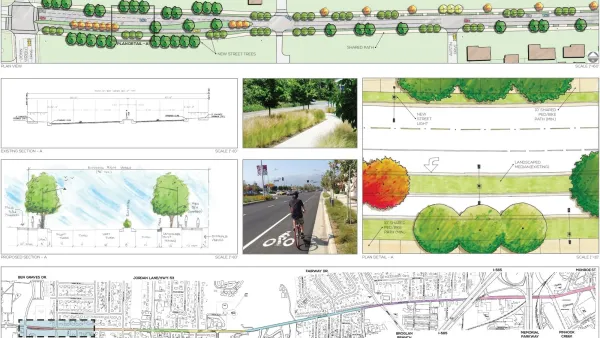
Huntsville, Alabama Launches $30M Complete Streets Project
A redesign of Holmes Avenue will bring new sidewalks, bike lanes, lighting, and street furniture to the corridor.
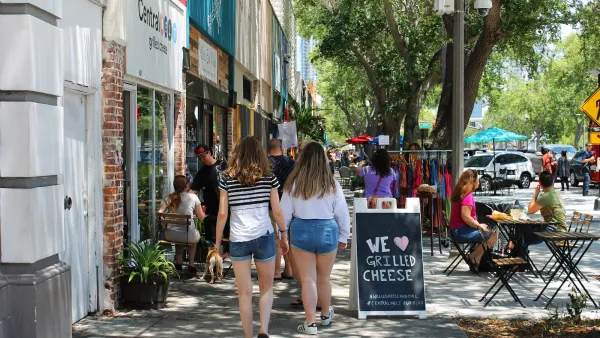
St. Petersburg Launches Sidewalk Master Plan to Close Gaps in Pedestrian Network and Improve Accessibility
The plan will inform priorities for fiscal year 2027.
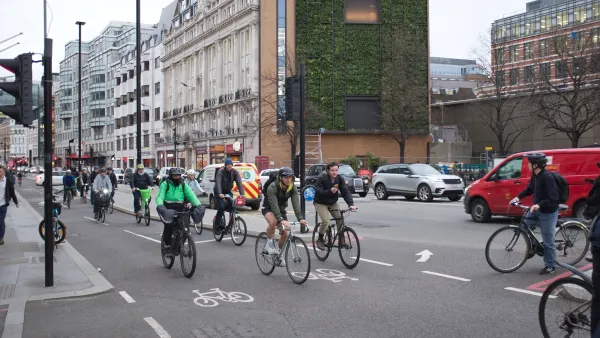
Study: Induced Demand Works for Bikes and Transit, too
If you build it — bike infrastructure, bus lanes, and sidewalks, that is — they will come.

Planetizen Federal Action Tracker
A weekly monitor of how Trump’s orders and actions are impacting planners and planning in America.

The state-sanctioned urbicide of Austin
People don’t kill cities. Freeways do.

US to reduce Colorado River water deliveries to Mexico
A new Colorado Treaty amendment reduces Mexico’s Colorado River water allocation by 250,000 acre feet.

5 New England states march closer to 800 megawatt wind energy project
Securing federal approval for the project may be complicated under the Trump administration, which has historically been hostile towards domestic wind power.

Baltimore to break ground on $50 million Transit Priority Project
The project will bring faster bus trips, safer streets and better bike connections to Baltimore.

Airbnb launches $250 million 'last-dollar financing' housing accelerator, makes first investment in Austin
The company will put $6.4 million towards affordable housing development in Texas’ capital.

FREE Course: Walkable City 1: Why Walkability?
After describing his path towards focusing on walkability as the essence of good planning, Jeff Speck marches through his five principal reasons for making more walkable places.
Reinventing Malls: Planning Alchemy—Turning Gray Fields Into Gold
The course focuses on the opportunities and imperatives that shape reinvention of mall sites.

Eagle County Government
Harvard University Graduate School of Design
Nashville Planning Department
The Architects Foundation
University of Cincinnati Online
The Pocatello Development Authority
The Urban Renewal Agency of the City of Pocatello
Journal of the American Planning Association