The city plans to upgrade the park’s drainage infrastructure to channel more stormwater into its lake and other drainage ponds and reduce flooding risk.


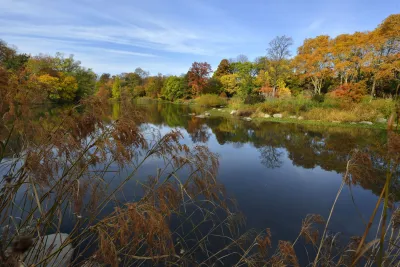
New York City is planning a $68 million ‘Bluebelt’ system in Brooklyn to reduce flash flooding in the borough. As Robyn Griggs Lawrence explains in Smart Cities Dive, the plan includes upgrading Prospect Park Lake’s drainage infrastructure and building new ponds and rain gardens. The project is crucial as annual rainfall in New York City is projected to increase by up to 14 percent by the 2050s.
The project is the result of a study from the city’s Department of Environmental Protection which found that water during storms often rushes over the ground instead of flowing into the lake, whose limited capacity can cause it to overflow. “DEP, NYC’s Department of Parks & Recreation and the Prospect Park Alliance will collaborate on upgrading the lake’s drainage infrastructure, building a new pond and a continuous stretch of rain gardens that will slow and filter rainwater as it drains to the lake and restore a pond that was filled in north of the Prospect Park Zoo to collect rainwater from Flatbush Avenue.”
According to Griggs Lawrence, “The project is intended to complement the $20 million Lakeshore Restoration Plan, which will reconstruct Prospect Park Lake’s shoreline with green infrastructure for stormwater management.”
The city built its first Bluebelt project in Staten Island in 2023, where new infrastructure filters stormwater into catch basins and storm sewers before it reaches lower New York Bay.
FULL STORY: Facing extreme rainfall and flooding, NYC is turning Brooklyn’s Prospect Park into a natural buffer

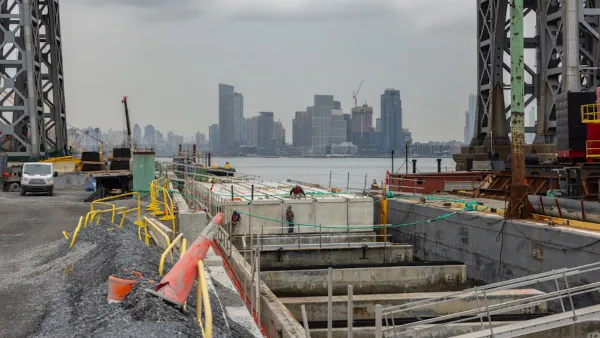
New York Flood Control Plan Takes Lessons From the Dutch
The Netherlands has a long history of flood mitigation. U.S. cities, threatened by coastal flooding and erosion, are taking note.
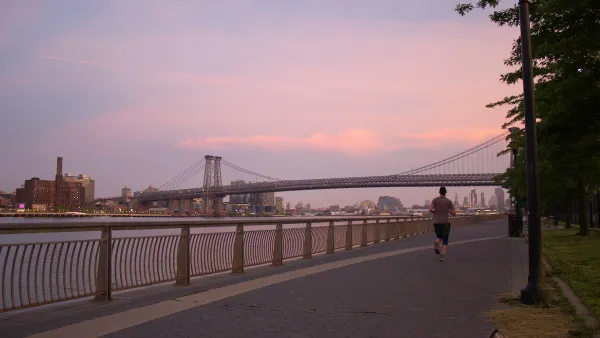
East River Floodgates Rising in NYC
A tour of new infrastructure designed to protect the city’s East Side from catastrophic flooding.
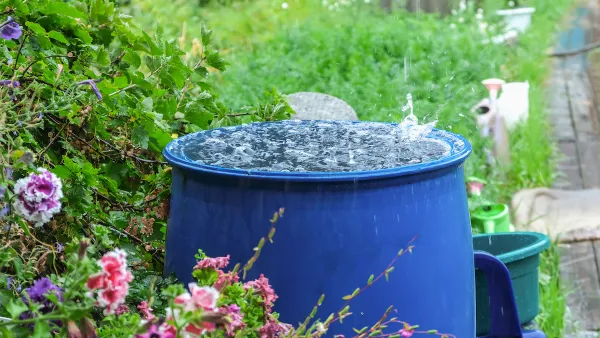
Flood Resilience Through Green Infrastructure
Cities like New York and Los Angeles are moving to build green infrastructure as the need for spongier urban spaces becomes more apparent.

The state-sanctioned urbicide of Austin
People don’t kill cities. Freeways do.

US to reduce Colorado River water deliveries to Mexico
A new Colorado Treaty amendment reduces Mexico’s Colorado River water allocation by 250,000 acre feet.

New Jersey’s second-largest city bans standalone data centers
Jersey City will continue to allow co-location facilities, such as those meant for research institutions that store their own data.

Amtrak not solely to blame for New Jersey commuter rail's unreliability, report finds
A new study from the Garden State Initiative found that NJ Transit’s budget grew 20% across a 4 year period, but reliability declined significantly over the same period.

EPA erases limits on planet-warming pollution from power plants
Under Monday’s plan, power plants would still have some limits on how much mercury, arsenic and other contaminants they can emit.

Phoenix announces new on-demand transit service, more frequent RAPID buses
Both new services will launch in October, and are part of Phoenix's Project Effective Access Solutions for Easing Congestion.

FREE Course: Walkable City 1: Why Walkability?
After describing his path towards focusing on walkability as the essence of good planning, Jeff Speck marches through his five principal reasons for making more walkable places.
Reinventing Malls: Planning Alchemy—Turning Gray Fields Into Gold
The course focuses on the opportunities and imperatives that shape reinvention of mall sites.

Eagle County Government
Harvard University Graduate School of Design
Nashville Planning Department
The Architects Foundation
University of Cincinnati Online
The Pocatello Development Authority
The Urban Renewal Agency of the City of Pocatello
Journal of the American Planning Association