Well-designed bike lanes can actually improve the flow of traffic for all vehicles, including emergency responders.


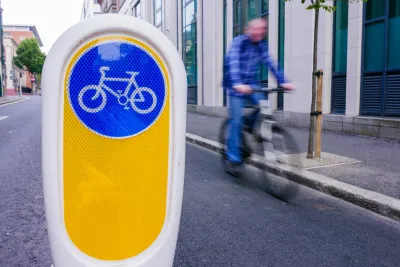
A new study from Limerick, Ireland shows that protected bike lanes do not lead to slower emergency response, and in fact “maintained or enhanced” access for emergency vehicles, reports Ron Johnson in Momentum. “According to the report, designs that adhered to Ireland’s national street-design and cycling manuals ‘effectively facilitated the movement of emergency vehicles by ensuring adequate carriageway widths and junction radii.’”
A similar study out of Toronto found that “overall response times within bike lane corridors performed as well as or better than citywide averages.” According to Johnson, “Limerick’s new study adds another strong data point to an already long list—showing that properly designed cycling infrastructure doesn’t just coexist with emergency services. It often improves the streets for everyone who uses them.”
FULL STORY: New Irish Study Shows Protected Bike Lanes Don’t Slow Emergency Vehicles


Study: Bike Lanes, Traffic Calming Don’t Impact First Responders
Despite common concerns that narrower traffic lanes and bike infrastructure can slow emergency response, response times in one study didn’t change.
Las Vegas is building its first protected bike lane
The new lane connects Henderson and the Las Vegas Raiders headquarters via Starr Avenue.

Nashville installs concrete barriers to protect bike lanes
The new 'Toronto barriers' provide a physical buffer between cars and bike lanes.

Planetizen Federal Action Tracker
A weekly monitor of how Trump’s orders and actions are impacting planners and planning in America.

The state-sanctioned urbicide of Austin
People don’t kill cities. Freeways do.

US to reduce Colorado River water deliveries to Mexico
A new Colorado Treaty amendment reduces Mexico’s Colorado River water allocation by 250,000 acre feet.

5 New England states march closer to 800 megawatt wind energy project
Securing federal approval for the project may be complicated under the Trump administration, which has historically been hostile towards domestic wind power.

Baltimore to break ground on $50 million Transit Priority Project
The project will bring faster bus trips, safer streets and better bike connections to Baltimore.

Airbnb launches $250 million 'last-dollar financing' housing accelerator, makes first investment in Austin
The company will put $6.4 million towards affordable housing development in Texas’ capital.

FREE Course: Walkable City 1: Why Walkability?
After describing his path towards focusing on walkability as the essence of good planning, Jeff Speck marches through his five principal reasons for making more walkable places.
Reinventing Malls: Planning Alchemy—Turning Gray Fields Into Gold
The course focuses on the opportunities and imperatives that shape reinvention of mall sites.

Eagle County Government
Harvard University Graduate School of Design
Nashville Planning Department
The Architects Foundation
University of Cincinnati Online
The Pocatello Development Authority
The Urban Renewal Agency of the City of Pocatello
Journal of the American Planning Association