Although ‘deadheading’ time has gone down, Waymos still spend much of their time creating traffic without passengers.


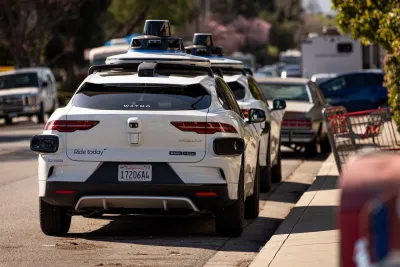
Data from the California Public Utilities Commission (CPUC) reveals that Waymo vehicles spend close to half of their driving time without passengers, writes Harry Campbell in The Driverless Digest.
Although the phenomenon known as ‘deadheading’ has decreased from 51.5 percent in January 2024 to 44.3 percent in September 2025, the autonomous vehicles still spend a significant amount of time creating traffic without being in service.
According to Campbell, “Waymo may be forced to reposition more after drop-offs — or simply keep moving because there aren’t many legal places to wait. At a high level, the data suggests their fleet spends a lot of time driving around between trips while waiting for a request, rather than staying put, which is why P1 miles remain so high.”
Read the full story: What CPUC Data Reveals About Waymo’s Deadheading and Utilization

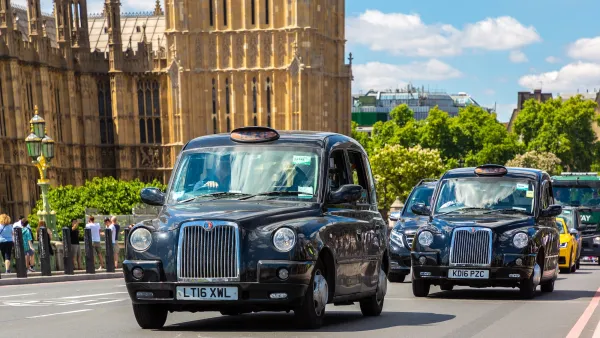
Can Robotaxis Handle London's Famously Tangled Streets?
Black Cab drivers say autonomous cars won’t be able to handle London’s unique conditions.
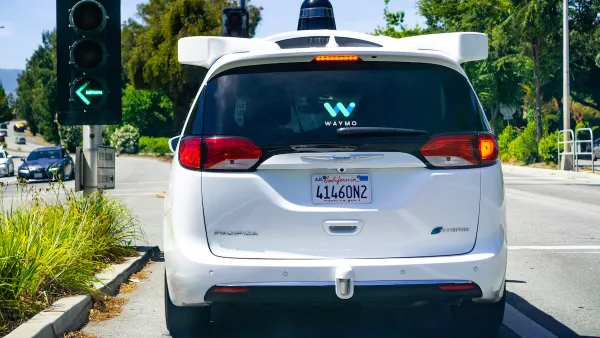
Advice for Autonomous Cars
Drivers for Uber and Lyft in San Francisco express their concerns and advice for self-driving taxi services.
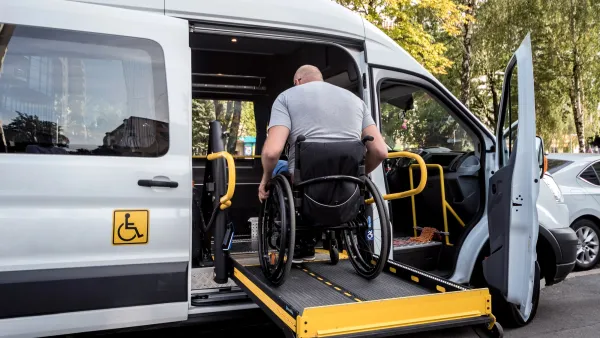
DC's robotaxi bill stays silent on accessibility
A 24-page bill addresses safety, permitting and consumer rights — but fails to mention wheelchairs or accessible vehicles.

Planetizen Federal Action Tracker
A weekly monitor of how Trump’s orders and actions are impacting planners and planning in America.

The state-sanctioned urbicide of Austin
People don’t kill cities. Freeways do.

US to reduce Colorado River water deliveries to Mexico
A new Colorado Treaty amendment reduces Mexico’s Colorado River water allocation by 250,000 acre feet.

Nation's most wind-powered state turns to coal as data centers increase energy demand
For the first time in decades, Iowa has increased its generation of coal power.

NYC cools commuters with city's first rain garden above a bus stop
New York City officials say the plants in the rain garden can absorb 16 gallons of rainwater during heavy storms.

Brightline West’s future may rely on $6 billion federal loan
The company has until Nov. 2 to make a $400 million equity investment into its proposed high-speed rail line.

FREE Course: Walkable City 1: Why Walkability?
After describing his path towards focusing on walkability as the essence of good planning, Jeff Speck marches through his five principal reasons for making more walkable places.
Reinventing Malls: Planning Alchemy—Turning Gray Fields Into Gold
The course focuses on the opportunities and imperatives that shape reinvention of mall sites.

Greater Baltimore Committee
Eagle County Government
Harvard University Graduate School of Design
The Architects Foundation
University of Cincinnati Online
The Pocatello Development Authority
The Urban Renewal Agency of the City of Pocatello
Journal of the American Planning Association