With limited space and funding, South Gate opened three new parks this year through community-driven design, creative partnerships, and persistent public leadership.


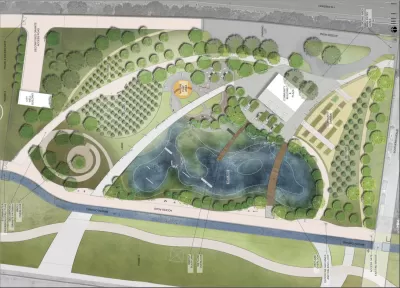
South Gate, one of Los Angeles County’s most park-poor cities, reached a major milestone this year by opening three new parks. As reported by LAist’s Erin Stone, the most notable achievement is Urban Orchard Park — a new 7-acre green space built on long-neglected land between the 710 Freeway and the Los Angeles River. For seniors living next door in a mobile home park, the space now offers walking paths, native trees, a small wetland, and an orchard designed to help address local food insecurity.
These new and renovated parks meet a longstanding need. Only 3 percent of South Gate’s land is dedicated to park space, far below the national average, and the city’s predominantly low-income Latino residents have historically had limited access to nature, shade, and safe places to exercise. The Trust for Public Land led a community-guided design process for Urban Orchard Park, prioritizing shade, healthy food, and climate resilience. A constructed wetland now captures and cleans stormwater from the Los Angeles River, providing most of the park’s irrigation and attracting new wildlife.
Bringing the Urban Orchard to life took more than a decade, substantial coordination, and a complex mix of public, private, and nonprofit partnerships. Funding came from a broad range of state, county, federal, and philanthropic sources, while the Conservation Corps of Long Beach is providing early maintenance and workforce training for local youth. City officials note that the achievement highlights both the creativity required to build parks in space-constrained communities and the structural challenge posed by South Gate’s limited local tax revenue. While recent county and state efforts may help streamline similar projects in the future, long-term solutions will require stronger, more equitable funding tools for small cities.
FULL STORY: South Gate opened 3 new parks in the last year. How did the small city do it?

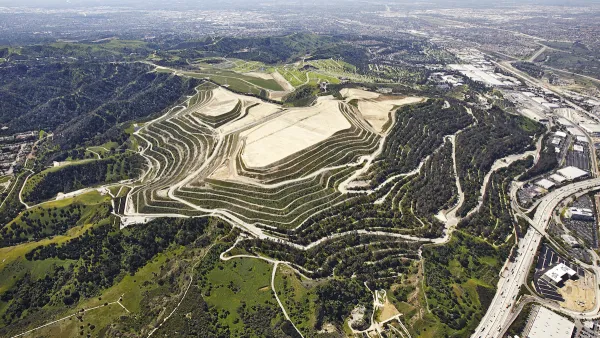
In Los Angeles and beyond, landfills and gas stations are the new public spaces
With scarce urban land, transforming overlooked and underutilized urban pockets into parks and green space it critical to meeting growing community, climate, and equity needs.
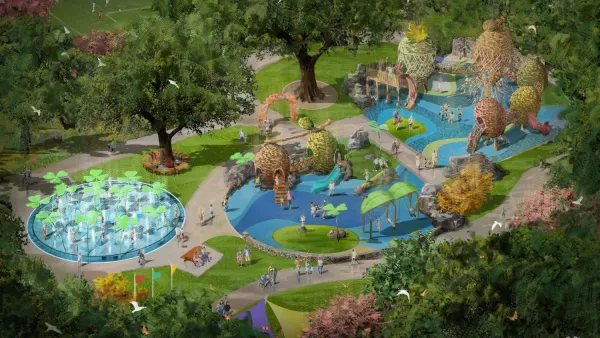
Disney Imagineers Join Effort to Rebuild Altadena’s Charles White Park After Wildfire
Disney is contributing $5 million and the talents of its Imagineers to help Los Angeles County rebuild Charles White Park and other fire-damaged Altadena parks.
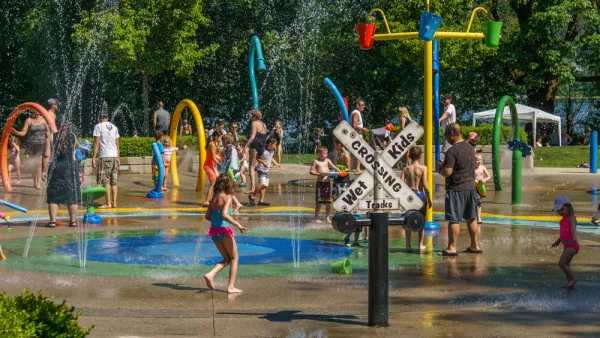
In a Warming World, Water-Based Recreation Isn’t a Luxury — It’s a Necessity
Increasing access to pools, splash pads, and lakes is not just about fun — it is about health, equity, and resilience in a warming world.

Planetizen Federal Action Tracker
A weekly monitor of how Trump’s orders and actions are impacting planners and planning in America.

The state-sanctioned urbicide of Austin
People don’t kill cities. Freeways do.

US to reduce Colorado River water deliveries to Mexico
A new Colorado Treaty amendment reduces Mexico’s Colorado River water allocation by 250,000 acre feet.

5 New England states march closer to 800 megawatt wind energy project
Securing federal approval for the project may be complicated under the Trump administration, which has historically been hostile towards domestic wind power.

Baltimore to break ground on $50 million Transit Priority Project
The project will bring faster bus trips, safer streets and better bike connections to Baltimore.

Airbnb launches $250 million 'last-dollar financing' housing accelerator, makes first investment in Austin
The company will put $6.4 million towards affordable housing development in Texas’ capital.

FREE Course: Walkable City 1: Why Walkability?
After describing his path towards focusing on walkability as the essence of good planning, Jeff Speck marches through his five principal reasons for making more walkable places.
Reinventing Malls: Planning Alchemy—Turning Gray Fields Into Gold
The course focuses on the opportunities and imperatives that shape reinvention of mall sites.

Eagle County Government
Harvard University Graduate School of Design
Nashville Planning Department
The Architects Foundation
University of Cincinnati Online
The Pocatello Development Authority
The Urban Renewal Agency of the City of Pocatello
Journal of the American Planning Association