The city reimburses residents who install gardens, rain barrels, and other methods that retain stormwater and decrease the risk of flooding.


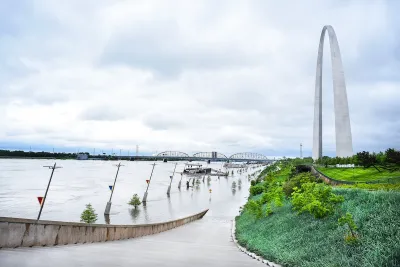
Urban farms and gardens are helping St. Louis absorb and filter stormwater, preventing it from overwhelming the city’s combined stormwater/sewer system and preventing pollution from reaching local rivers and creeks.
As Elizabeth Hewitt explains in Reasons to be Cheerful, “If the system is overloaded, wastewater either overflows — sending pollutants directly into the Mississippi River — or backs up, into basements or streets.” Now, a multi-decade plan is in the works to overhaul the city’s wastewater system and make the overall urban landscape more absorbent to prevent flooding — a plan that makes community members key participants in making the city more resilient.
The Metropolitan St. Louis Sewer District is investing $120 million by 2034 on projects that include subsidies for landowners who use water collection methods on their property. “Projects range from bioretention basins — depressions filled with plants that gather water — to backyard rain barrels that collect precipitation and use it to irrigate native plant or vegetable gardens.”
The reimbursements not only prevent stormwater from going to waste and reduce flooding but also support gardens that grow fresh food in areas where produce is scarce. “Beyond improving water quality, green infrastructure projects can be a boon for the people who live in the communities around them and who get to enjoy natural spaces, shadier streets and cleaner air.”
FULL STORY: Harvesting Hope: The Urban Farms Helping Save a City’s Aging Sewer System

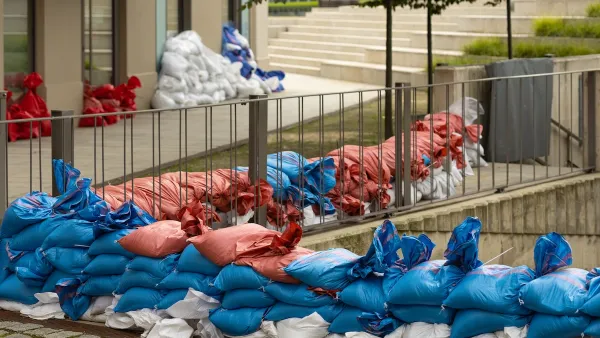
How US Communities Are Building Resilience Against Flooding
Flooding causes over $400 billion in damage in the United States every year.
Adapting Combined Sewer-Stormwater Systems to Climate Change
Only one coastal city has a sewer system that must handle stormwater as well as wastewater. San Francisco's efforts to adapt its combined sewer-stormwater system has put it on the vanguard of the city's climate adaptation efforts.
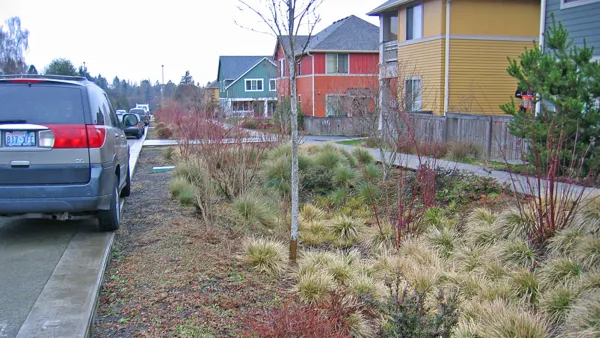
Water-Smart Green Infrastructure: The Private Sector Steps Up
A new Urban Land Institute Report details the increasing implementation of citywide green infrastructure networks, including investments on both public and privately owned sites.

The state-sanctioned urbicide of Austin
People don’t kill cities. Freeways do.

US to reduce Colorado River water deliveries to Mexico
A new Colorado Treaty amendment reduces Mexico’s Colorado River water allocation by 250,000 acre feet.

New Jersey’s second-largest city bans standalone data centers
Jersey City will continue to allow co-location facilities, such as those meant for research institutions that store their own data.

Amtrak not solely to blame for New Jersey commuter rail's unreliability, report finds
A new study from the Garden State Initiative found that NJ Transit’s budget grew 20% across a 4 year period, but reliability declined significantly over the same period.

EPA erases limits on planet-warming pollution from power plants
Under Monday’s plan, power plants would still have some limits on how much mercury, arsenic and other contaminants they can emit.

Phoenix announces new on-demand transit service, more frequent RAPID buses
Both new services will launch in October, and are part of Phoenix's Project Effective Access Solutions for Easing Congestion.

FREE Course: Walkable City 1: Why Walkability?
After describing his path towards focusing on walkability as the essence of good planning, Jeff Speck marches through his five principal reasons for making more walkable places.
Reinventing Malls: Planning Alchemy—Turning Gray Fields Into Gold
The course focuses on the opportunities and imperatives that shape reinvention of mall sites.

Eagle County Government
Harvard University Graduate School of Design
Nashville Planning Department
The Architects Foundation
University of Cincinnati Online
The Pocatello Development Authority
The Urban Renewal Agency of the City of Pocatello
Journal of the American Planning Association