The suit alleges the city has failed to create a “coordinated, proactive system” for complying with ADA and ensuring accessibility on the city’s sidewalks and crosswalks.


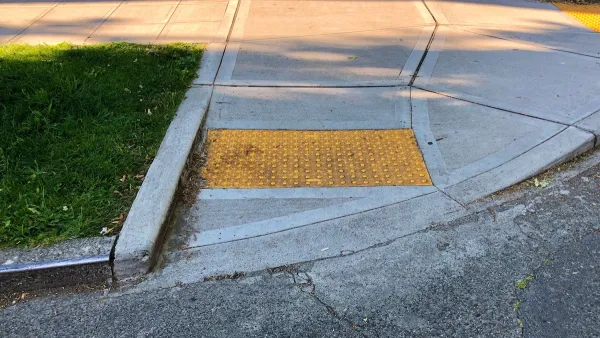
Four Chicago-area residents with disabilities filed a class action lawsuit against the city, “challenging its widespread and ongoing failure to make its sidewalks, curb ramps, and other public pedestrian rights of way accessible to people with mobility disabilities.”
According to a press release from Disability Rights Advocates, the suit charges that the city has failed to use a “coordinated, proactive system” to maintain accessibility in its rights-of-way and relies too heavily on a reactive, complaint-based system to make improvements.
One plaintiff, Kevin Sullivan, a suburban resident who regularly commutes into the city, said, “I chose to be a part of this class action because this city is built on Daniel Burnham’s idea of public spaces being accessible to all, and I ultimately wish for it to finally fulfill that promise.”
After a similar lawsuit two decades ago, the city agreed to install more curb ramps, but without a system for maintenance, much of this infrastructure has now fallen into disrepair. “Access barriers such as these make it difficult—if not impossible—for people who use wheelchairs, canes, scooters, and walkers to travel freely and participate equally in public life. These barriers impede travel, as people with mobility disabilities must find alternative accessible routes, use longer routes, or forego travel to difficult-to-reach locations. The barriers also create risks of injury or even death, as people often have no choice but to travel in the street with vehicular traffic.”
Read the full story: Chicagoans with Mobility Disabilities Challenge City’s Inaccessible Sidewalks in Class Action Lawsuit

Baltimore Ordered to Improve Sidewalk Accessibility
The city is one of many to face lawsuits for failing to comply with the Americans with Disabilities Act.

For Advice on Accessibility, Look to Iceland
Cities around the country installed over 1,700 wheelchair ramps in the last five years, thanks in part to one man’s initiative.

Chicago Budget Fails to Include Snow Plowing Program
Disability rights advocates say the “Plow the Sidewalks” program is a necessity for Chicagoans with limited mobility in winter months.

Planetizen Federal Action Tracker
A weekly monitor of how Trump’s orders and actions are impacting planners and planning in America.

California plans to bury El Niño’s downpour
If the state plays its cards right, it may be able to store a billion acre-feet of El Niño’s water in aquifers.

Chicago breaks ground on $3 billion megadevelopment
The new neighborhood, titled Foundry Park, will one day host 3,700 residences.

California High-Speed Rail Authority CEO resigns after $600,000 scandal
Under Ian Choudri, the authority used taxpayer dollars to fund first class flights and trips to nightclubs.

Want to study the Missouri River? Soon, you may need unanimous approval from 10 states
Legislation would require 10 governors’ permission to study or build projects moving water outside the basin.

Desperate measures: Advocates weigh draining Lake Powell to fill Colorado River
Draining the reservoir could reduce evaporation losses by a couple hundred thousand acre-feet.

FREE Course: Walkable City 1: Why Walkability?
After describing his path towards focusing on walkability as the essence of good planning, Jeff Speck marches through his five principal reasons for making more walkable places.
Reinventing Malls: Planning Alchemy—Turning Gray Fields Into Gold
The course focuses on the opportunities and imperatives that shape reinvention of mall sites.

City of Rosemead
Rutgers University, Edward J. Bloustein School of Planning and Public Policy
One Hundred Miles
Hunter College, City University of New York (CUNY)
The Architects Foundation
University of Cincinnati Online
City of Cambridge
Montrose County
The Pocatello Development Authority