While Duffy and Nadler battle it out in a shouting match, the data is clear: transit is safe.



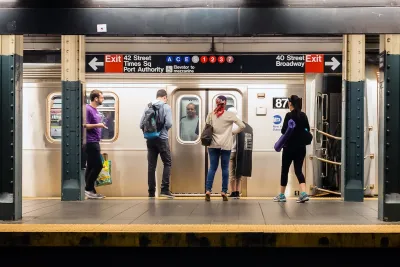
Most people underestimate driving’s dangers and transit’s safety. In fact, automobile travel has about ten times the death rate as public transit, and transit vehicles also impose less risk on non-occupants like cyclists, pedestrians and other road users. Cars should come with warnings: “Driving causes painful injuries, disabilities and death.”
As I wrote about recently in Bloomberg City Lab, last week the debate about transit’s safety escalated into a political shouting match between US Transportation Secretary Sean Duffy and Manhattan Congressman Jerry Nadler. So the time feels right to set the record straight. Transit = safe. Driving = dangerous.
Considering risks to both passengers and other road users, driving has about ten times the traffic fatality rate per passenger-mile as transit travel. Everybody is safer when travellers shift from driving to bus or rail, including motorists.

As transit travel increases in a community, total (all mode) crash casualties tend to decline. Sprawled areas have about five times the traffic fatality rates as transit-oriented neighborhoods. Even moderate increases in transit travel are associated with large reductions in traffic casualty rates.
Several factors contribute to these outcomes. Transit-oriented communities tend to have less total driving, slower traffic speeds and less high-risk driving. For example, in compact, multimodal neighborhoods customers normally walk or take transit to restaurants, pubs and bars, but in automobile-dependent areas they take their cars — and often drive home impaired. Age is a factor, too: In suburban and rural areas, parents often give teenagers access to cars to reduce their chauffeuring burdens, and older people often continue driving despite declining abilities because they lack alternatives. Since most fatal or high-injury crashes involve multiple vehicles, even a perfect driver who never errs is safer if their higher-risk neighbors shift from driving to transit.
Urban Regional Traffic Fatality Rate Versus Transit Ridership

But what about crime risks? Many people have the impression that cities in general and transit vehicles in particular are hotbeds of criminality. They are mostly wrong.
During the last three decades, US crime rates declined significantly, as illustrated below. This occurred for virtually all crime types in virtually all communities, but the declines were particularly large in major cities. The assumption that cities are dangerous is out of date.
Transit travel has different but generally less crime risk than driving. The crimes that do occur on buses and trains also tend to be less costly. A typical transit theft involves a phone, wallet or backpack worth a few hundred dollars; a stolen or vandalized vehicle usually costs thousands of dollars to repair or replace.
Addressing transit crime anxiety is important because, when it comes to safety, perception is often reality. Fear discourages responsible passengers from using transit, which makes transit travel seem — and ultimately become — more dangerous.

It is time to correct misinformation about the dangers of public transit travel and urban living. Road safety programs should promote transit travel and transit-oriented development rather than focusing exclusively on driver behavior. And transit agencies should give more priority to improving security, convenience, comfort and aesthetics. That means devoting more resources to cleaning and maintenance, safer sidewalks and crosswalks, better lighting and surveillance, and tighter enforcement and restrictions on unpleasant behaviors.
Agencies can also create a better narrative about the relative risks of using their service. Instead of dire warnings about the dangers of riding trains and buses, operators should open with a positive message: “Public transit is by far the safest way to travel — and we can make it even safer by observing safety rules, reporting suspicious activities, and challenging harassment of fellow passengers or transit employees.”

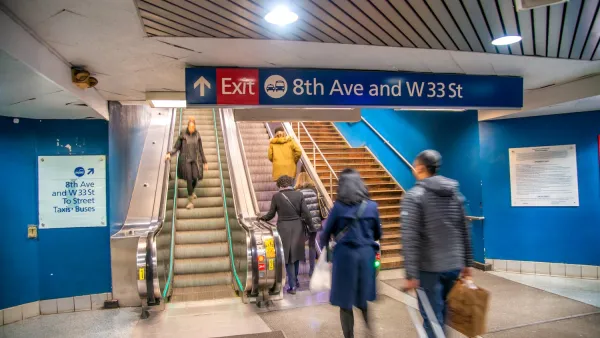
In Both Crashes and Crime, Public Transportation is Far Safer than Driving
Contrary to popular assumptions, public transportation has far lower crash and crime rates than automobile travel. For safer communities, improve and encourage transit travel.
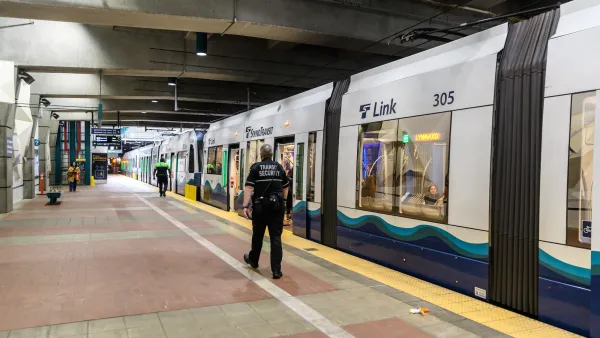
Perception vs. reality: NYC transit crime declined by 14% since 2019
In spite of popular perceptions, crime on many US transit systems is steadily dropping.
MBTA threatens to use eminent domain to pedestrianize Boston streets during World Cup
Boston city hall has been unusually reluctant to align with MassDOT and MBTA's proposed crowd management plans.

Planetizen Federal Action Tracker
A weekly monitor of how Trump’s orders and actions are impacting planners and planning in America.

The state-sanctioned urbicide of Austin
People don’t kill cities. Freeways do.

US to reduce Colorado River water deliveries to Mexico
A new Colorado Treaty amendment reduces Mexico’s Colorado River water allocation by 250,000 acre feet.

Mamdani overhauls NYC's Vision Zero plan with 100 new policy goals
The overhaul aims to reduce traffic deaths and make streets safer for pedestrians, cyclists and drivers through lower speed limits, new safety infrastructure and more.

Amtrak not solely to blame for New Jersey commuter rail's unreliability, report finds
A new study from the Garden State Initiative found that NJ Transit’s budget grew 20% across a 4 year period, but reliability declined significantly over the same period.

EPA erases limits on planet-warming pollution from power plants
Under Monday’s plan, power plants would still have some limits on how much mercury, arsenic and other contaminants they can emit.

FREE Course: Walkable City 1: Why Walkability?
After describing his path towards focusing on walkability as the essence of good planning, Jeff Speck marches through his five principal reasons for making more walkable places.
Reinventing Malls: Planning Alchemy—Turning Gray Fields Into Gold
The course focuses on the opportunities and imperatives that shape reinvention of mall sites.

Eagle County Government
Harvard University Graduate School of Design
Nashville Planning Department
The Architects Foundation
University of Cincinnati Online
The Pocatello Development Authority
The Urban Renewal Agency of the City of Pocatello
Journal of the American Planning Association

