Dark-colored cars in particular can raise the surrounding air temperature by as much as 3.8 degrees Celsius.


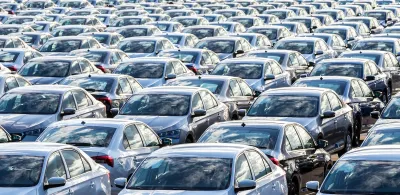
Parked cars make a significant impact on the surrounding air temperature, contributing to the urban heat island effect, according to a new report.
As an article in Carbon Copy explains, “The report by the City and Environment Interactions showed that thermal and radiative properties of cars, especially when they are stationary, alter urban surface properties and contribute to heat retention in cities.”
According to the research, many of these cars cover up to 10% of road space in busy city centres. This means that the overall “lightness” or “darkness” of a city’s surface changes a lot during the day because of where cars are parked.
The color of the cars plays a major role in how much heat it contributes to the surrounding air. Dark-colored vehicles made the surrounding air 3.8 degrees Celsius hotter than nearby asphalt roads. Light-colored cars did not significantly add to the temperature because they reflect most of the sunlight.
“The researchers pointed out that there is an urgent need to integrate the impact of parked vehicles into UHI studies and urban planning strategies.” Suggested mitigation tactics include color-based parking restrictions and building shading elements in open parking lots.
Read the full story: Parked Vehicles Significantly Intensify Urban Warming: Report

Copenhagen is losing its cool
In a city long designed to maximize light during dark Scandinavian winters, climate change is forcing the Danish capital to rethink its relationship with the sun.
Washington Urban Forestry Program Faces 'Existential' Budget Cut
A proposed budget eliminates funding for a key urban forestry program that funds greening efforts across the state.
Study: Houston’s Vacant Lots Worsen Heat Island Effect
Paved lots and abandoned buildings can raise surrounding surface temperatures as much as 20 degrees, according to a new study.

Planetizen Federal Action Tracker
A weekly monitor of how Trump’s orders and actions are impacting planners and planning in America.

California plans to bury El Niño’s downpour
If the state plays its cards right, it may be able to store a billion acre-feet of El Niño’s water in aquifers.

Desperate measures: Advocates weigh draining Lake Powell to fill Colorado River
Draining the reservoir could reduce evaporation losses by a couple hundred thousand acre-feet.

Chicago Avenue bridge construction delays enrages city leaders
The bridge has been closed since 2025. The city originally aimed to re-open it in December, and now expects to finish construction in 2027.

NYC bus network redesign speeds up Queens buses
Rush routes have seen a 4.6% speed increase after the redesign.

California High-Speed Rail Authority picks trainset manufacturer
The California High-Speed Rail Authority aims to start servicing passengers by 2033.

FREE Course: Walkable City 1: Why Walkability?
After describing his path towards focusing on walkability as the essence of good planning, Jeff Speck marches through his five principal reasons for making more walkable places.
Reinventing Malls: Planning Alchemy—Turning Gray Fields Into Gold
The course focuses on the opportunities and imperatives that shape reinvention of mall sites.

City of Rosemead
Rutgers University, Edward J. Bloustein School of Planning and Public Policy
One Hundred Miles
Hunter College, City University of New York (CUNY)
The Architects Foundation
University of Cincinnati Online
City of Cambridge
Montrose County
The Pocatello Development Authority