The freight trucking industry is a prime candidate for a mileage tax that would boost road maintenance revenue.


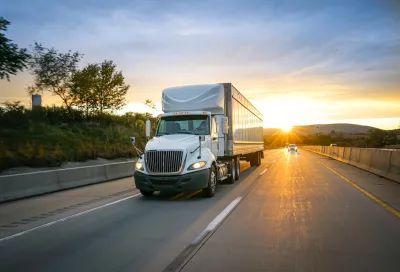
In a paper published by the Information Technology and Innovation Foundation, Michael F. Gorman outlines an argument for a Vehicle Mileage Traveled Tax (VMTT) on freight trucks, which cause a disproportionate amount of damage to roadways. While some states are imposing VMT taxes on private vehicles, public support is low, and Gorman argues that imposing a tax on freight trucks would be a more cost-effective and efficient starting point.
According to the analysis, a VMTT on trucks makes sense because “Trucks create far more pavement damage per vehicle mile than do passenger vehicles, making the VMTT more important for these heavier vehicles. There is already in place extensive tracking of miles traveled by in-cab systems, making the implementation of taxes based on miles driven much easier. There are far fewer large trucks than passenger vehicles, which allows for a far lower administration cost. Thus, the cost of tracking miles is low and the benefit is high by imposing a VMTT on trucks.”
The analysis proposes “an axle-adjusted VMTT of 1 to 13 cents for single-unit trucks and 1 to 19 cents for combination trucks on top of existing taxes to offset the deficit in the Highway Trust Fund.”
The paper concludes, “Current insufficient, inequitable, and poorly incentivized tax structures are leading to behaviors in the trucking industry that threaten the sustainability of the highway (and other road) network. An axle-adjusted VMTT would address many of these inefficiencies and help mitigate the shortfall to ensure the sustainability of the U.S. Interstate network.”
FULL STORY: A Truck Mileage Traveled Tax to Enhance US Roadway Sustainability

California Governor Brown's Conflicting Road Budget Priorities
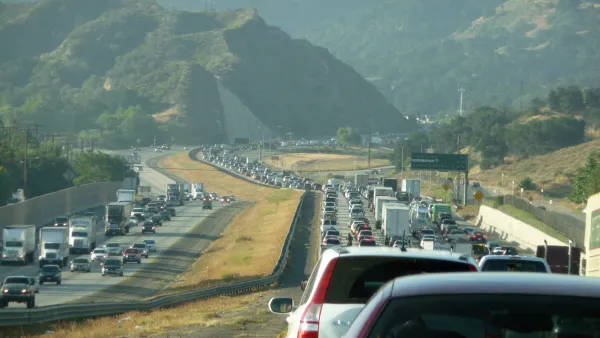
When his father was governor, California was awash in federal highway dollars. Now Jerry Brown's administration contemplates a risky tax hike, juggling the need for road improvements with a clean, transit-oriented agenda.
The True Cost of Texas Highways
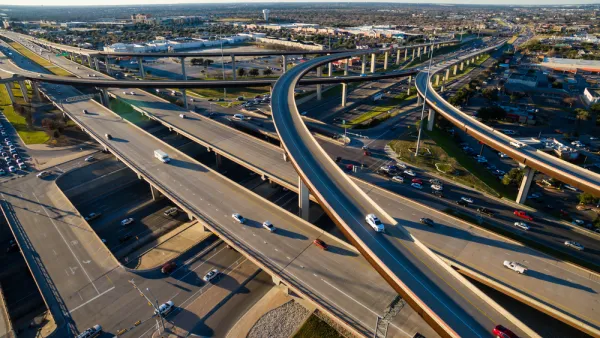
An explainer of the monetary, environmental, and social costs of exuberant road building.
How Close Is the Brooklyn-Queens Expressway to Collapse?
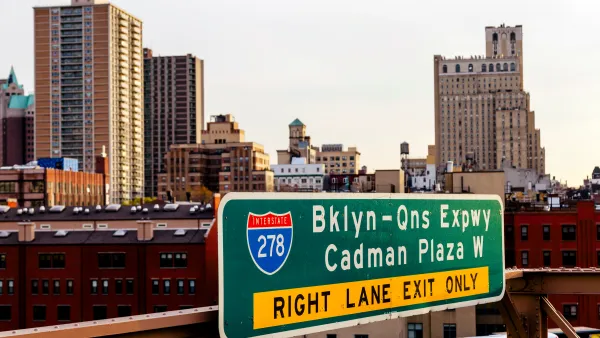
The crucial freight connection is ‘crumbling,’ but a decision on how to move forward with repairing and supplementing it continues to elude the city.

Planetizen Federal Action Tracker
A weekly monitor of how Trump’s orders and actions are impacting planners and planning in America.

The state-sanctioned urbicide of Austin
People don’t kill cities. Freeways do.

US to reduce Colorado River water deliveries to Mexico
A new Colorado Treaty amendment reduces Mexico’s Colorado River water allocation by 250,000 acre feet.

5 New England states march closer to 800 megawatt wind energy project
Securing federal approval for the project may be complicated under the Trump administration, which has historically been hostile towards domestic wind power.

Baltimore to break ground on $50 million Transit Priority Project
The project will bring faster bus trips, safer streets and better bike connections to Baltimore.

Airbnb launches $250 million 'last-dollar financing' housing accelerator, makes first investment in Austin
The company will put $6.4 million towards affordable housing development in Texas’ capital.

FREE Course: Walkable City 1: Why Walkability?
After describing his path towards focusing on walkability as the essence of good planning, Jeff Speck marches through his five principal reasons for making more walkable places.
Reinventing Malls: Planning Alchemy—Turning Gray Fields Into Gold
The course focuses on the opportunities and imperatives that shape reinvention of mall sites.

Eagle County Government
Harvard University Graduate School of Design
Nashville Planning Department
The Architects Foundation
University of Cincinnati Online
The Pocatello Development Authority
The Urban Renewal Agency of the City of Pocatello
Journal of the American Planning Association