Shared mobility is ‘growing up,’ with rental options increasingly expanding to include e-bikes, scooters, and cargo bikes.



Bike share systems in Columbus, Ohio and Washington, D.C. will soon let customers rent cargo bikes, reports Skip Descant in GovTech.
“Columbus’ newest transportation offering is electric cargo bikes provided by Veo, the city’s micromobility operator. The bikes, known as the Apollo Cargo, can carry up to 100 pounds of cargo and will be introduced this month. They include front and rear baskets, throttle-assist motor to eliminate having to pedal, and a cellphone holder with Bluetooth-enabled speakers.” In D.C., CaBi will roll out the same bike model this summer.
According to Paige Miller, Veo’s senior manager for policy and communications, “These cities have laid the groundwork with infrastructure — protected bike lanes, curb management programs, and supportive policies — that make it safe and convenient to ride.” In Columbus, “Interest clearly seems to be trending toward the electrified modes of micromobility. By the end of last year, about one-third of the the city’s bike-share fleet was electric, while the other two-thirds were conventional bikes.”
Expanding the types of bikes and scooters available is a natural extension of shared mobility’s “growing up:” as Descant puts it, “morphing into the kinds of practical vehicles that can haul home a bag of groceries or other items, establishing these devices as essential pieces of urban mobility.”
FULL STORY: In These Capitals, Electric Bike-Share Will Take on Cargo

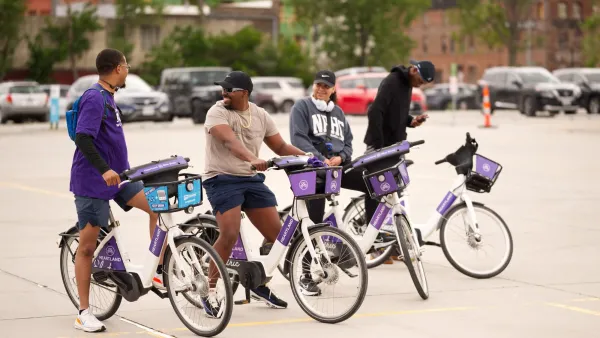
Omaha's 400 shared e-bikes are now free to all residents
Before eliminating fares for locals, the Heartland system only recovered 10%-15% of its operating costs through fare revenue.

Chicago to Add or Upgrade 200 Bike Share Stations
The Divvy bike share system saw its highest ridership ever in 2025 with 6.8 million trips.

Making Shared Micromobility More Inclusive
Cities and shared mobility system operators can do more to include people with disabilities in planning and operations, per a new report.

Planetizen Federal Action Tracker
A weekly monitor of how Trump’s orders and actions are impacting planners and planning in America.

The state-sanctioned urbicide of Austin
People don’t kill cities. Freeways do.

US to reduce Colorado River water deliveries to Mexico
A new Colorado Treaty amendment reduces Mexico’s Colorado River water allocation by 250,000 acre feet.

5 New England states march closer to 800 megawatt wind energy project
Securing federal approval for the project may be complicated under the Trump administration, which has historically been hostile towards domestic wind power.

Baltimore to break ground on $50 million Transit Priority Project
The project will bring faster bus trips, safer streets and better bike connections to Baltimore.

Airbnb launches $250 million 'last-dollar financing' housing accelerator, makes first investment in Austin
The company will put $6.4 million towards affordable housing development in Texas’ capital.

FREE Course: Walkable City 1: Why Walkability?
After describing his path towards focusing on walkability as the essence of good planning, Jeff Speck marches through his five principal reasons for making more walkable places.
Reinventing Malls: Planning Alchemy—Turning Gray Fields Into Gold
The course focuses on the opportunities and imperatives that shape reinvention of mall sites.

Eagle County Government
Harvard University Graduate School of Design
Nashville Planning Department
The Architects Foundation
University of Cincinnati Online
The Pocatello Development Authority
The Urban Renewal Agency of the City of Pocatello
Journal of the American Planning Association