Fueled by “stranded” natural gas, the startup hopes to become the largest in the US, and to make Alaska an industry center.


A proposed bitcoin mine in Alaska would use natural has to produce as much energy as is produced by the state’s largest coal plant, reports Nathaniel Herz in the Alaska Beacon.
The startup planning the project, Stax Capital Partners, “recently applied for a permit with state land managers to set up shipping container-like pods housing natural gas generators and computers at a site some 30 miles south of the massive Prudhoe Bay oil field. The generators would be fueled by the basin’s huge stores of ‘stranded’ natural gas — an industry term for gas that doesn’t have a pipeline connecting it to potential customers.”
Alaska officials have been positioning the state as ideal for Bitcoin operations, which require massive amounts of energy. “But developing new industries in the region is challenging due to its remote location and steep construction costs. And oil companies on the North Slope haven’t ever sold large quantities of gas for Alaska-based data centers or Bitcoin mining, so it’s not yet known whether their asking price would be low enough to offset the higher costs of building and operating infrastructure in the Arctic.”
Phil Wight, an energy historian at the University of Alaska Fairbanks, warns that the project could add to the industrialization of the fragile region and increase carbon emissions.
FULL STORY: New Alaska Bitcoin mine would use as much power as the state’s largest coal plant produces

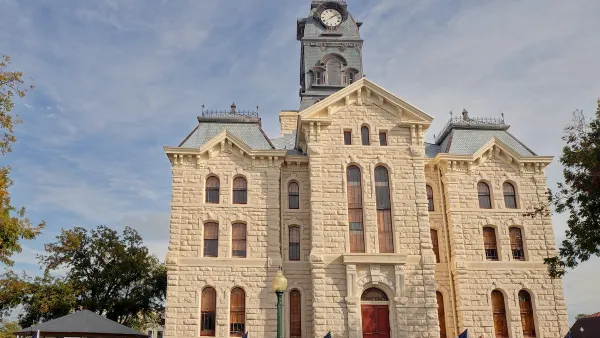
Rural Texans are Forming a City to Fight a Noisy Crypto Facility
In the face of state inaction, residents of an unincorporated community want to take matters into their own hands to limit the noise from a bitcoin mining operation.
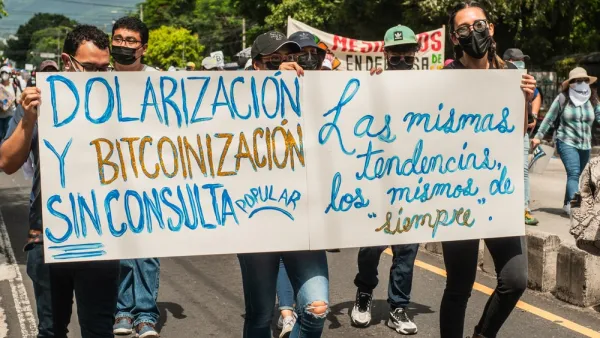
El Salvador President Envisions Retro-Futurist ‘Bitcoin City’
In the same week that the cryptocurrency’s value took a nosedive, the president of El Salvador unveiled a model for a volcano-powered ‘smart city.’
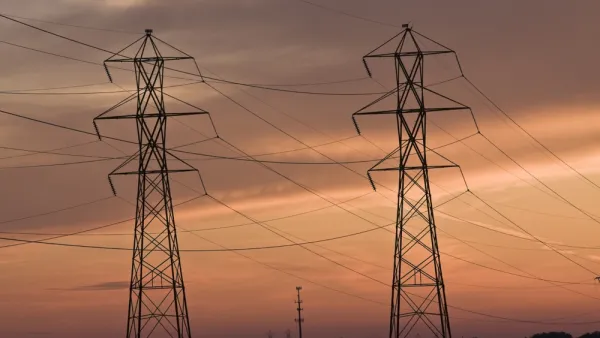
Cryptocurrency Goes in Search of Cheap Power, Finds it in Small-Town America
Some of the least expensive electricity in the country can be found in Upstate New York, where cryptocurrency miners are starting to set up shop—with or without local approval.

Planetizen Federal Action Tracker
A weekly monitor of how Trump’s orders and actions are impacting planners and planning in America.

The state-sanctioned urbicide of Austin
People don’t kill cities. Freeways do.

US to reduce Colorado River water deliveries to Mexico
A new Colorado Treaty amendment reduces Mexico’s Colorado River water allocation by 250,000 acre feet.

5 New England states march closer to 800 megawatt wind energy project
Securing federal approval for the project may be complicated under the Trump administration, which has historically been hostile towards domestic wind power.

Baltimore to break ground on $50 million Transit Priority Project
The project will bring faster bus trips, safer streets and better bike connections to Baltimore.

Airbnb launches $250 million 'last-dollar financing' housing accelerator, makes first investment in Austin
The company will put $6.4 million towards affordable housing development in Texas’ capital.

FREE Course: Walkable City 1: Why Walkability?
After describing his path towards focusing on walkability as the essence of good planning, Jeff Speck marches through his five principal reasons for making more walkable places.
Reinventing Malls: Planning Alchemy—Turning Gray Fields Into Gold
The course focuses on the opportunities and imperatives that shape reinvention of mall sites.

Eagle County Government
Harvard University Graduate School of Design
Nashville Planning Department
The Architects Foundation
University of Cincinnati Online
The Pocatello Development Authority
The Urban Renewal Agency of the City of Pocatello
Journal of the American Planning Association