Industry leaders say the U.S. electric grid is unprepared for the increased demand for power created by electric cars, data centers, and electric homes.


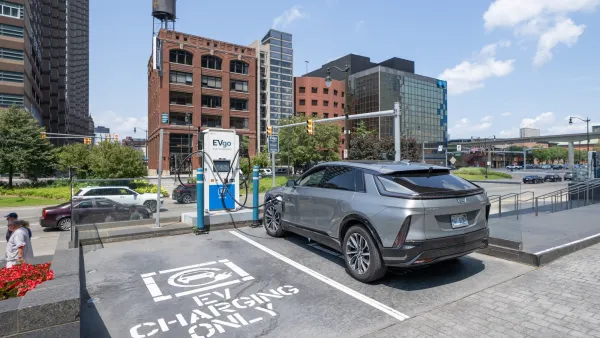
Electric vehicle charge point operators are voicing concerns about the U.S. electric grid’s capacity to support the demand for EV charging, reports Skip Descant in GovTech.
That concern was voiced in the 2025 State of EV Charging Network Operators report, which reveals that “90 percent of charging operators anticipate grid capacity will limit their growth in the next year.” And while federal cuts to the National Electric Vehicle Infrastructure (NEVI) formula program will reduce funding for EV charging, industry experts say it will likely not slow down the rate of construction. Rather, an inadequate supply of electricity could be what stymies
A report from global consulting firm ICF predicts a 78 percent increase in electric demand in the U.S. by 2050, a combination of demand from data centers, EVs, and electric buildings. This will require an “all-of-the-above” approach to energy sources and charging infrastructure. “It doesn’t need to be high-speed charging requiring costly, complicated utility upgrades. In fact, developments like multifamily housing could simply install low-level trickle charging for each parking space, giving residents the kind of daily charge needed for most daily commutes and trips, Forth Program Manager Anna Guida said during the panel.”
Read the full story: EV Charging Infrastructure May Need Power More Than Incentives
96% of federal EV charging funds from 2021-2022 are unspent
New Buy America requirements and other stipulations are slowing the process for accessing federal funds.

USDOT Wants to Require 100% American-made Materials for EV Charging Stations
The proposal comes after a judge ruled against the agency’s attempt to rescind federal funds for electric car charging projects.
Judge Rules Trump Administration Can’t Withhold EV Charger Funds
A federal judge ordered the Trump administration to release withheld funds and approvals for state EV charging plans.

Planetizen Federal Action Tracker
A weekly monitor of how Trump’s orders and actions are impacting planners and planning in America.

Washington state to charge fee to drivers with fuel-efficient cars
Revenue from the fee will go towards supporting the state’s highways.

Illinois considers spending $1 billion in taxpayer money on data center
A quantum computing campus and data center are currently under construction in Chicago.

Some incoming, leading US House Dems urge a national moratorium new data centers
McGovern, the top Democrat on the House Rules Committee, called for “an immediate change to the status quo.”

People Mover delayed again, LAX and contractor trade barbs
The automated train was last slated to open in January 2027.

Trump to blast ‘hydrocarbon highway’ through ‘world’s longest art gallery’
Environmental and historic preservation groups are suing to stop the project.

FREE Course: Walkable City 1: Why Walkability?
After describing his path towards focusing on walkability as the essence of good planning, Jeff Speck marches through his five principal reasons for making more walkable places.
Reinventing Malls: Planning Alchemy—Turning Gray Fields Into Gold
The course focuses on the opportunities and imperatives that shape reinvention of mall sites.

City of Charlotte
City of Rosemead
Rutgers University, Edward J. Bloustein School of Planning and Public Policy
University of Michigan School for Environment and Sustainability (SEAS)
Hunter College, City University of New York (CUNY)
The Architects Foundation
University District Partnership