New Buy America requirements and other stipulations are slowing the process for accessing federal funds.


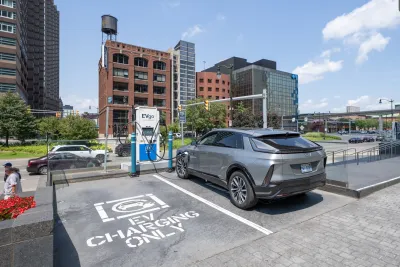
According to a Sierra Club analysis, 96% of funds allocated in 2021 and 2022 for the National Electric Vehicle Infrastructure program are still unspent, reports Justin Boggs for Scripps News.
"While about one-third of the money has been 'obligated,' meaning committed to specific projects, roughly two-thirds is still available," Boggs explains. The Trump administration has created new rules requiring that EV charges be produced in the United States, making it harder for states to purchase equipment. "Despite the hurdles, 2025 was the biggest year yet for EV charger installations, with 18,000 new fast public chargers coming online, the Sierra Club said."
According to Boggs, "Most EV owners charge their vehicles at home overnight, depending on the type of charger. Public fast chargers—capable of recharging an EV in about an hour—remain limited and can cost more per fill-up than gasoline. They are most commonly used by drivers on road trips."
FULL STORY: EV chargers still scarce as states leave most federal money on the table

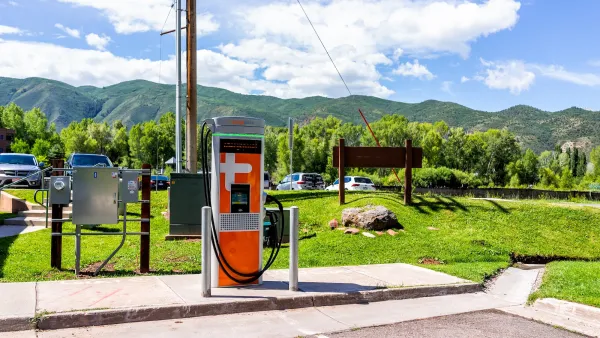
USDOT Cancels Over $100 Million in Sustainable Transportation Funds for Colorado
The administration is pulling funding for what it calls “woke” and “redundant” clean energy projects including EV charging infrastructure.
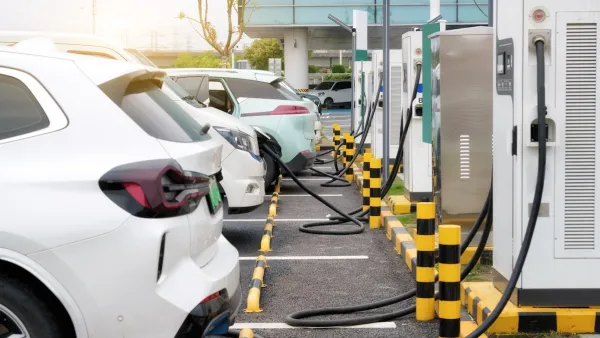
USDOT Issues New Rules for EV Charging Grants After Judge Forces Administration to Unfreeze Funds
The Trump administration is reviving the National Electric Vehicle Infrastructure program, revising its guidelines to eliminate consumer protections, environmental reviews, labor standards, and other provisions from the Biden-era program.
‘Big, Beautiful Bill’ Guts EV Tax Credits
The bill eliminates federal subsidies for electric vehicle buyers and charging stations.

Planetizen Federal Action Tracker
A weekly monitor of how Trump’s orders and actions are impacting planners and planning in America.

The state-sanctioned urbicide of Austin
People don’t kill cities. Freeways do.

US to reduce Colorado River water deliveries to Mexico
A new Colorado Treaty amendment reduces Mexico’s Colorado River water allocation by 250,000 acre feet.

Baltimore to break ground on $50 million Transit Priority Project
The project will bring faster bus trips, safer streets and better bike connections to Baltimore.

Airbnb launches $250 million 'last-dollar financing' housing accelerator, makes first investment in Austin
The company will put $6.4 million towards affordable housing development in Texas’ capital.

Guerilla urbanists are building DIY bus stop benches in Chicago
A before-and-after of one of the bus stops with a new bench. The new benches are not officially sanctioned or permitted, but the residents who placed them hope they will be the start of a network of DIY benches across the city.

FREE Course: Walkable City 1: Why Walkability?
After describing his path towards focusing on walkability as the essence of good planning, Jeff Speck marches through his five principal reasons for making more walkable places.
Reinventing Malls: Planning Alchemy—Turning Gray Fields Into Gold
The course focuses on the opportunities and imperatives that shape reinvention of mall sites.

Eagle County Government
Harvard University Graduate School of Design
Nashville Planning Department
The Architects Foundation
University of Cincinnati Online
The Pocatello Development Authority
The Urban Renewal Agency of the City of Pocatello
Journal of the American Planning Association