As the housing crisis deepens, interest in faith-based development is spreading across the country. How do YIGBY zoning laws work, where are they being implemented or introduced, and what could it mean for communities and churches?


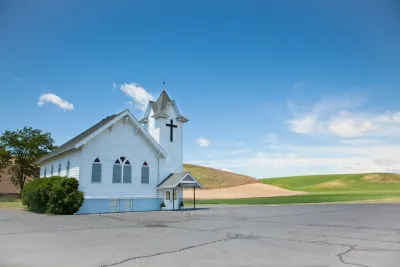
As the housing crisis deepens, interest in the YIGBY, or Yes In God's Backyard, movement has been gaining traction. The movement pushes for legal reforms to remove restrictive zoning laws that prohibit religious property from being used as anything else.
YIGBY laws have been adopted in cities like Atlanta, Georgia, and San Antonio, Texas; and proposed in states like New York, Virginia, and Hawaii.
In this reported piece, Shelterforce's Frances Nguyen explores the growing movement and how congregations like The Neighborhood Congregational Church (NCC) in Laguna Beach are reimagining their role in the community by developing affordable housing. California’s new YIGBY law, SB 4, will help make NCC's efforts more plausible.
Faith-based housing initiatives are also progressing in New York, where advocates argue that zoning reform can help combat the state’s housing crisis. Despite concerns over preserving historical religious sites, proponents see faith communities as essential partners in addressing housing shortages while preserving their own financial stability and community missions.
Read the full story: The YIGBY Movement—Unlocking Church-Owned Land for Affordable Housing

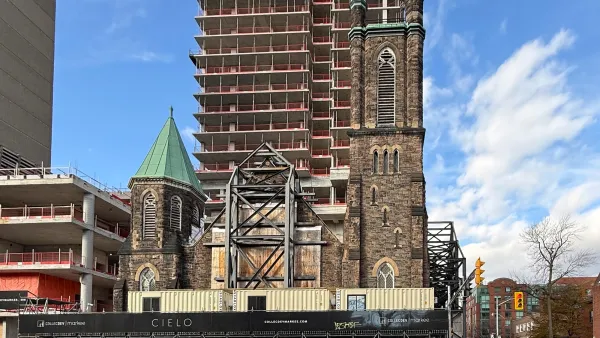
Five simple zoning changes that any city can make to increase housing affordability
Zoning for more affordable housing is not rocket science, says Donald Elliot, author of "An Even Better Way to Zone." Here’s his five-step guide to getting started.
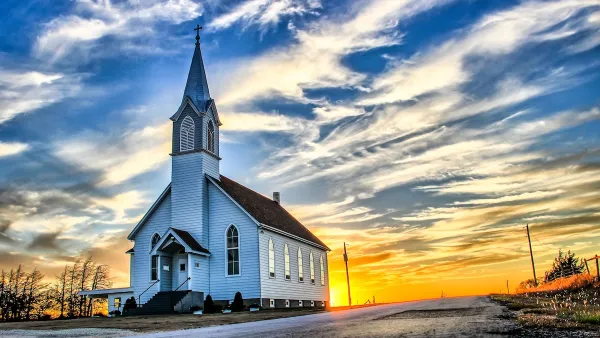
The Matchmakers Bringing Churches and Developers Together
Several groups are serving as mediators for faith-based development, helping congregations access funding, navigate long-term development processes, and avoid developer exploitation.
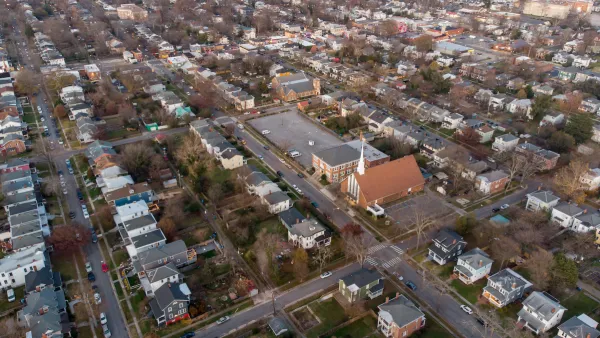
Church Housing Movement Takes Hold in Virginia
A Richmond-based congregation plans to build over 200 units on its property, and a proposed state law could lead to more projects like it.

Planetizen Federal Action Tracker
A weekly monitor of how Trump’s orders and actions are impacting planners and planning in America.

Amtrak, CN end decades-long dispute with eight-year agreement
The new operating agreement establishes an updated framework for the companies to work together, including processes to resolve disputes.

Judges permit Denver to divert 77,000 acre feet from the Colorado River for reservoir expansion
Overuse and climate change have caused the Colorado River’s water levels to plummet.

NYC DOT wants faster, more permanent street upgrades
The city is examining ways to build more concrete infrastructure without getting entangled in 'decades-long' projects.

'Something we’ve never seen before:' rising utility rates could strain city finances nationwide
Data centers, climate change and other factors have caused utility rates in the United States to increase by 38% since 2020.

Trump to overrule local leaders, lease millions of acres of America’s Pacific Island territories’ seafloors to mining companies
International law says that the Indigenous people of America’s territories have a right to prior and informed consent regarding projects that impact their countries.

FREE Course: Walkable City 1: Why Walkability?
After describing his path towards focusing on walkability as the essence of good planning, Jeff Speck marches through his five principal reasons for making more walkable places.
Reinventing Malls: Planning Alchemy—Turning Gray Fields Into Gold
The course focuses on the opportunities and imperatives that shape reinvention of mall sites.

Harvard University Graduate School of Design
KFH Group Inc.
Greater Baltimore Committee
The Architects Foundation
University of Cincinnati Online
The Pocatello Development Authority
The Urban Renewal Agency of the City of Pocatello