The city’s costly experiment with on-demand transit is yielding to more strategic investment.


In 2016, Kansas City, Missouri became a pioneer in ‘microtransit,’ on-demand transportation services used to supplement or — in some cases — replace public transit.
In a piece for Bloomberg CityLab, David Zipper describes the city’s experiment and interviews Kansas City Area Transportation Authority CEO Frank White III, who says the original goal of introducing microtransit was to get more people to ride transit.
White admits that the public subsidy for the city’s current on-demand transit service is between $20 and $25 per passenger — roughly ten times as much as a fixed-bus route. But White asserts that “It works best in less dense areas. You could use it in rural areas where there is no fixed route service at all, or you could use it as a feeder system to nearby buses — but then the whole system has to be correlated, which can be challenging.”
For White, microtransit can also be a tool for gauging public interest in transit to pave the way for future fixed-route service and serving areas with no other options. “I think we’ll see more strategic use of microtransit, focusing on less dense areas and connecting with our fixed-route buses.”
FULL STORY: Kansas City Looks Back on its Long, Costly Ride With Microtransit

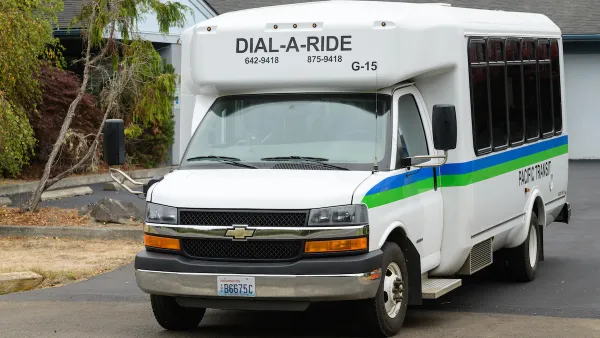
Opinion: Microtransit Isn’t the Answer to Transit Woes
On-demand services can’t scale successfully without massive government subsidies, and could obscure the impacts of car-centric sprawl.

Advocates Urge Caution as Microtransit Expands
On-demand microtransit is gaining popularity with transit agencies, but is it at the expense of existing service?
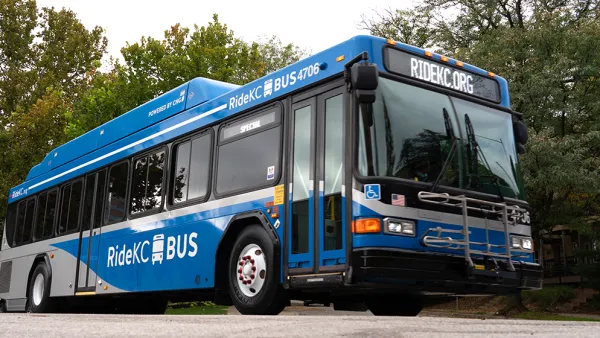
Transit Advocates Fear On-Demand Microtransit Undermines Bus Service
A new on-demand transit service is meant to fill gaps in Kansas City regional bus service, but some transit supporters worry the service is drawing funding away from fixed-route buses.

Planetizen Federal Action Tracker
A weekly monitor of how Trump’s orders and actions are impacting planners and planning in America.

The state-sanctioned urbicide of Austin
People don’t kill cities. Freeways do.

US to reduce Colorado River water deliveries to Mexico
A new Colorado Treaty amendment reduces Mexico’s Colorado River water allocation by 250,000 acre feet.

Mamdani overhauls NYC's Vision Zero plan with 100 new policy goals
The overhaul aims to reduce traffic deaths and make streets safer for pedestrians, cyclists and drivers through lower speed limits, new safety infrastructure and more.

Amtrak not solely to blame for New Jersey commuter rail's unreliability, report finds
A new study from the Garden State Initiative found that NJ Transit’s budget grew 20% across a 4 year period, but reliability declined significantly over the same period.

EPA erases limits on planet-warming pollution from power plants
Under Monday’s plan, power plants would still have some limits on how much mercury, arsenic and other contaminants they can emit.

FREE Course: Walkable City 1: Why Walkability?
After describing his path towards focusing on walkability as the essence of good planning, Jeff Speck marches through his five principal reasons for making more walkable places.
Reinventing Malls: Planning Alchemy—Turning Gray Fields Into Gold
The course focuses on the opportunities and imperatives that shape reinvention of mall sites.

.jpg)
Eagle County Government
Harvard University Graduate School of Design
Nashville Planning Department
The Architects Foundation
University of Cincinnati Online
The Pocatello Development Authority
The Urban Renewal Agency of the City of Pocatello
Journal of the American Planning Association