The plan outlines the department’s key priorities in building resilient infrastructure and ensuring environmental justice in historically disinvested communities.



The U.S. Department of Transportation has released a 2024-2027 Climate Adaptation Plan aimed at building resilient infrastructure, integrating climate risk into its operations, and ensuring environmental justice. The agency’s focus on integrating environmental justice is designed to ensure across its programs and strengthen vulnerable communities.
According to an article in Global Railway Review, “The CAP introduces initiatives to strengthen infrastructure resilience and support vulnerable communities” that include a Climate Hazard Exposure and Resilience (CHER) Tool and the PROTECT program, which “supports resilience projects like evacuation routes and coastal defenses to protect infrastructure from extreme weather.”
The CAP prioritizes four key areas: investment in climate-smart infrastructure, linking climate resilience and environmental justice, leveraging federal climate data, and reducing climate impacts on federal assets.
Read the full story: USDOT unveils Climate Adaptation Plan 2024-2027

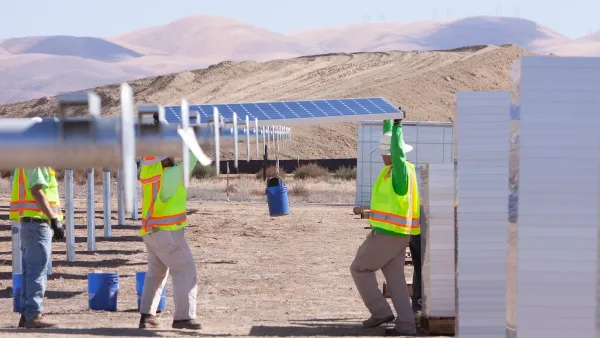
21 Climate Resilience Projects Cancelled by the EPA
The federal government has pulled funding for at least 21 projects related to farming, food systems, and environmental justice to comply with one of Trump’s early executive orders.
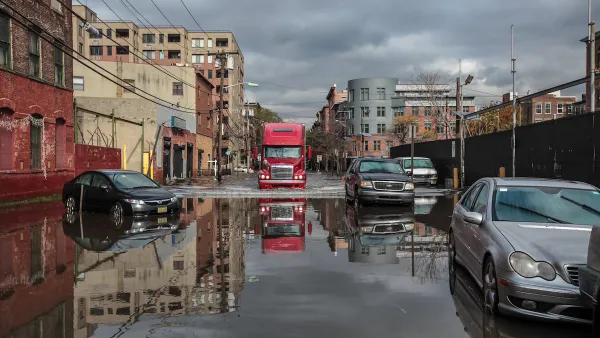
FEMA Resilience Program Cuts Grant Funding
The Building Resilient Infrastructure and Communities program funded projects from flood prevention to power station upgrades.
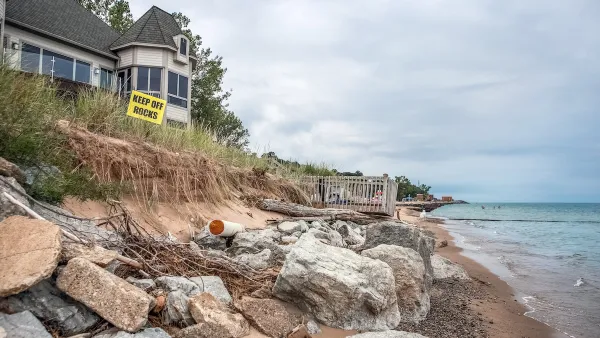
How US Cities Can Prepare for Climate Disasters
Resilience, encompassing infrastructure, governance, economic strength, and social cohesion, is critical for cities to mitigate rising climate risks like flooding, wildfires, and heat, ensuring long-term recovery and adaptability.

Planetizen Federal Action Tracker
A weekly monitor of how Trump’s orders and actions are impacting planners and planning in America.

California plans to bury El Niño’s downpour
If the state plays its cards right, it may be able to store a billion acre-feet of El Niño’s water in aquifers.

Desperate measures: Advocates weigh draining Lake Powell to fill Colorado River
Draining the reservoir could reduce evaporation losses by a couple hundred thousand acre-feet.

California city breaks ground on transit connector
The project includes three mobility hubs and a pedestrian bridge.

After public outcry, Massachusetts city releases housing development tracker
Cambridge’s tracker currently shows 250 housing projects in various stages of development.

40 years after approval, Chicago breaks ground on new park
The park honors Jean Baptiste Point du Sable, the city’s first permanent non-native settler.

FREE Course: Walkable City 1: Why Walkability?
After describing his path towards focusing on walkability as the essence of good planning, Jeff Speck marches through his five principal reasons for making more walkable places.
Reinventing Malls: Planning Alchemy—Turning Gray Fields Into Gold
The course focuses on the opportunities and imperatives that shape reinvention of mall sites.

City of Rosemead
Rutgers University, Edward J. Bloustein School of Planning and Public Policy
One Hundred Miles
Hunter College, City University of New York (CUNY)
The Architects Foundation
University of Cincinnati Online
City of Cambridge
Montrose County
The Pocatello Development Authority