The Miami New Times explores the relationship between crime and urban design in Miami.


"There are two main approaches to crime prevention: the 'dispositional' and the 'situational.' The first looks at the criminal's motivations and calls for education, moral guidance, sanctions, and/or penalties... Our local increase in urban crime has social, political, and economic causes. For one thing, Miami's racially and ethnically segregated populations are physically, economically, and politically disenfranchised, facts that become significant in the analysis of urban crime. Which brings me to a broader idea of community, one that encompasses more than just something defined by physical territory. Let's stop seeing crime solely as a subjective and isolated matter. Our civic leaders and planners need to understand that a factor in our crisis is this: We don't see ourselves as part of a greater community with commonly held aspirations. If we did, the general distribution of crime would substantially decrease. People don't pilfer when they believe they have an ownership interest."
Thanks to Chris Steins
Read the full story: Miami, Crime, and Urban Design


Planetizen Federal Action Tracker
A weekly monitor of how Trump’s orders and actions are impacting planners and planning in America.

‘Going backwards:’ Baltimore mayor, students rally against state's transit funding plan
Maryland's proposed six-year plan provides no funding for Baltimore’s BMORE bus program and reduces its road maintenance funding.
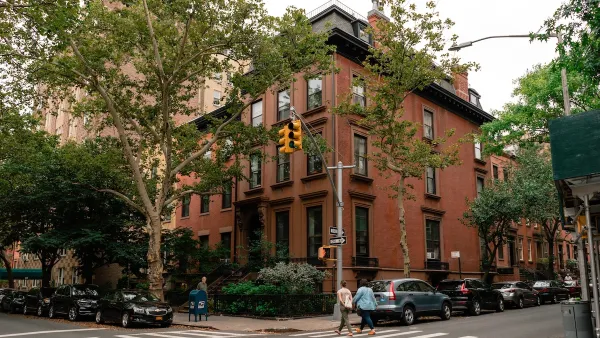
Mamdani sent nearly 6,000 pied-à-terre tax warnings to homes that didn’t qualify
A judge has ordered the administration to cancel thousands of pied-à-terre tax notices after it sent 35% of them erroneously.

Mamdani sent nearly 6,000 pied-à-terre tax warnings to homes that didn’t qualify
A judge has ordered the administration to cancel thousands of pied-à-terre tax notices after it sent 35% of them erroneously.

Detroit to transform waterfront with $2.2 billion investment
Developers will convert about 18 acres of unused parking lot space into civic spaces.

‘Going backwards:’ Baltimore mayor, students rally against state's transit funding plan
Maryland's proposed six-year plan provides no funding for Baltimore’s BMORE bus program and reduces its road maintenance funding.

FREE Course: Walkable City 1: Why Walkability?
After describing his path towards focusing on walkability as the essence of good planning, Jeff Speck marches through his five principal reasons for making more walkable places.
Reinventing Malls: Planning Alchemy—Turning Gray Fields Into Gold
The course focuses on the opportunities and imperatives that shape reinvention of mall sites.

City of Thousand Oaks
City of Wisconsin Rapids
Harvard University Graduate School of Design
The Architects Foundation
University of Cincinnati Online
Northern Illinois Transit Authority (NITA)
The Pocatello Development Authority
The Urban Renewal Agency of the City of Pocatello