The plan could bring much-needed water to farmers in South Texas.


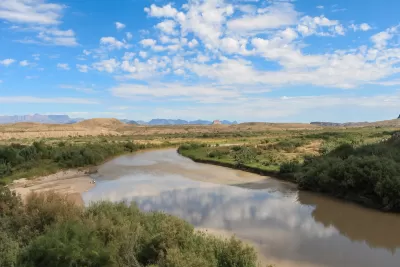
The United States and Mexico signed an agreement that could bring more water to drought-stricken South Texas farms, reports Berenice Garcia in The Texas Tribune.
As Garcia explains, “Under the 1944 international treaty, Mexico must deliver 1,750,000 acre-feet of water to the U.S. from six tributaries every five years, or an average of 350,000 every year. But Mexico is at a high risk of not meeting that deadline. The country still has a balance of more than 1.3 million acre-feet of water it needs to deliver by October 2025.”
The new amendment lets Mexico use additional water from its reservoirs and two additional rivers to meet its obligations. “The amendment’s provisions that address current water delivery shortfalls expire in five years unless extended. The amendment also establishes longer-term measures such as an environmental working group to explore other sources of water.”
Read the full story: U.S.-Mexico water agreement might bring relief to parched South Texas
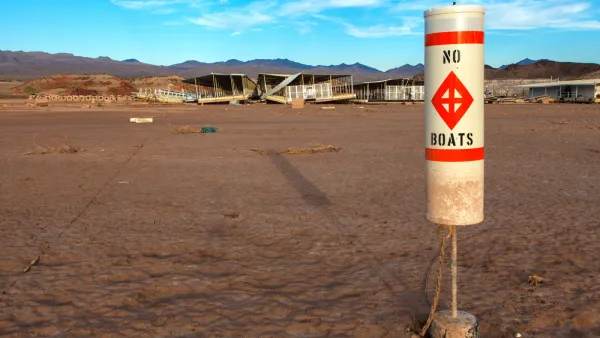
Colorado River Compact Needs 21st Century Update
While the historic agreement set a new precedent for water rights, its inherent flaws, growing demand, and the threat of climate change make much of it obsolete for today’s needs.
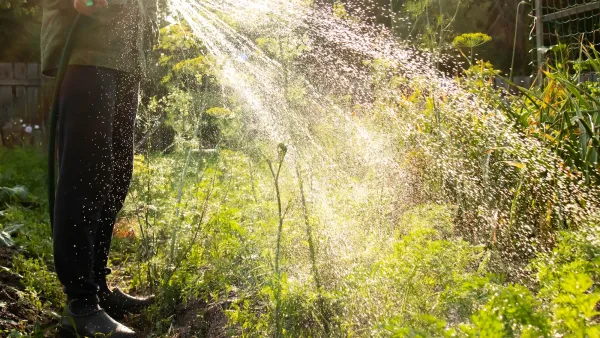
Climate change could double household water costs in some cities, study finds
New research suggests that climate change-related stressors are straining municipal water systems.
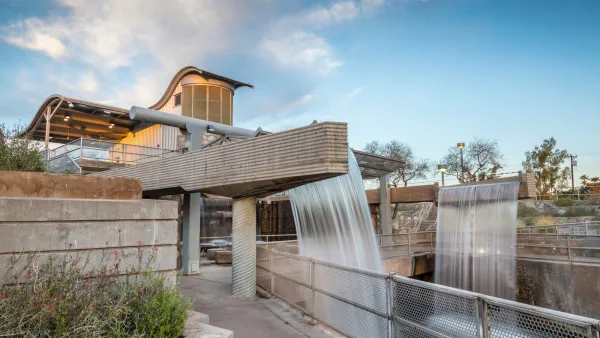
Arizona prepares to tap into emergency water supply as it braces for Colorado River cuts
The Salt River Project has been collecting nearly 4 million acre-feet of water since the mid-1990s.

Planetizen Federal Action Tracker
A weekly monitor of how Trump’s orders and actions are impacting planners and planning in America.

California plans to bury El Niño’s downpour
If the state plays its cards right, it may be able to store a billion acre-feet of El Niño’s water in aquifers.

Desperate measures: Advocates weigh draining Lake Powell to fill Colorado River
Draining the reservoir could reduce evaporation losses by a couple hundred thousand acre-feet.

US buildings threatened, destroyed by fires set to triple by 2060
Researchers found a high fire risk for socioeconomically vulnerable neighborhoods in the American West.

LA residents may be allowed to paint their own crosswalks
Councilwoman Katy Yaroslavsky put out a motion instructing the Los Angeles Department of Public Transportation to study the feasibility of allowing volunteers to paint crosswalks.

Dallas moves to overhaul its zoning code
The city's zoning reform will allow more multi-family and mixed-use developments.

FREE Course: Walkable City 1: Why Walkability?
After describing his path towards focusing on walkability as the essence of good planning, Jeff Speck marches through his five principal reasons for making more walkable places.
Reinventing Malls: Planning Alchemy—Turning Gray Fields Into Gold
The course focuses on the opportunities and imperatives that shape reinvention of mall sites.

City of Rosemead
Rutgers University, Edward J. Bloustein School of Planning and Public Policy
One Hundred Miles
Hunter College, City University of New York (CUNY)
The Architects Foundation
University of Cincinnati Online
City of Cambridge
Montrose County
The Pocatello Development Authority