These days, a house in California costs a lot of money. Inevitably, the planning system gets blamed for the mess.


Are high home prices really due to planners and their crazy processes? The answer is yes and no -- or, perhaps more accurately, no and yes, writes William Fulton: "The recent run-up in prices has occurred not only in the context of Californias typically kooky and complicated planning system, but also in the context of a very peculiar housing market... Planning well usually means resisting short-term economic forces in the service of long-term benefit to the community -- focusing on workforce and low-income housing, for example, instead of permitting developers to build only high-end houses. Equally important to planning well is keeping the plans you make. That means allowing developers to build the housing you want when as now the market motivates them to do so. One clear cost that planning imposes on developers is the cost of processing time, a cost that can be fatal if it means that developers miss the hot real estate market and must wait years until the opportunity to build arises again."
Thanks to Chris Steins
Read the full story: Red-Hot Housing Market Shouldn't Change Planning Principles


Planetizen Federal Action Tracker
A weekly monitor of how Trump’s orders and actions are impacting planners and planning in America.

‘Going backwards:’ Baltimore mayor, students rally against state's transit funding plan
Maryland's proposed six-year plan provides no funding for Baltimore’s BMORE bus program and reduces its road maintenance funding.
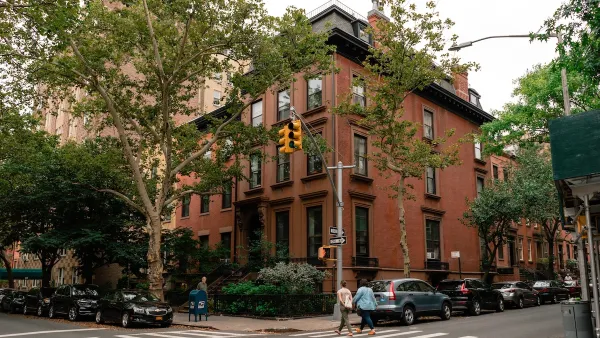
Mamdani sent nearly 6,000 pied-à-terre tax warnings to homes that didn’t qualify
A judge has ordered the administration to cancel thousands of pied-à-terre tax notices after it sent 35% of them erroneously.

Mamdani sent nearly 6,000 pied-à-terre tax warnings to homes that didn’t qualify
A judge has ordered the administration to cancel thousands of pied-à-terre tax notices after it sent 35% of them erroneously.

Detroit to transform waterfront with $2.2 billion investment
Developers will convert about 18 acres of unused parking lot space into civic spaces.

‘Going backwards:’ Baltimore mayor, students rally against state's transit funding plan
Maryland's proposed six-year plan provides no funding for Baltimore’s BMORE bus program and reduces its road maintenance funding.

FREE Course: Walkable City 1: Why Walkability?
After describing his path towards focusing on walkability as the essence of good planning, Jeff Speck marches through his five principal reasons for making more walkable places.
Reinventing Malls: Planning Alchemy—Turning Gray Fields Into Gold
The course focuses on the opportunities and imperatives that shape reinvention of mall sites.

City of Thousand Oaks
City of Wisconsin Rapids
Harvard University Graduate School of Design
The Architects Foundation
University of Cincinnati Online
Northern Illinois Transit Authority (NITA)
The Pocatello Development Authority
The Urban Renewal Agency of the City of Pocatello