Los Angeles artist Dan Kwong is leading a project to restore the baseball field at the Manzanar National Historic Site, honoring the resilience of Japanese Americans incarcerated there during World War II.


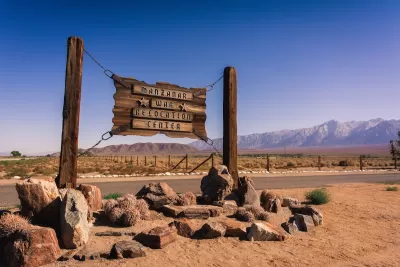
For decades, the Manzanar National Historic Site has served as a reminder of the incarceration of thousands of Japanese Americans during World War II. As reported by Adolfo Guzman-Lopez, Los Angeles artist Dan Kwong is now leading a project to rebuild the baseball field at the former camp, hoping to bring healing and honor to those who endured this dark chapter of U.S. history. Baseball, a quintessential American sport, offered Japanese Americans in the camp a rare sense of normalcy and connection to their identity during their confinement.
Kwong, whose mother was incarcerated at Manzanar, has collaborated with the National Park Service and volunteers, including Chris Siddens, to restore the field. The project, two decades in the making, is more than just a reconstruction of a baseball diamond—it symbolizes resilience, justice, and the collective memory of those wronged. While much of the camp's tragic past remains, this effort to bring back the field and hold annual baseball games represents a form of healing for descendants and the community at large.
The restoration of the baseball field, supported by grants, is nearly complete, with plans for more additions like an announcer’s booth and scoreboard. Kwong envisions future games on this sacred ground, bringing together Japanese American teams and fostering a space where history, healing, and American traditions intertwine. Kwong reflects on how proud his late mother and others who lived through Manzanar would be, knowing that the spirit of resilience is being honored through these efforts.
Read the full story: Baseball at Manzanar


Chicago Amtrak funding makes way for new White Sox stadium
The new funding is the first step in Amtrak vacating its 14th Street rail yard, the future development site of a new baseball stadium.
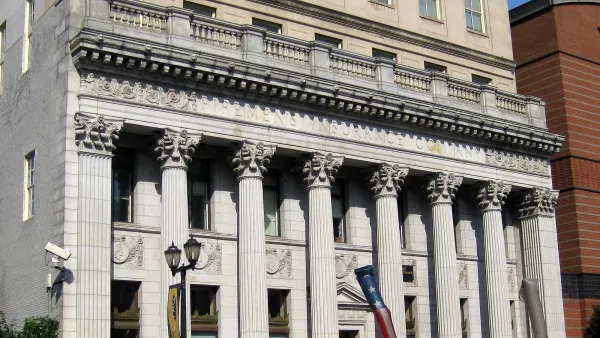
Historic Newark building to become affordable housing
The century-old building will be converted into nearly 200 homes with ground-floor retail.
A call for people-centered historic preservation
'Managing the Magic of Old Places' offers a new vision for preservation that maintains its relevance while prioritizing the lived experience of residents of historic places.

Planetizen Federal Action Tracker
A weekly monitor of how Trump’s orders and actions are impacting planners and planning in America.

California plans to bury El Niño’s downpour
If the state plays its cards right, it may be able to store a billion acre-feet of El Niño’s water in aquifers.

Chicago breaks ground on $3 billion megadevelopment
The new neighborhood, titled Foundry Park, will one day host 3,700 residences.

Satanic Place Names
From streams and lakes to valleys and canyons, I mapped more than 1,000 places named after the Devil.

California High-Speed Rail Authority CEO resigns after $600,000 scandal
Under Ian Choudri, the authority used taxpayer dollars to fund first class flights and trips to nightclubs.

Want to study the Missouri River? Soon, you may need unanimous approval from 10 states
Legislation would require 10 governors’ permission to study or build projects moving water outside the basin.

FREE Course: Walkable City 1: Why Walkability?
After describing his path towards focusing on walkability as the essence of good planning, Jeff Speck marches through his five principal reasons for making more walkable places.
Reinventing Malls: Planning Alchemy—Turning Gray Fields Into Gold
The course focuses on the opportunities and imperatives that shape reinvention of mall sites.

City of Rosemead
Rutgers University, Edward J. Bloustein School of Planning and Public Policy
One Hundred Miles
Hunter College, City University of New York (CUNY)
The Architects Foundation
University of Cincinnati Online
City of Cambridge
Montrose County
The Pocatello Development Authority