Elhania v. Airbnb, Inc. will be the first case in the U.S. to hold Airbnb responsible for a shooting death that happened at a home rented through the platform, because the short-term rental violated local laws designed to protect from that type of harm.



A San Francisco Superior Court judge has overruled Airbnb’s request to dismiss a case brought against it by the parents of a teen who died in August 2021 after being shot at a party held in a Sunnyvale, California, home rented on Airbnb. According to an article from ACCESSWIRE, the case — Elhania v. Airbnb, Inc. — will be the first in the nation to potentially hold Airbnb legally responsible for a victim’s death from a shooting at an Airbnb party, which happen more often than one might assume. In the last 30 days, injuries and deaths from “shootouts” at Airbnb parties were reported in Utah, Alabama, Texas, and Georgia.
Until now, Airbnb has been able to dismiss the case by arguing it can’t be held liable because injuries at parties could not be foreseen and that they’re merely a platform connecting renters with property owners. So what’s making the case stick this time? The fact that Airbnb violated the local city ordinance regulating short-term rentals, which were specifically designed to protect the type of harm the 18-year-old Elias Elhania suffered. Those violations include the fact that the rental was an illegal short-term rental, the owner was not on site throughout the stay, and Airbnb rented the unit to an unaccompanied minor.
ACCESSWIRE reports, “Airbnb, in the oral argument, argued that because it conducts business in many cities, counties, and countries, all of which has [stet] different laws, it is impossible for Airbnb to determine what the law is or comply with it. Airbnb also argued that the local law regulating short-term rentals does not apply to Airbnb, only to the property owners.” The judge disagreed and ruled “that Airbnb can be held legally responsible … if the short-term rental violates a local ordinance that is designed to protect the public's health, safety, or welfare from disorderly conduct.”
As this case moves forward in court against Airbnb and the property owner, it will be one to keep an eye on, particularly as cities and counties across the United States struggle to enforce short-term rental rules to minimize the negative impact of the industry on local communities. Thus far, Airbnb has had little incentive to work with local governments to ensure short-term rental owners doing business through their platform are following local regulations. If they can be held liable for death or injury at short-term rentals from their platform that violate local ordinances aimed at preventing these threats to public safety, it could be a game changer.
FULL STORY: Airbnb Is Found by Court to Be Legally Responsible for Victim of Shooting at an Airbnb Party


California Bill Takes Aim at Vacation Rentals
Proposed legislation in California would limit short-term beach rentals in San Diego.

Maui's new hotel zoning districts could grandfather in 4,500 vacation rentals
The council approved a bill creating two new hotel districts.
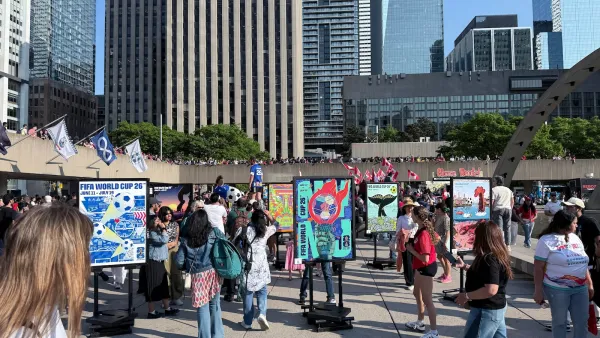
Airbnb investing millions to loosen rules ahead of World Cup
US cities hosting World Cup games all have regulations on short-term rentals, but none have created new rules to limit speculation and displacement during the World Cup.

Planetizen Federal Action Tracker
A weekly monitor of how Trump’s orders and actions are impacting planners and planning in America.

The state-sanctioned urbicide of Austin
People don’t kill cities. Freeways do.

US to reduce Colorado River water deliveries to Mexico
A new Colorado Treaty amendment reduces Mexico’s Colorado River water allocation by 250,000 acre feet.

Mamdani overhauls NYC's Vision Zero plan with 100 new policy goals
The overhaul aims to reduce traffic deaths and make streets safer for pedestrians, cyclists and drivers through lower speed limits, new safety infrastructure and more.

Amtrak not solely to blame for New Jersey commuter rail's unreliability, report finds
A new study from the Garden State Initiative found that NJ Transit’s budget grew 20% across a 4 year period, but reliability declined significantly over the same period.

EPA erases limits on planet-warming pollution from power plants
Under Monday’s plan, power plants would still have some limits on how much mercury, arsenic and other contaminants they can emit.

FREE Course: Walkable City 1: Why Walkability?
After describing his path towards focusing on walkability as the essence of good planning, Jeff Speck marches through his five principal reasons for making more walkable places.
Reinventing Malls: Planning Alchemy—Turning Gray Fields Into Gold
The course focuses on the opportunities and imperatives that shape reinvention of mall sites.

Eagle County Government
Harvard University Graduate School of Design
Nashville Planning Department
The Architects Foundation
University of Cincinnati Online
The Pocatello Development Authority
The Urban Renewal Agency of the City of Pocatello
Journal of the American Planning Association