The two cities launched targeted efforts to improve security and offer supportive services to transit users.


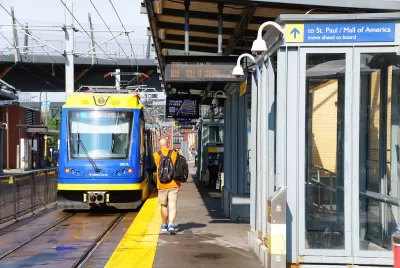
Reported crime on Minneapolis Metro Transit fell by 17.5 percent in the second quarter of 2024 compared to the previous year while ridership rose by 9 percent, reports Christopher Carey in Cities Today. “Metro Transit’s Safety & Security Action Plan – which was endorsed by the Met Council in June 2022 –includes more than 40 ‘action items’” including a new Transit Rider Investment Program (TRIP) that deploys agents at rail stations, “resiliency, de-escalation and crisis intervention training” for transit operators, and hiring more staff.
The agency also contracted with local non-profit organizations to offer supportive resources to riders. “During the past year, Metro Transit says the agencies have connected with around 6,700 individuals and made around 3,800 referrals.”
In New York City, crime on the subway network decreased by 15 percent in June 2024 compared to the same period last year. “The reduction in crime has been attributed to an additional 1,000 police officers patrolling the subway system since February, and the introduction of “Operation Fare Play” in March which cracked down on passengers not paying their fare when entering the network.”
FULL STORY: California bill aims to speed up tiny homes amid homelessness and housing crisis

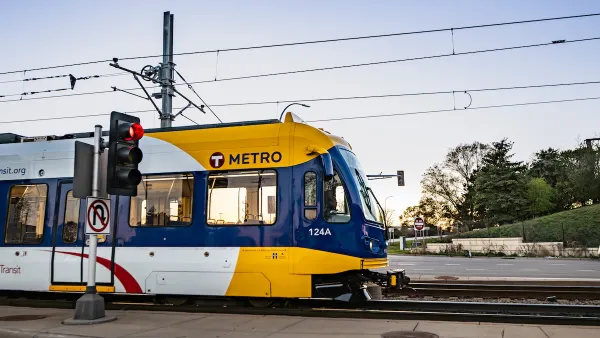
Twin Cities Transit Agency Launches Safety Initiatives
The agency is pairing with nonprofit partners to provide on-site services and resources to riders and boosting fare enforcement without police involvement.
Report: Transit Safety Begins With Better Service
Transit riders want more frequent service, less police.
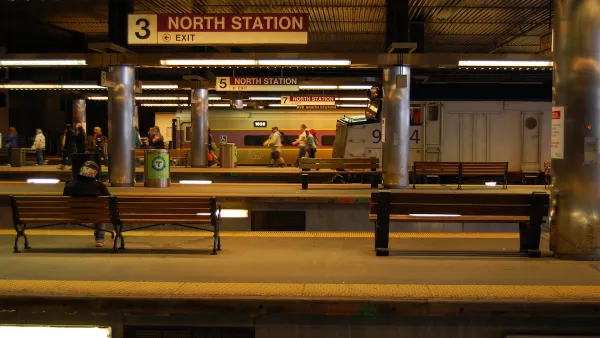
Boston Transit Riders Report Safety Concerns
Almost three-quarters of current and former riders report feeling unsafe while using MBTA services.

Planetizen Federal Action Tracker
A weekly monitor of how Trump’s orders and actions are impacting planners and planning in America.

The state-sanctioned urbicide of Austin
People don’t kill cities. Freeways do.

US to reduce Colorado River water deliveries to Mexico
A new Colorado Treaty amendment reduces Mexico’s Colorado River water allocation by 250,000 acre feet.

Mamdani overhauls NYC's Vision Zero plan with 100 new policy goals
The overhaul aims to reduce traffic deaths and make streets safer for pedestrians, cyclists and drivers through lower speed limits, new safety infrastructure and more.

Amtrak not solely to blame for New Jersey commuter rail's unreliability, report finds
A new study from the Garden State Initiative found that NJ Transit’s budget grew 20% across a 4 year period, but reliability declined significantly over the same period.

EPA erases limits on planet-warming pollution from power plants
Under Monday’s plan, power plants would still have some limits on how much mercury, arsenic and other contaminants they can emit.

FREE Course: Walkable City 1: Why Walkability?
After describing his path towards focusing on walkability as the essence of good planning, Jeff Speck marches through his five principal reasons for making more walkable places.
Reinventing Malls: Planning Alchemy—Turning Gray Fields Into Gold
The course focuses on the opportunities and imperatives that shape reinvention of mall sites.

Eagle County Government
Harvard University Graduate School of Design
Nashville Planning Department
The Architects Foundation
University of Cincinnati Online
The Pocatello Development Authority
The Urban Renewal Agency of the City of Pocatello
Journal of the American Planning Association