The city is considering new decarbonization strategies, including carbon impact fees and educational programs, after the failure of a natural gas ban due to a federal court ruling.


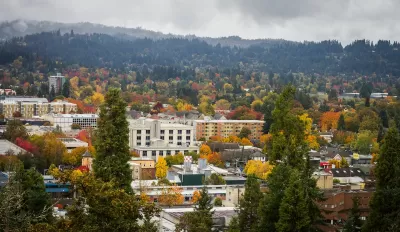
Following the federal court's decision to overturn Berkeley's natural gas ban, Eugene's City Council is seeking new strategies to reduce carbon emissions. The initial attempt to ban natural gas hookups in new residential buildings faced opposition from Northwest Natural and was ultimately withdrawn. As reported by Nathan Wilk, city staff have now proposed alternative decarbonization measures, such as implementing carbon impact fees, launching educational programs, and expediting permits for electrified buildings, which other cities have successfully adopted.
Councilor Lyndsie Leech expressed enthusiasm about exploring these new approaches, emphasizing the need to understand funding requirements and regulatory actions necessary for implementation. The City Council plans to reconvene later this year to discuss potential revenue sources and the specifics of the proposed strategies. Additionally, Councilor Mike Clark suggested negotiating a franchise agreement with Northwest Natural to secure funding for building weatherization, a process that previously stalled due to decarbonization discussions.
City Manager Sarah Medary noted that Eugene might have greater regulatory authority than initially assumed, following a clarification by the 9th Circuit in January. This new understanding could influence the city’s approach to regulating natural gas distribution and further its decarbonization efforts.
Read the full story: Eugene seeks new decarbonization strategies after failure of natural gas ban
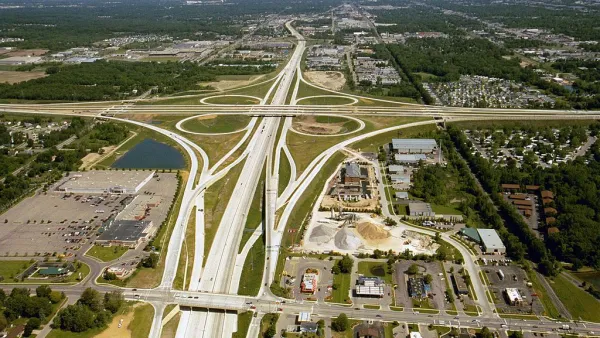
Op-Ed: Michigan Needs a New Transportation Strategy
One writer calls on the state to stop expanding roads and channel funding to projects that support Michigan’s sustainability goals.
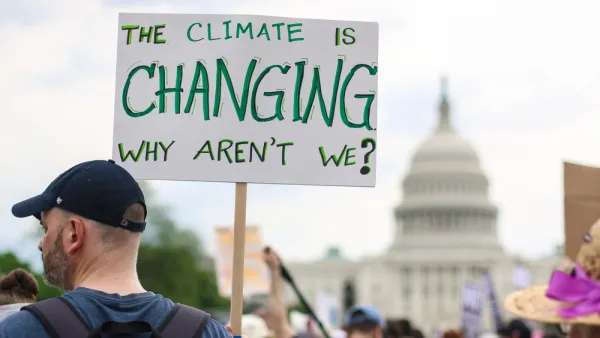
How Cities Can Curb Climate Change and Protect Vulnerable Residents
A new U.N. report urges cities to upgrade their infrastructure to bolster climate resilience and build more sustainable, climate-friendly places.

The Search for a New Green Building Standard
The need to slash emissions from buildings is increasingly urgent, and critics say LEED won't get us there.

Planetizen Federal Action Tracker
A weekly monitor of how Trump’s orders and actions are impacting planners and planning in America.

Washington state to charge fee to drivers with fuel-efficient cars
Revenue from the fee will go towards supporting the state’s highways.

Trump to blast ‘hydrocarbon highway’ through ‘world’s longest art gallery’
Environmental and historic preservation groups are suing to stop the project.

A data center developer is going back on its promises to nearby residents
Data center developer HostDime originally promised free at-home Wi-Fi to residents of Eatonville, Florida.

Trump administration takes another swing at Solar for All
Since the Environmental Protection Agency announced its intent to end Solar for All in August 2025, two federal judges have ruled in favor of protecting it.

The MTA wants to entice international bus manufacturers to set up shop in America
The MTA hopes to create more competition for better bus options while still "buying American."

FREE Course: Walkable City 1: Why Walkability?
After describing his path towards focusing on walkability as the essence of good planning, Jeff Speck marches through his five principal reasons for making more walkable places.
Reinventing Malls: Planning Alchemy—Turning Gray Fields Into Gold
The course focuses on the opportunities and imperatives that shape reinvention of mall sites.

City of Charlotte
City of Rosemead
Rutgers University, Edward J. Bloustein School of Planning and Public Policy
University of Michigan School for Environment and Sustainability (SEAS)
Hunter College, City University of New York (CUNY)
The Architects Foundation
University District Partnership