The group wants to draw attention to the dangers of extreme heat and encourage tenants to organize to demand improved conditions.


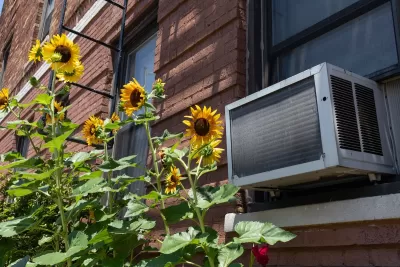
A Chicago nonprofit is distributing free air conditioning units to low-income tenants in the city to help people stay safe during extreme heat events.
As Lucas Frisancho explains in Next City, “Through social media outreach and in-person, grassroots organizing, organizers source AC units and personally visit tenants to install them for free. The equipment is collected and stored over the winter, to be returned to the same tenants next summer. Last summer, the group gave out less than 20 units; this summer, they expect to give away more than 70.”
The project, dubbed the People’s Cooling Army, is an initiative of the All-Chicago Tenant Alliance. The organization is also conducting outreach about tenants’ unions and encouraging renters to unionize and leverage their power. “Founded in 2023, the People’s Cooling Army has been entirely powered by donations. All its operations are conducted by nine members with access to three cars.”
Extreme heat poses a growing public health risk to urban residents, particularly low-income households without access to cooling, which are often located in neighborhoods with the highest temperatures due to extensive pavement and lack of green space and trees. In Chicago, three women in a senior living facility died from excessive heat exposure in a 2022 heat wave. The city responded with an ordinance that calls for air conditioning in ‘common gathering spaces’ in senior housing and larger buildings, but the Tenants’ Alliance says the legislation applies to few of the cities’ buildings.
FULL STORY: Chicago’s “People’s Cooling Army” Is Giving Tenants Free Air Conditioners

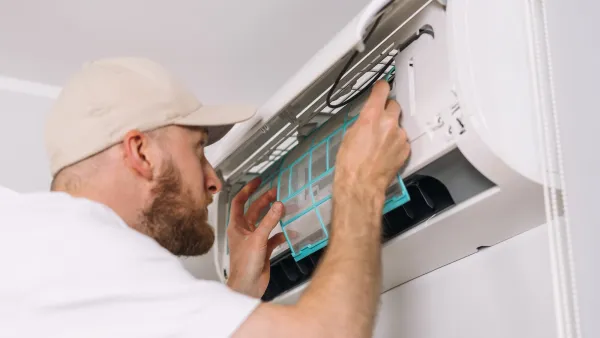
The Pacific Northwest is an unlikely front in the fight for cooling
A 2021 heat dome killed over 250 people in the Pacific Northwest, bringing into sharp focus the potential of extreme heat to have deadly consequences even in historically cool climates.
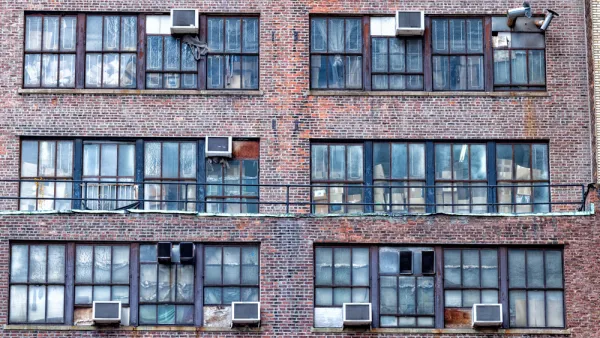
Protecting Urban Residents From Extreme Heat
With temperatures reaching record highs in cities around the country, local officials are implementing measures to ensure vulnerable residents have adequate cooling.
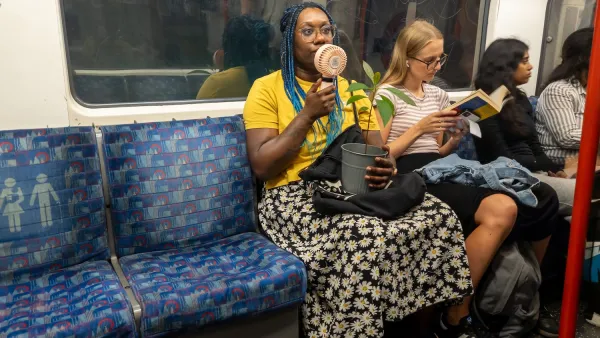
Temperatures in Subways Can Soar Well Above 100. What Some Cities are Doing About it.
Extreme heat can be even more dangerous in confined subway cars and stations.

Planetizen Federal Action Tracker
A weekly monitor of how Trump’s orders and actions are impacting planners and planning in America.

The state-sanctioned urbicide of Austin
People don’t kill cities. Freeways do.

US to reduce Colorado River water deliveries to Mexico
A new Colorado Treaty amendment reduces Mexico’s Colorado River water allocation by 250,000 acre feet.

5 New England states march closer to 800 megawatt wind energy project
Securing federal approval for the project may be complicated under the Trump administration, which has historically been hostile towards domestic wind power.

Baltimore to break ground on $50 million Transit Priority Project
The project will bring faster bus trips, safer streets and better bike connections to Baltimore.

Airbnb launches $250 million 'last-dollar financing' housing accelerator, makes first investment in Austin
The company will put $6.4 million towards affordable housing development in Texas’ capital.

FREE Course: Walkable City 1: Why Walkability?
After describing his path towards focusing on walkability as the essence of good planning, Jeff Speck marches through his five principal reasons for making more walkable places.
Reinventing Malls: Planning Alchemy—Turning Gray Fields Into Gold
The course focuses on the opportunities and imperatives that shape reinvention of mall sites.

Eagle County Government
Harvard University Graduate School of Design
Nashville Planning Department
The Architects Foundation
University of Cincinnati Online
The Pocatello Development Authority
The Urban Renewal Agency of the City of Pocatello
Journal of the American Planning Association