The Amtrak service, 12 years in the making, doubles the number of available trips on the corridor.



Amtrak’s Borealis passenger rail service between St. Paul, Minnesota, and Chicago launched late last month, marking an effective doubling of service to cities along its route.
According to an article by Daniel C. Vock in Route Fifty, “Before Borealis, those cities were only served by Amtrak’s long-distance Empire Builder train that runs once a day between Chicago and Seattle or Portland. The Empire Builder, though, often arrived at inconvenient times, and the eastbound trains were routinely late, because of delays in Montana and North Dakota.”
The line is the first new passenger rail service in Minnesota since 1975 and the first in Wisconsin in over 20 years, Vock adds. The line runs where existing passenger trains already travel, essentially extending two Hiawatha routes between Chicago and Milwaukee.
Officials say the 12-year process to launch the route reveals the arduous bureaucratic process that delays the development of new train lines, but also offers lessons for other states and transportation agencies looking to start new rail services. “Brian Nelson, the president of All Aboard Minnesota, is hoping the new route will inspire state officials to pursue plans to deliver service to Duluth and to add more daily trains along the Borealis route.”
FULL STORY: Midwest states launch new rail service, 12 years in the making

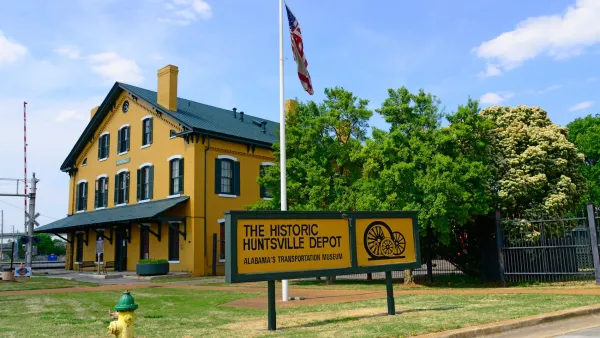
Huntsville wants to be a key Southern player in intercity rail
The Alabama city is commissioning a study to assess the potential for 'Amtrak-like' connections to Nashville, Atlanta, and other Southern cities.
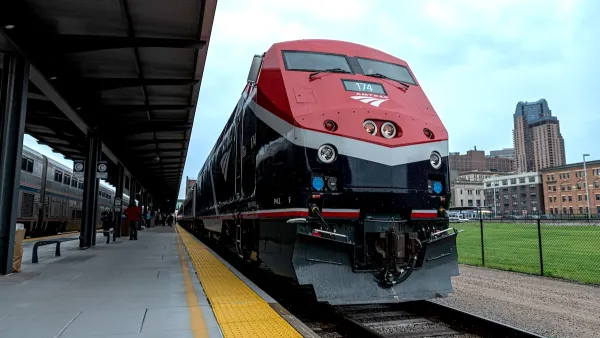
Amtrak’s Borealis Exceeds First Year Ridership Expectations
205,800 passengers have boarded the St. Paul to Chicago line, well above initial MDOT projections.
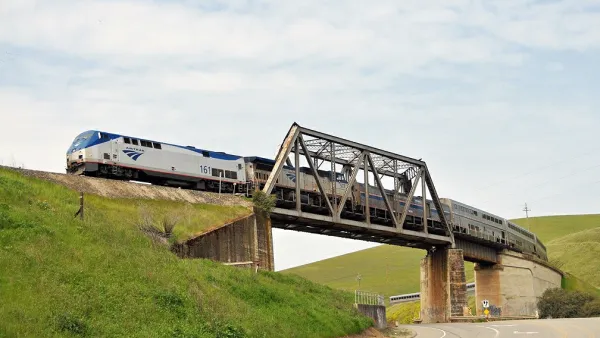
Amtrak Expanding Service in California’s Central Valley
Amtrak is planning a major expansion to the passenger rail lines connecting the Central Valley and the Bay Area.

Planetizen Federal Action Tracker
A weekly monitor of how Trump’s orders and actions are impacting planners and planning in America.

The state-sanctioned urbicide of Austin
People don’t kill cities. Freeways do.

US to reduce Colorado River water deliveries to Mexico
A new Colorado Treaty amendment reduces Mexico’s Colorado River water allocation by 250,000 acre feet.

Colorado’s Largest Data Center Could Rise Next to Homes — Without a Public Hearing
The proposed campus would consume 11 times the power of Denver International Airport; as it has across the country, opposition mounts.

5 New England states march closer to 800 megawatt wind energy project
Securing federal approval for the project may be complicated under the Trump administration, which has historically been hostile towards domestic wind power.

Baltimore to break ground on $50 million Transit Priority Project
The project will bring faster bus trips, safer streets and better bike connections to Baltimore.

FREE Course: Walkable City 1: Why Walkability?
After describing his path towards focusing on walkability as the essence of good planning, Jeff Speck marches through his five principal reasons for making more walkable places.
Reinventing Malls: Planning Alchemy—Turning Gray Fields Into Gold
The course focuses on the opportunities and imperatives that shape reinvention of mall sites.

Eagle County Government
Harvard University Graduate School of Design
Nashville Planning Department
The Architects Foundation
University of Cincinnati Online
The Pocatello Development Authority
The Urban Renewal Agency of the City of Pocatello
Journal of the American Planning Association